Pteroglossus castanotis

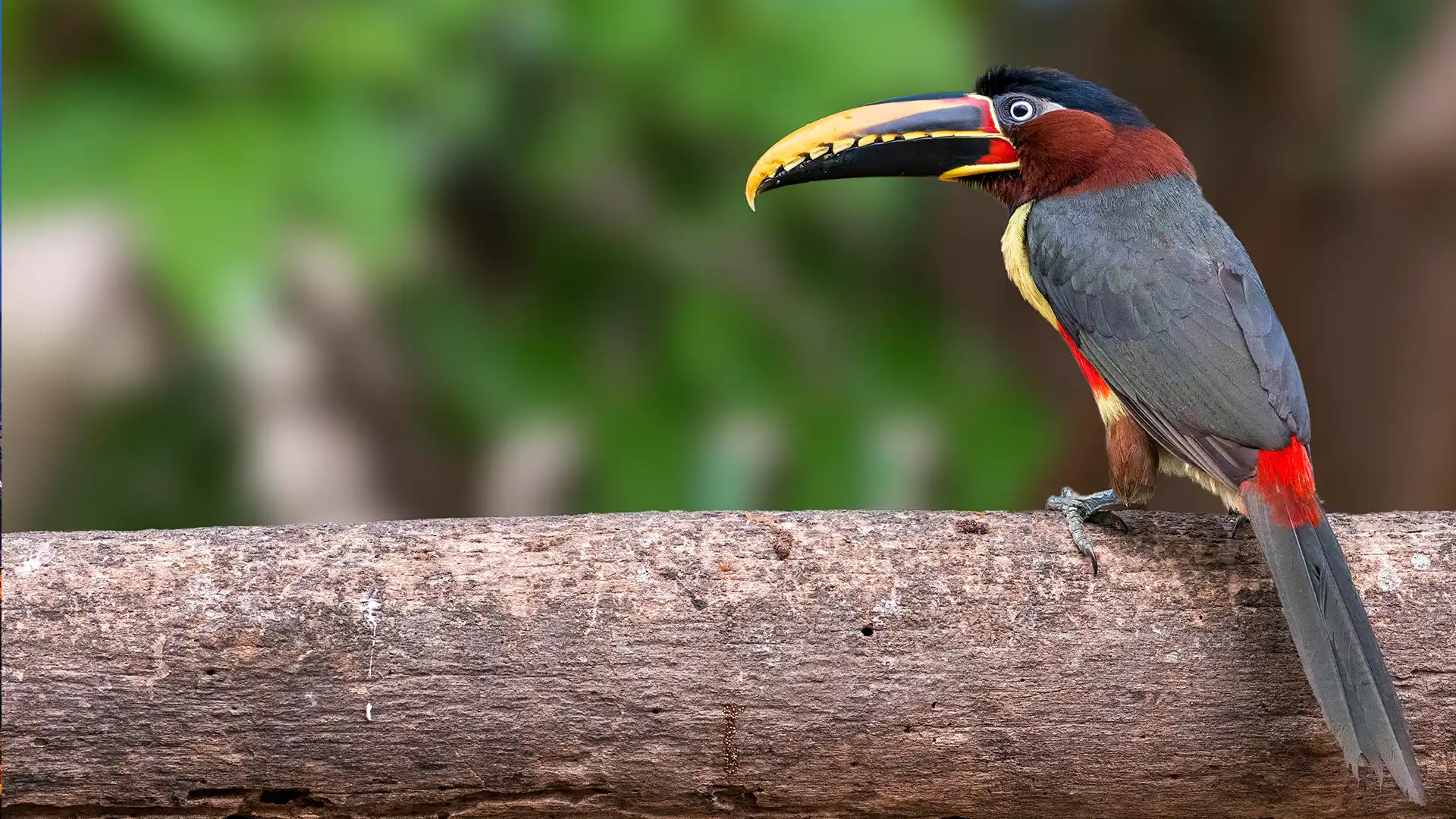
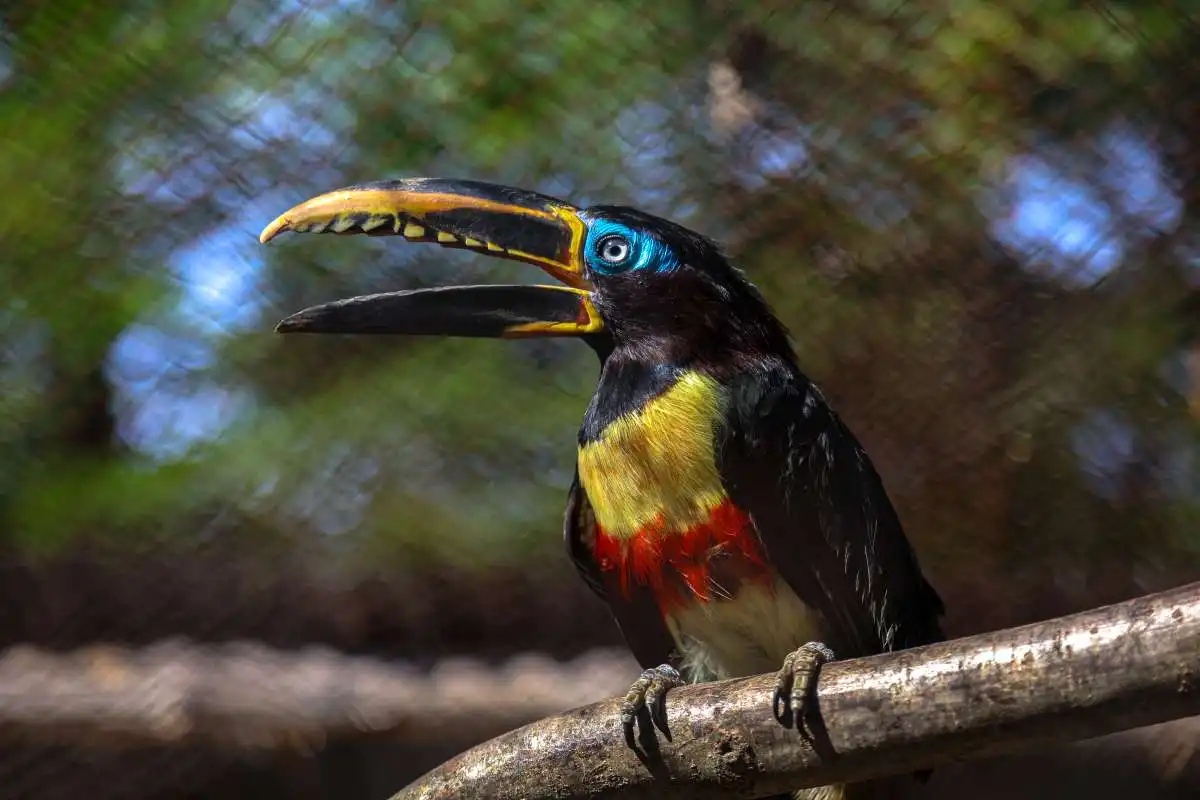
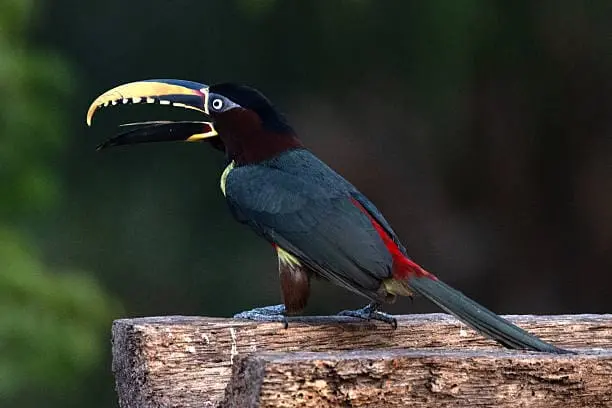
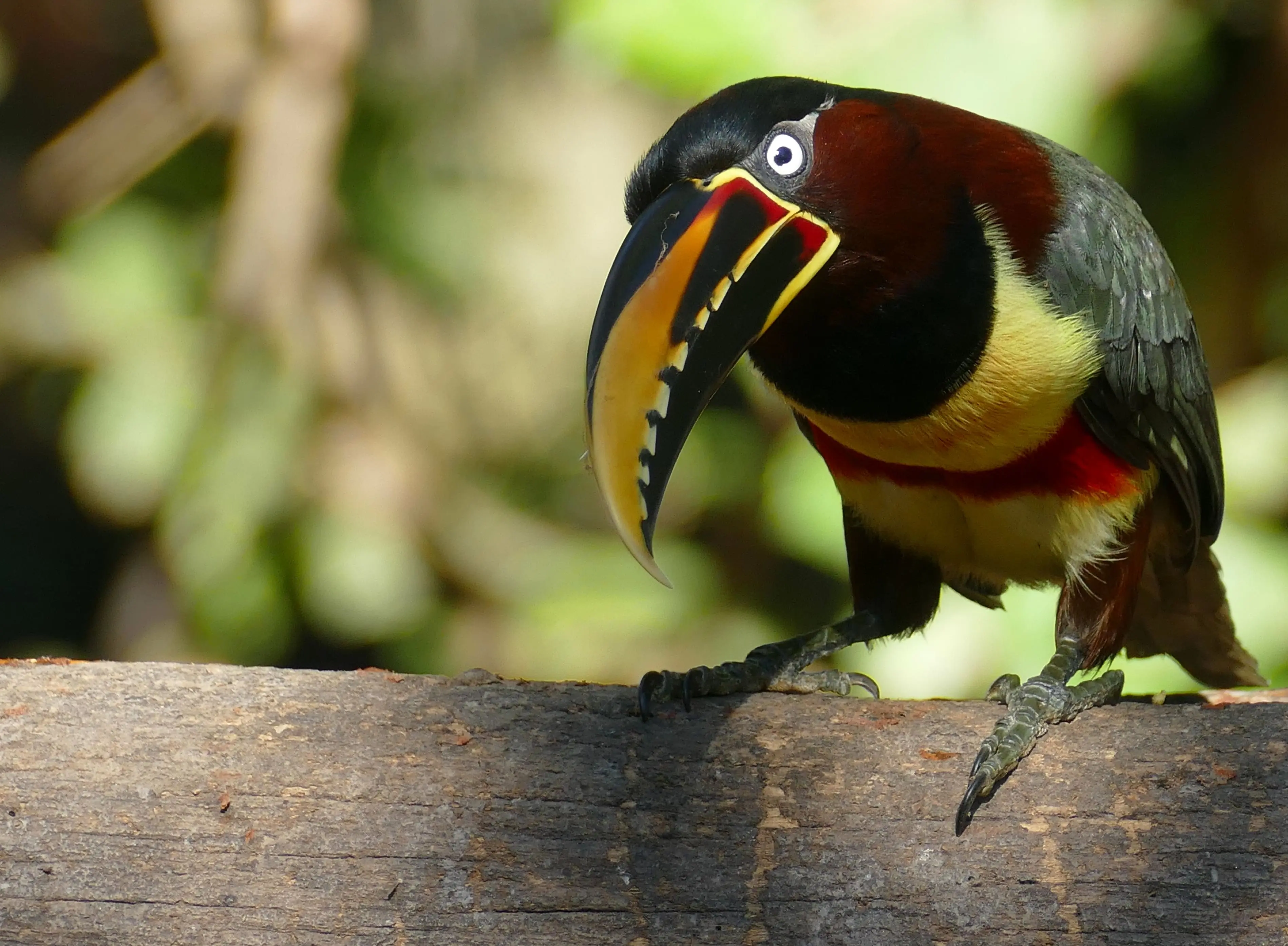
The chestnut-earedarasari is notable for its strikingly contrasting plumage: a dark olive-green back, a black head and a bright yellow belly crossed by a striking red band. Its name derives from the characteristic chestnut-coloured patch behind its eyes, which are surrounded by bluish skin.
Its most striking feature is its long, serrated beak, which is black and yellow in colour, with a distinctive textured upper edge featuring ivory-coloured teeth that it uses to gather food.

Longevity

15 years

Weight

200–300 g

Length

37–47 cm
LC (Least Concern)
LC (Preocupación Menor) Completo

The species is relatively secure in the wild and faces no immediate risk of extinction.

Reproduction

The chestnut-earedarasari is a monogamous species that breeds cooperatively, with several members of the group helping to protect the nest.

Nesting: They use natural cavities in trees or abandoned woodpecker nests, situated at great heights.

Egg-laying and incubation: The female lays between 2 and 4 white eggs. Both parents take turns incubating the eggs for around 16 days.

Caring for chicks: Chicks are born blind and featherless. They remain in the nest for around six weeks until they are ready to fly, during which time the whole group helps to feed them.

Behaviour

It is a highly social, noisy and active species that spends most of its time in the tree canopy.

Social behaviour: They move around and forage in small family groups of 4 to 12 individuals.

Communal roosts: Unlike other toucans, several adults often share the same tree cavity and sleep together there for protection.

Communication: They have a repertoire of shrill, high-pitched calls which they use to maintain group cohesion as they move through the jungle.

Skill and play: These birds are very curious and intelligent; they are often seen interacting with one another through games involving twigs or fruit, which strengthens their social bonds.

Threats

Their communities face growing risks in their natural environment:

Habitat loss and fragmentation: Deforestation for agriculture and livestock farming reduces the forest areas where it lives.

Lack of nesting sites: As they rely on natural cavities or old woodpecker nests in mature trees, selective logging drastically limits their breeding options.

Hunting pressure: In certain parts of its local range, it is hunted for its meat or for its feathers.

Feeding

The chestnut-earedarasari is primarily frugivorous (feeding on ripe fruit), playing a key role in seed dispersal in the rainforest.

Its diet is opportunistic and is supplemented by:

Insects and small arthropods.

Eggs and small vertebrates (occasionally).

Nectar and flowers.

It uses its serrated beak as a precision tool to deftly pluck and handle the fruit.

Distribution

Mapa Geográfico
VU (Vulnerable)
VU (Vulnerable) Completo

It is at high risk of extinction in the medium term.

NT (Near Threatened)
NT (Casi Amenazado) Completo

It is not yet at risk, but could be soon if conditions worsen.

ALL

Not Used

EX (Extinct)
EX (Extinto) Completo

There are no longer any living individuals of the species.

EW (Extinct in the wild)
EW (Extinto en estado silvestre) Completo

Only specimens survive in captivity or in scientific collections.

EN (Endangered)
EN (En Peligro) Completo

It has a very high risk of disappearing in the wild if conservation measures are not taken.

CR (Critically Endangered)
CR (En Peligro Crítico) Completo

It faces an extremely high risk of extinction in the near future.