1. Primates: Gestures and hierarchies
Our monkeys and lemurs are masters of body communication.
-
Ring-tailed lemurs: If you see them raise their tails and wag them at each other, they are in a «scent fight»! They are marking territory without fighting.
-
Squirrel Monkeys and Marmosets: They are very vocal. Their high-pitched chirps are not just noise; they indicate everything from the presence of a bird of prey in the sky to the discovery of a favourite fruit.
-
Brazza and Paws overalls: Notice their facial expressions. An exaggerated yawn or showing of teeth is not always sleep or a smile; it is often a warning sign to set boundaries of respect in the group.
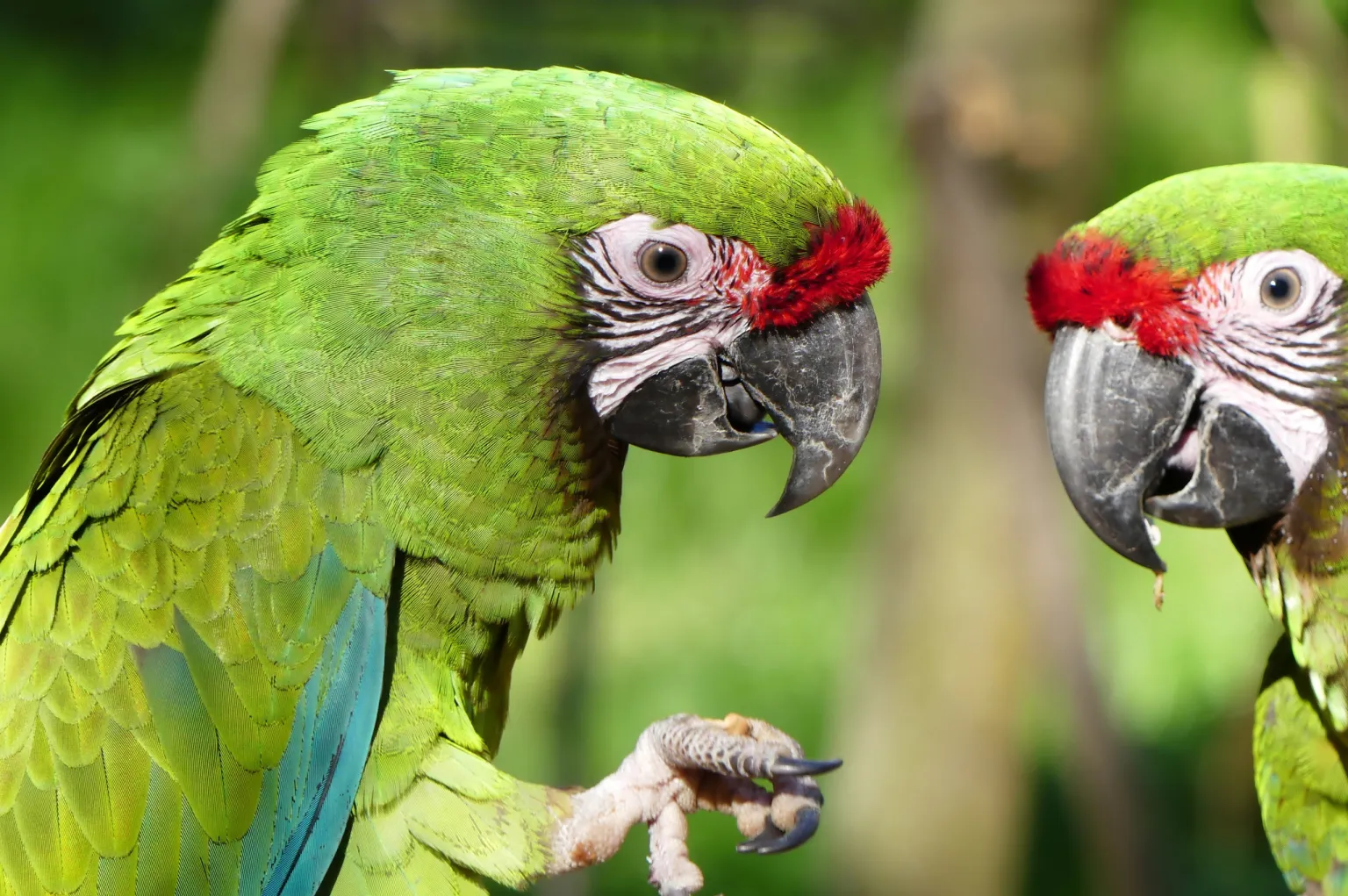
2. Aras y Loros: Much more than words
Although they are famous for imitating voices, their real language is in their feathers and movements.
-
The crest and plumage: If a parrot or guillemot ruffles its feathers and shivers, it may be relaxing or preparing for a bath. But if the feathers on the back of its neck suddenly ruffle, it is very excited or on alert!
-
The «dance» of the head: Rhythmic up and down movements are often signs of courtship or a way of asking for social attention.
3. Reptiles: The Language of Silence
Reptiles don't scream, but their bodies speak loudly.
-
Iguanas: Have you seen how they shake their heads up and down as if to say «yes»? It's a very clear territorial signal to say: «This log is mine».
-
Cuban Boa and Crocodiles: The key is the tongue and posture. The boa uses its forked tongue to «read» the air. A crocodile with its mouth open while resting is not looking for a fight; it is simply regulating its body temperature (thermoregulation).
The scout's advice:
Next time you visit us, choose an animal and observe it silently for 5 minutes. You will see that what seemed like a simple movement is actually a very important message to its environment.
Did you know that...? Brazza's monkeys are known as «white-bearded monkeys» and use their colourful facial fur to recognise each other in the dense vegetation.