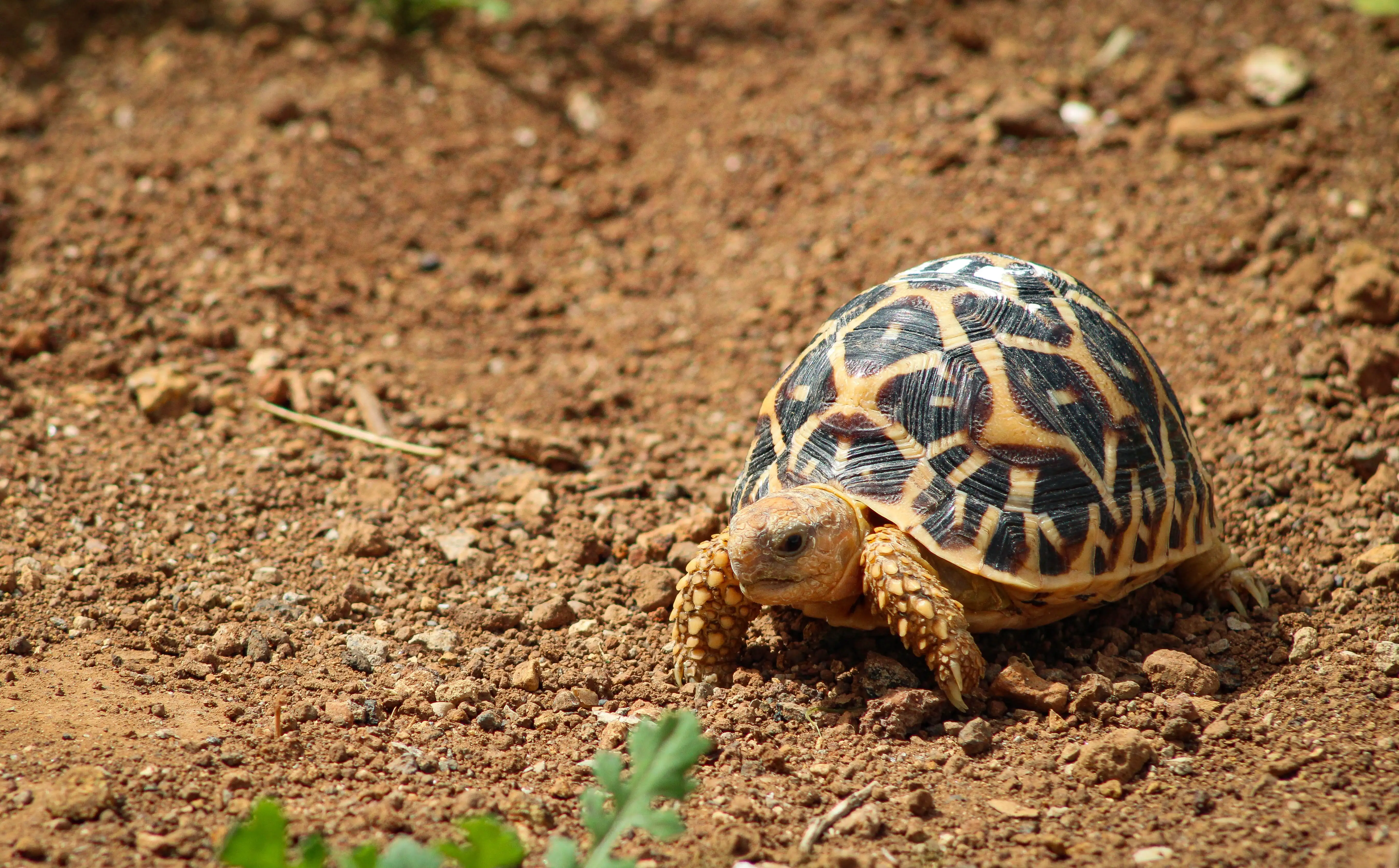
In the heart of our centre, away from the public eye, one of our institution's most ambitious projects is taking shape. The Indian Star Tortoise (Geochelone elegans), a species whose geometric beauty is surpassed only by its fragility in the wild, has become the focus of a renewed conservation effort at our facility.
A commitment to the future
Recently, we have made significant progress in consolidating our breeding and reserve group. Nur domestic population has grown exceptionally, This will enable us to lay the foundations for a long-term breeding programme.
Keeping these tortoises requires an almost poetic balance between environmental humidity and nutrition, critical factors to ensure that new generations grow healthy and strong, overcoming the metabolic challenges this species often faces in captivity.
Why now?
The status of the star tortoise is critical. Illegal trade and pressure on its habitat in South Asia have put it in a vulnerable position. As a conservation centre, our responsibility goes beyond exhibition:
-
Reserve work: We act as a secure genetic reservoir, protecting the species from fluctuations in wild populations.
-
Specialised care: Our keepers work daily in restricted access areas, monitoring the growth of each specimen to ensure its optimal welfare prior to any future phase of the project.
-
Applied science: Every piece of data collected on their behaviour and development in our facilities contributes to the global knowledge needed to save the species from extinction.
Quiet, but constant work
Although these specimens are currently in our restricted-access reserve and breeding areas to guarantee their total peace of mind and correct development, their presence defines the purpose of our zoo.
We work not only for what is seen today, but for what must continue to exist tomorrow. The expansion of this group is a testament to the fact that, with dedication and scientific rigour, it is possible to change the fate of the most endangered species on the planet.