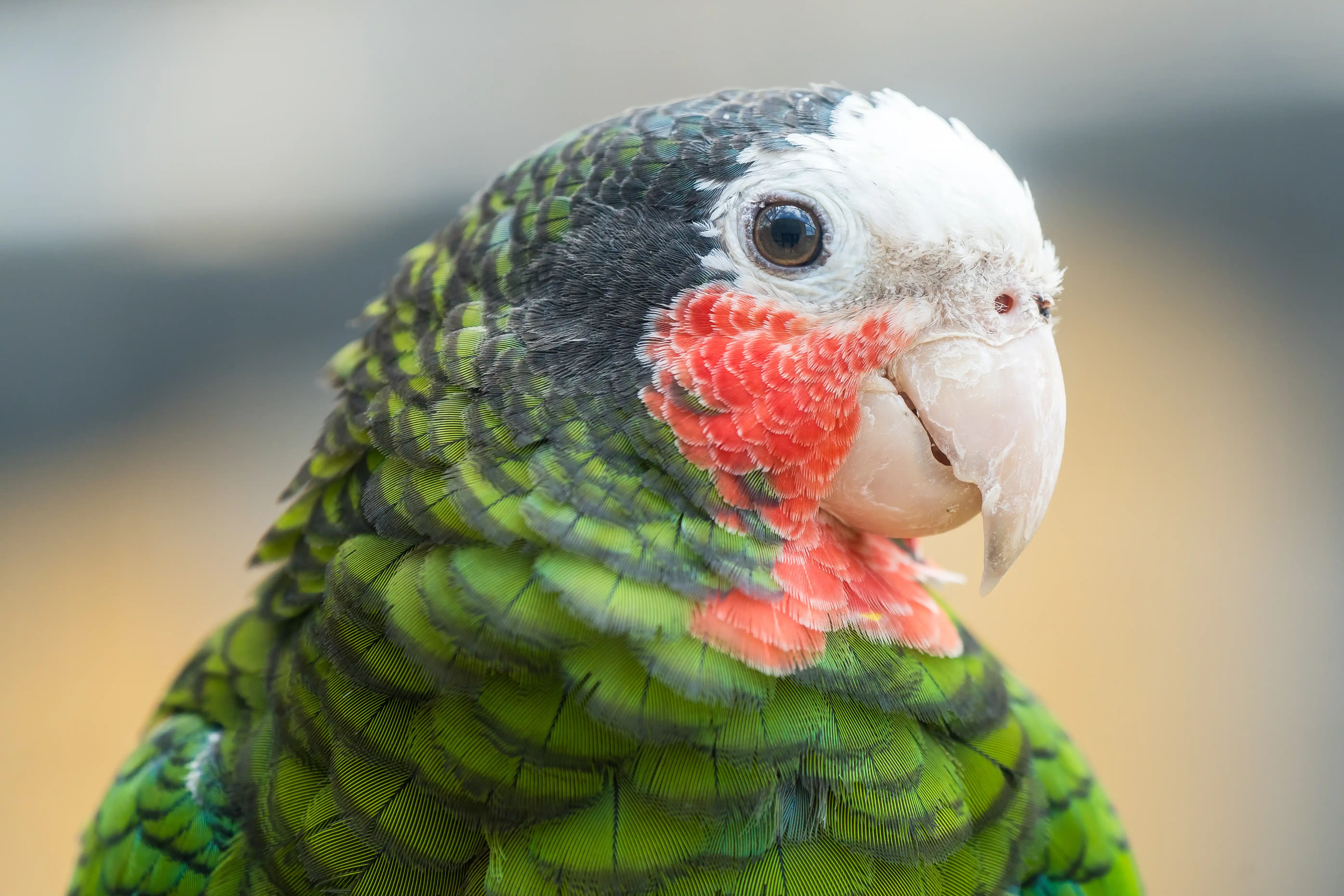
Cuban Parrot

Amazona leucocephala is a medium-sized parrot native to the Caribbean, especially Cuba and some nearby islands.

It is characterised by its bright green plumage, with a distinctive white head and red throat patches.

Longevity

40-60 years

Weight

250-300 gr

Length

28-33 cm
NT (Near Threatened)
NT (Near Threatened) Complete

It is not yet at risk, but could be soon if conditions worsen.

Reproduction

Breeding season is usually between March and July.

These birds nest in tree cavities or palm hollows.

The female normally lays 2 to 4 eggs, which she incubates for approximately 26 to 28 days.

Both parents participate in the care and feeding of the chicks until they are able to fly.

Behaviour

It is a very social and noisy bird, usually living in pairs or small family groups, although outside the breeding season it may form larger flocks.

It has a curious and active behaviour, and uses a variety of vocalisations to communicate with other members of the group.

Threats

The Cuban parrot faces a number of threats in the wild.

The main ones include habitat loss due to deforestation, illegal capture for the pet trade and nest predation.

Although some populations remain stable, the species is considered vulnerable in several areas of its distribution.

Feeding

Their diet is mainly herbivorous and very varied.

It feeds on fruits, seeds, flowers, buds and nuts.

In the wild, it tends to forage in the treetops, where it finds much of the resources it needs.

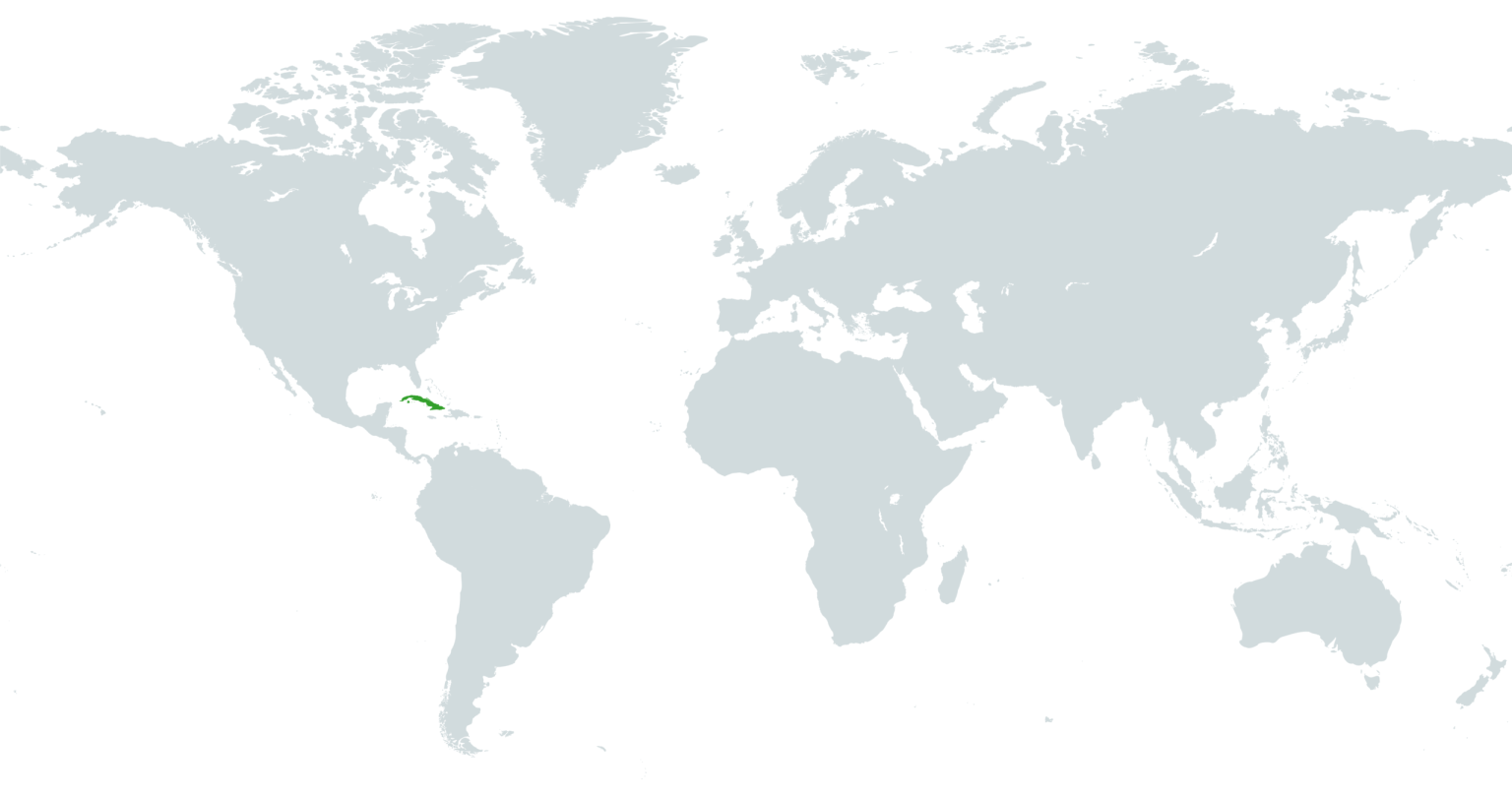
Distribution

Geographic Map
VU (Vulnerable)
VU (Vulnerable) Complete

It is at high risk of extinction in the medium term.

ALL

Not Used

EX (Extinct)
EX (Extinct) Complete

There are no longer any living individuals of the species.

EW (Extinct in the wild)
EW (Extinct in the wild) Complete

Only specimens survive in captivity or in scientific collections.

EN (Endangered)
EN (En Perilous) Complete

It has a very high risk of disappearing in the wild if conservation measures are not taken.

CR (Critically Endangered)
CR (Critically Endangered) Complete

It faces an extremely high risk of extinction in the near future.

LC (Least Concern)
LC (Minor Concern) Complete

The species is relatively secure in the wild and faces no immediate risk of extinction.