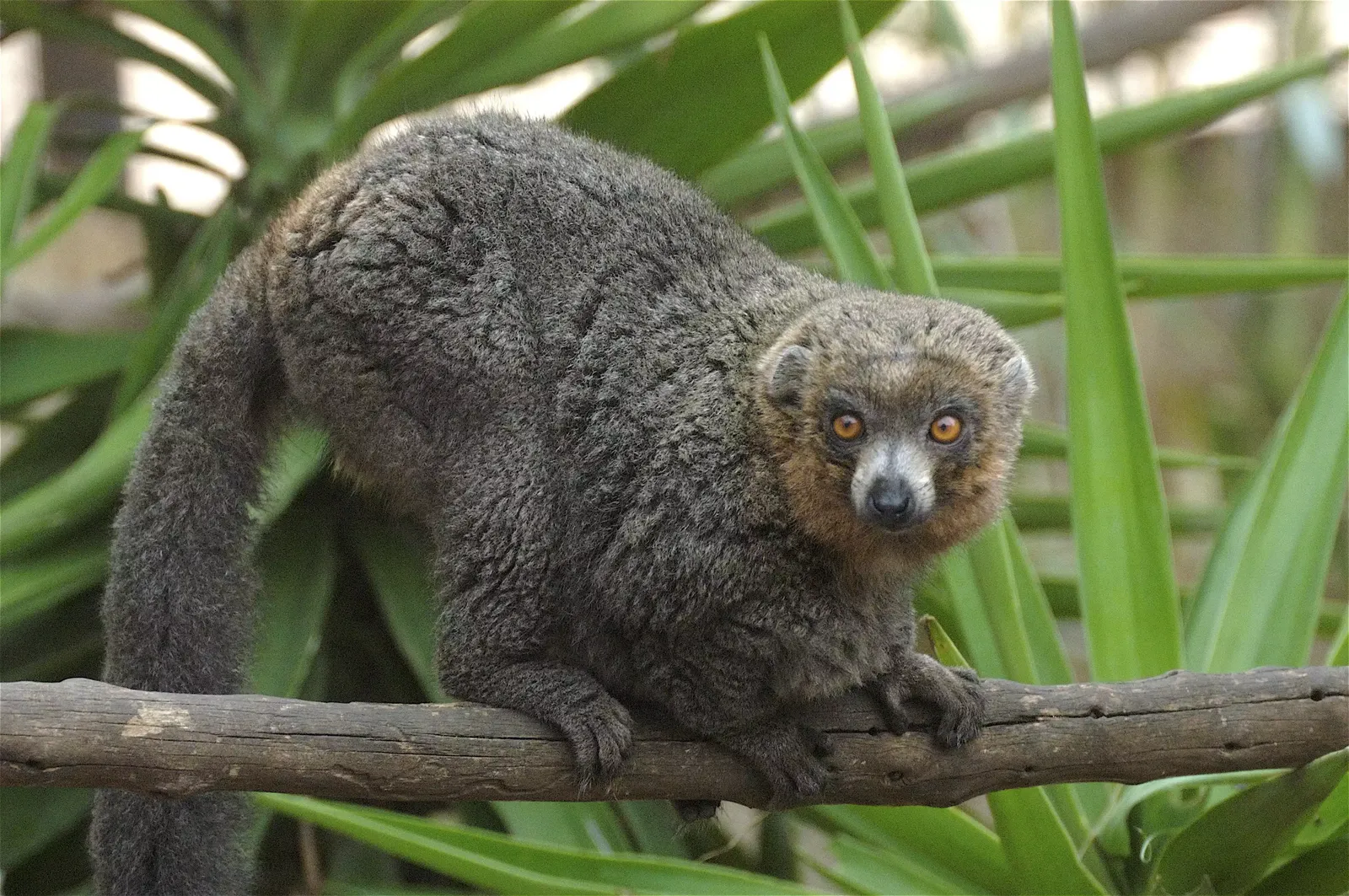
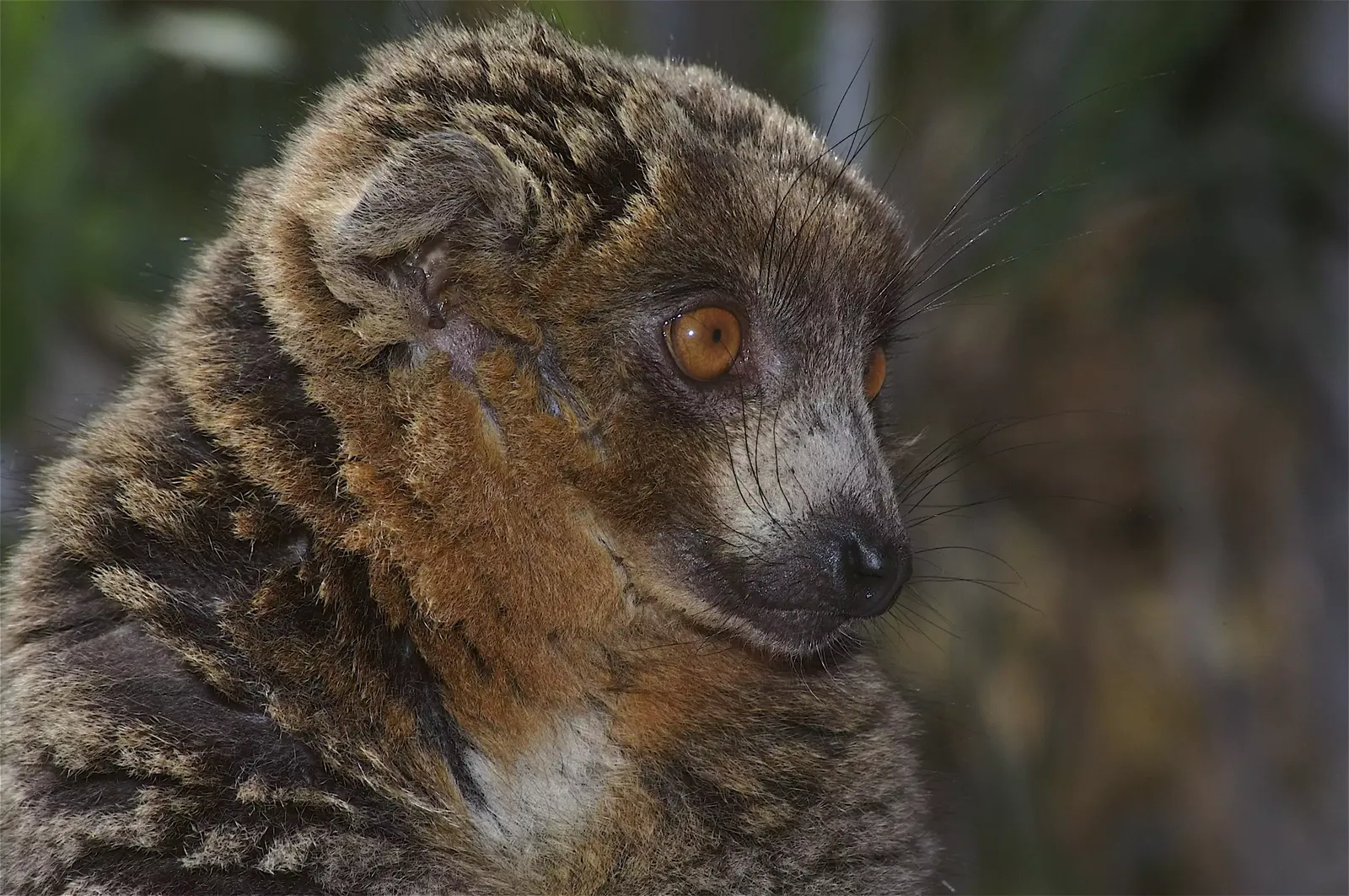
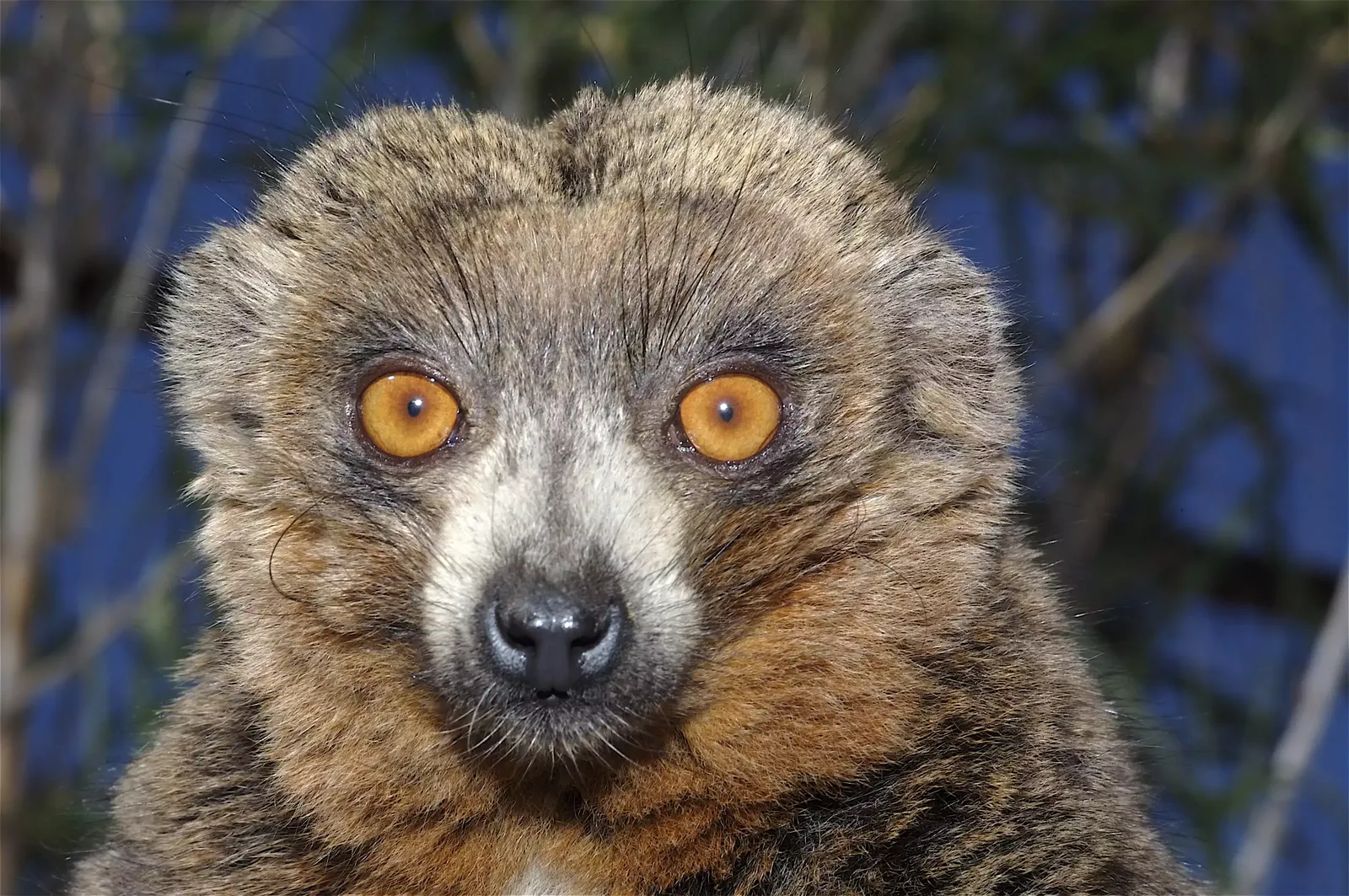
Mongoose lemur

These lemurs are noted for their small size, soft fur and colours that vary according to species, from shades of grey to brown or beige.They have a charming appearance with large, expressive eyes and a long, prehensile tail that helps them move nimbly through the trees.

Longevity

15-25 years

Weight

1.5-2.5 kg

Length

50-60 cm
CR (Critically Endangered)
CR (Critically Endangered) Complete

It faces an extremely high risk of extinction in the near future.

Reproduction

The breeding season generally occurs between September and October.Females give birth to a litter of 1-2 young after a gestation period of approximately 4 months.The young are carried on the mother's belly for the first few weeks and then cling to her back as she moves around.

Behaviour

Mongoose Lemurs are social animals that live in close-knit family groups. You will observe how they interact with grace and affection, communicating through soft vocalisations and delicate gestures. They are known for their ability to leap and climb trees with dexterity, allowing them to forage for food and escape predators.

Threats

Habitat loss due to deforestation and illegal hunting are the main threats to this species.

Feeding

They are mainly frugivorous, meaning that they feed mainly on fruit.They also consume leaves, flowers, nectar and insects.

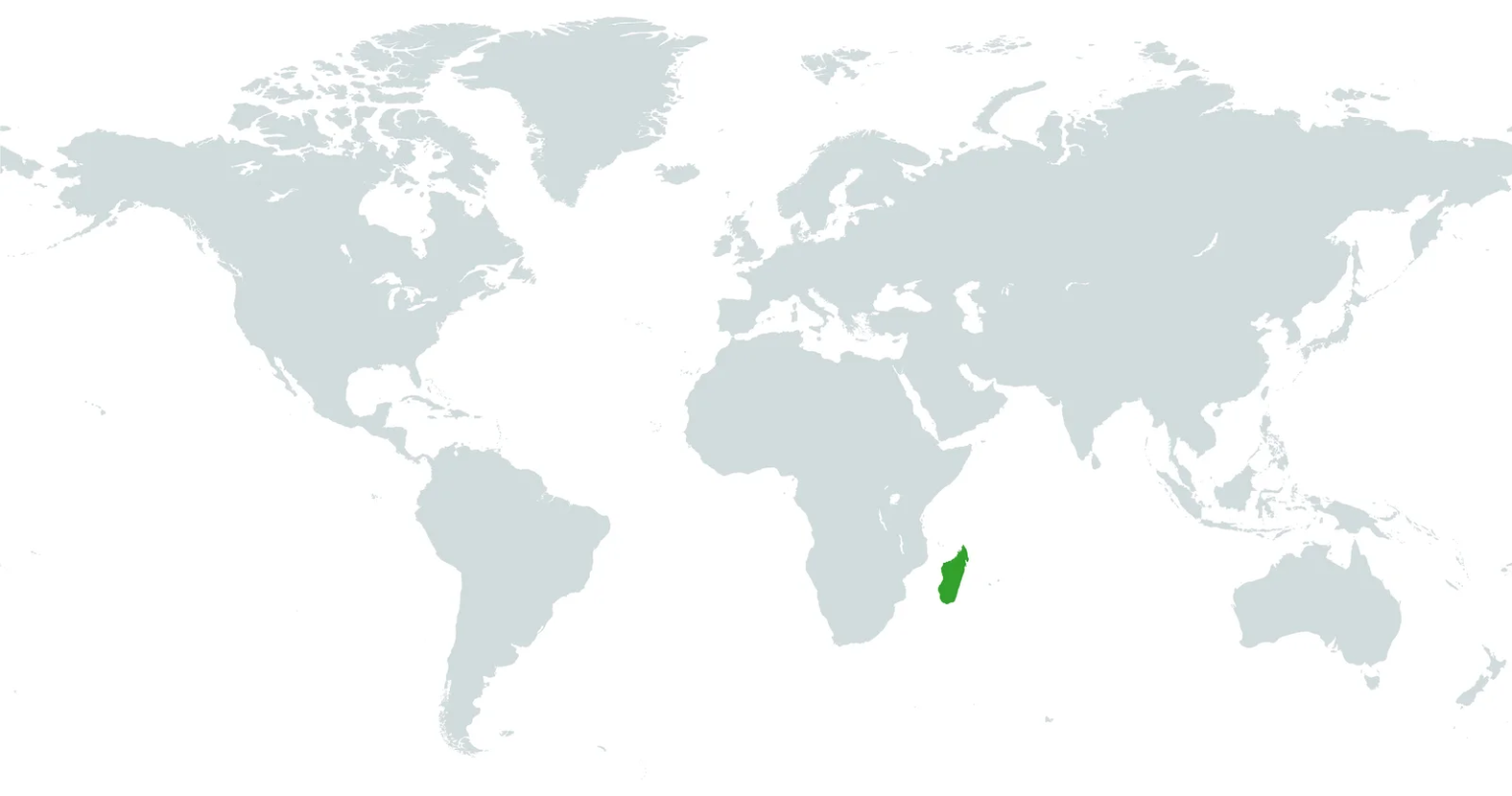
Distribution

Geographic Map
VU (Vulnerable)
VU (Vulnerable) Complete

It is at high risk of extinction in the medium term.

NT (Near Threatened)
NT (Near Threatened) Complete

It is not yet at risk, but could be soon if conditions worsen.

ALL

Not Used

EX (Extinct)
EX (Extinct) Complete

There are no longer any living individuals of the species.

EW (Extinct in the wild)
EW (Extinct in the wild) Complete

Only specimens survive in captivity or in scientific collections.

EN (Endangered)
EN (En Perilous) Complete

It has a very high risk of disappearing in the wild if conservation measures are not taken.

LC (Least Concern)
LC (Minor Concern) Complete

The species is relatively secure in the wild and faces no immediate risk of extinction.