
Florida turtle

Longevity
20-40 years
Weight
1-1.5 kg
Length
12–40 cm

20-40 years
1-1.5 kg
12–40 cm






The species is relatively secure in the wild and faces no immediate risk of extinction.
The incubation period lasts 80 to 90 days, and they reach sexual maturity at 5 years of age. They lay between 2 and 20 eggs, which they bury at a shallow depth.
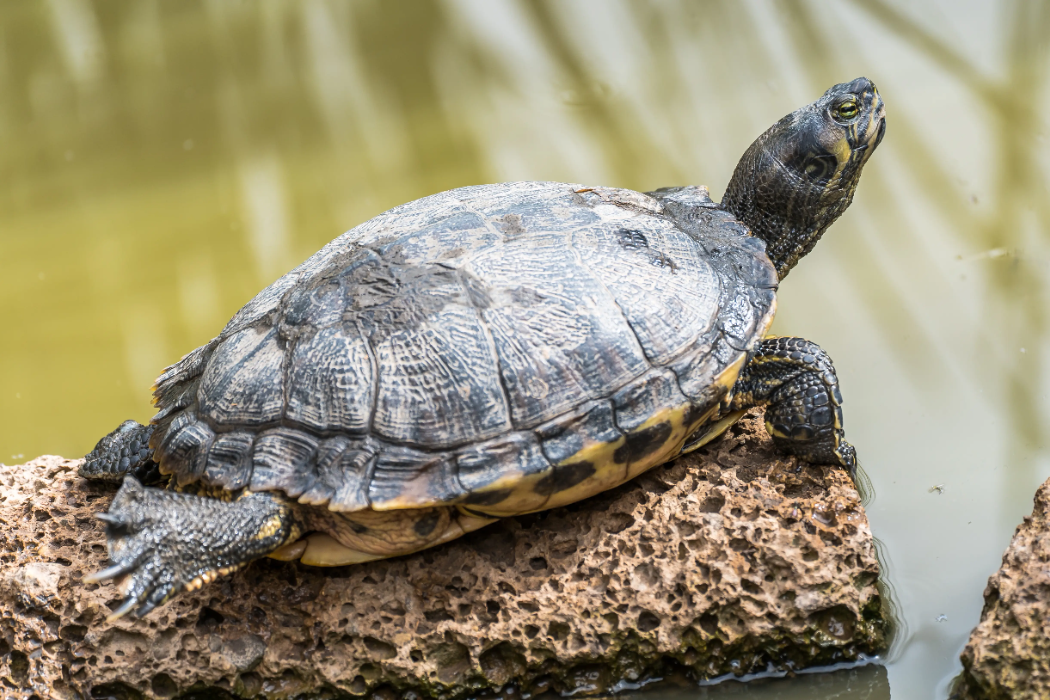
They are excellent swimmers and spend a lot of time in the water. They also enjoy sunbathing on logs or rocks near the water. They are active during the day and feed mainly in the water. Males have longer claws and wider tails than females. Females grow to a larger size.
Pollution, habitat destruction, and capture for pets are the main threats to this species. Despite this, its native population is well distributed, and the IUCN classifies it as "Least Concern".
The diet of the red-eared slider is opportunistic and omnivorous. They consume both plant matter and invertebrates, and occasionally small vertebrates. Hatchlings are more carnivorous, but as they age, their diet becomes more plant-based.


It is at high risk of extinction in the medium term.

It is not yet at risk, but could be soon if conditions worsen.

Not Used

There are no longer any living individuals of the species.

Only specimens survive in captivity or in scientific collections.

It has a very high risk of disappearing in the wild if conservation measures are not taken.

It faces an extremely high risk of extinction in the near future.