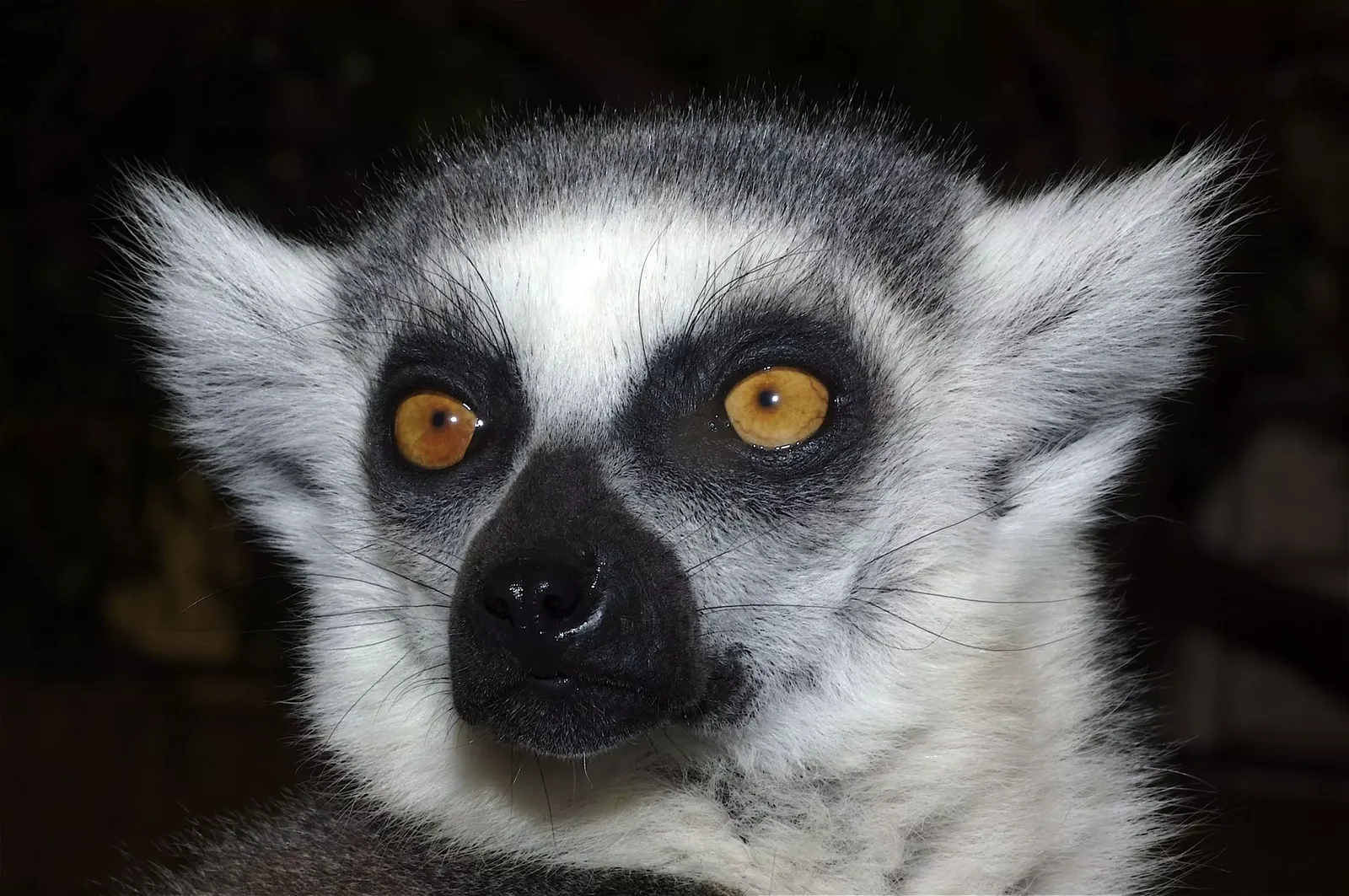
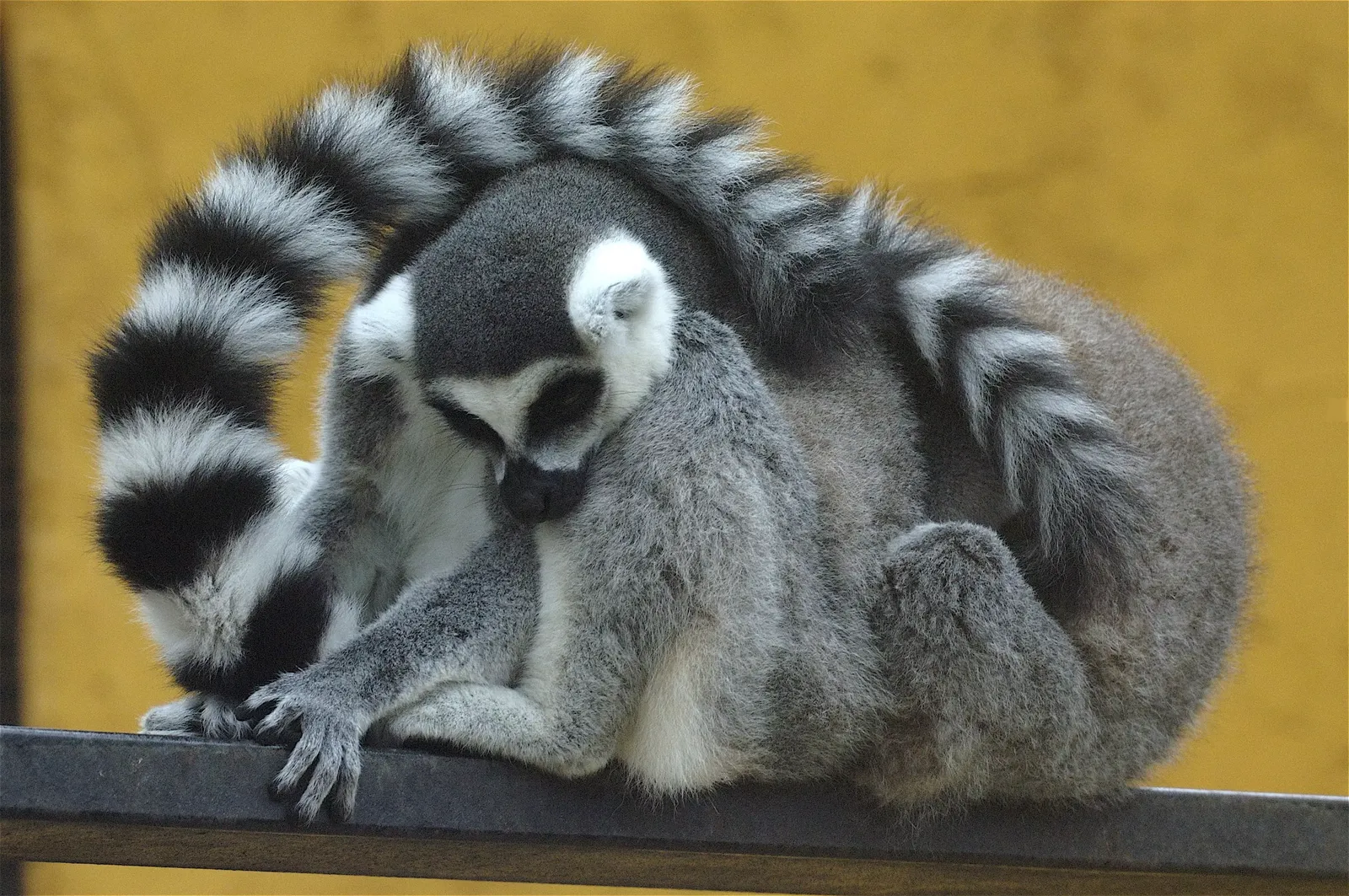
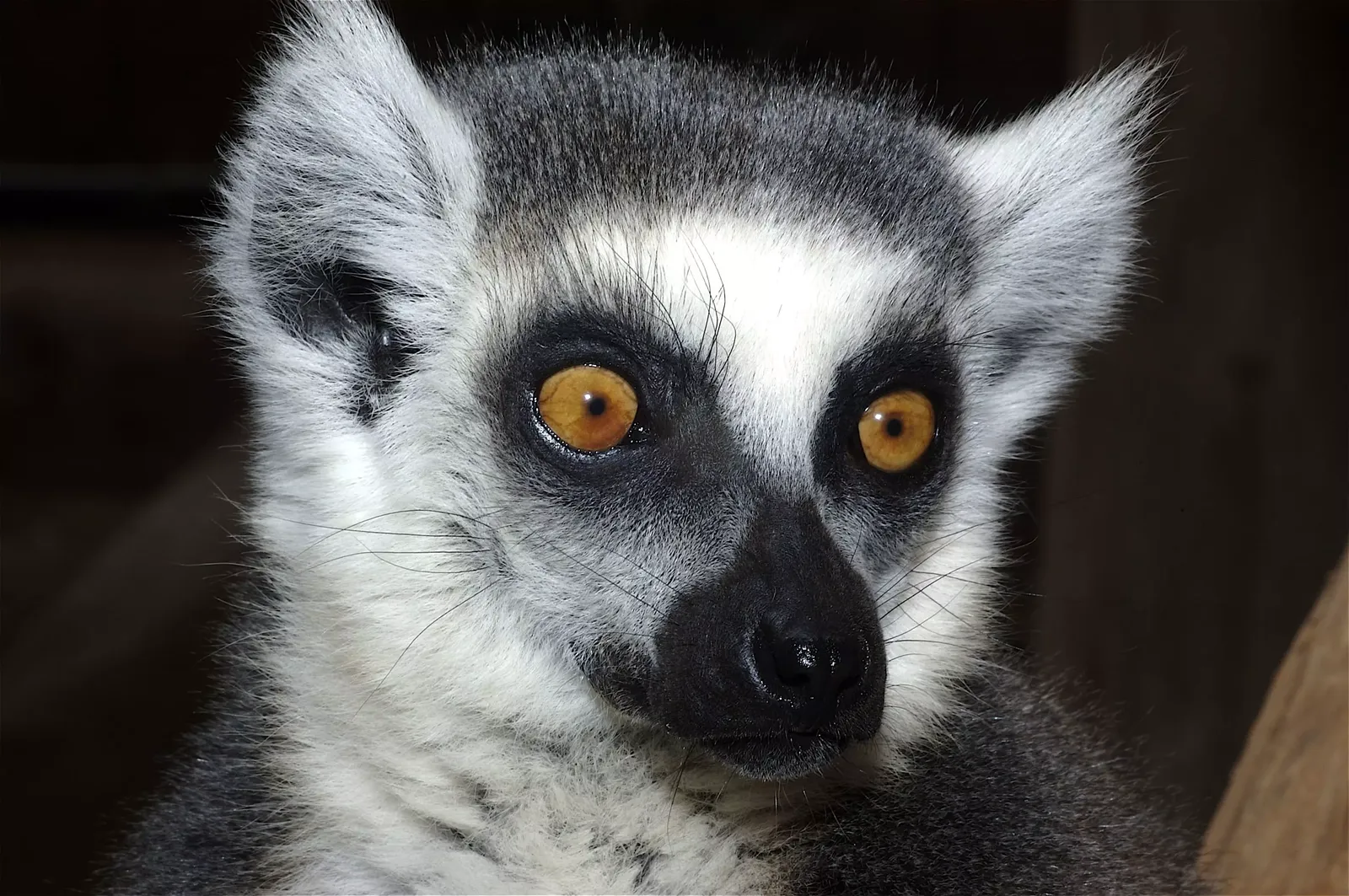
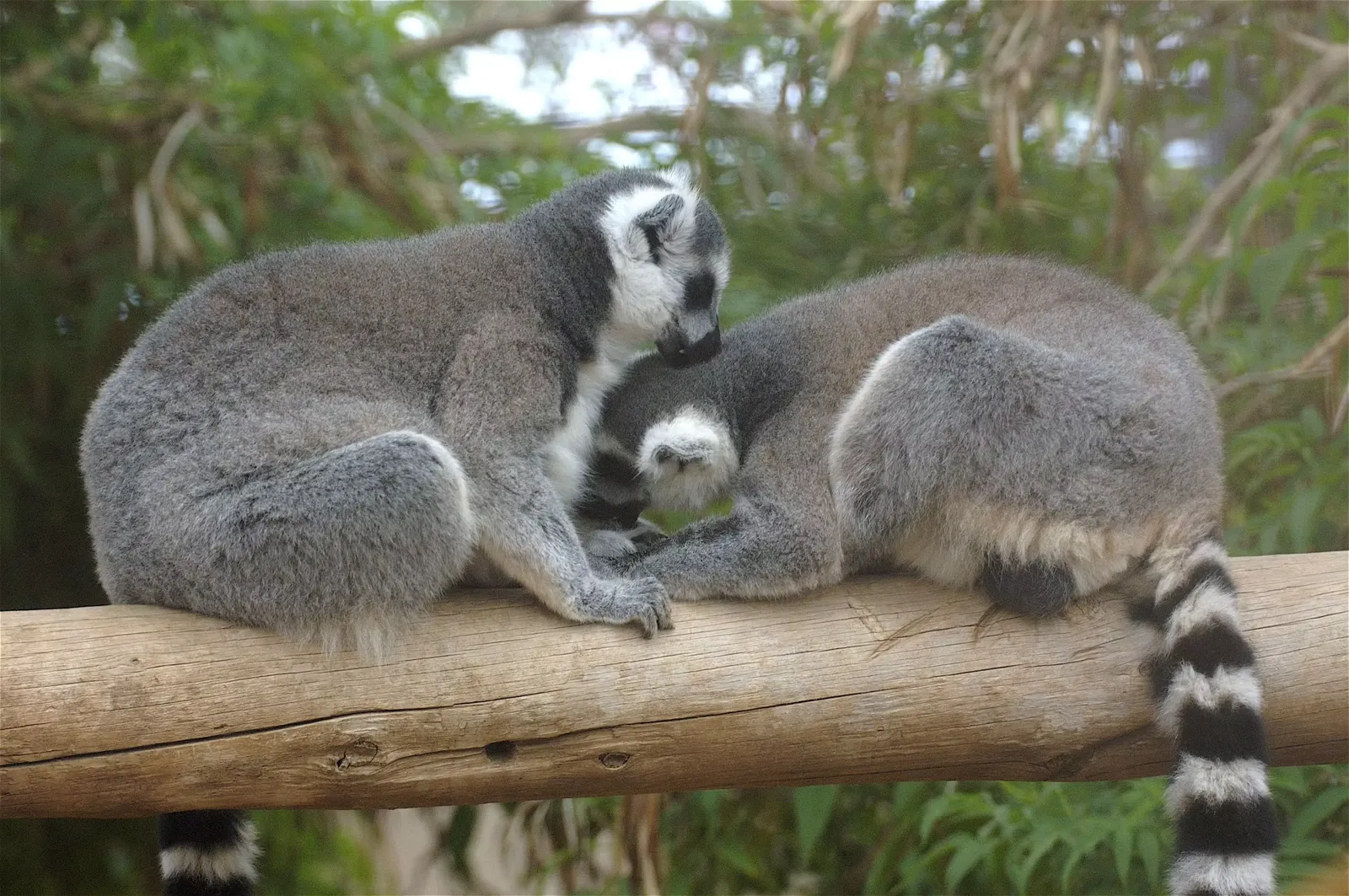
It is a slender animal with a narrow, elongated muzzle. Its coat is dense and in the areas of the throat, stomach and ears it is usually grey to cream.
throat, stomach and ears is usually grey to cream, while on the back it is usually greyish-brown.
greyish-brown on the back. It has a long ringed tail and strong legs that enable them to
to move over land without difficulty.
It has a very high risk of disappearing in the wild if conservation measures are not taken.
Reproduction
Breeding season is usually between April and May.
Mating usually occurs between individuals of the same group. Females stagger their receptivity to reduce competition for male attention.
Gestation lasts approximately 135 days and calving takes place in September or occasionally in October.
Behaviour
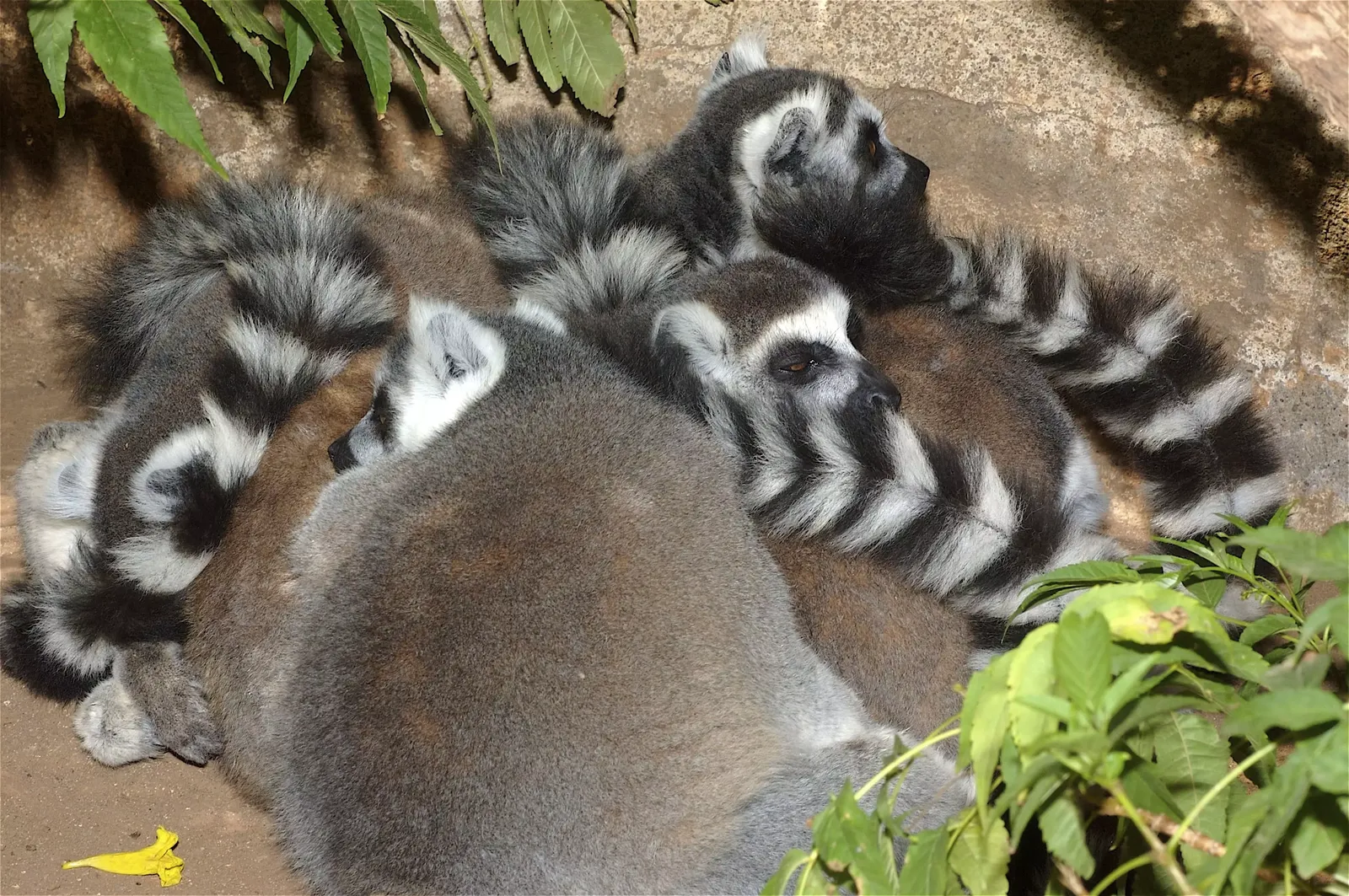
It is a highly social species that lives in groups of up to thirty individuals. They are diurnal animals and, among the lemurs, are one of the most terrestrial.
Threats
The wild population of the ring-tailed lemur is endangered by deforestation, fires, urban development,
overgrazing by livestock and logging that have destroyed most of their natural habitat.
On the other hand, there is also local hunting and trafficking of exotic pets.
Feeding
The ring-tailed lemur is an opportunistic omnivore that feeds mainly on fruits, leaves (particularly those of the tamarind tree), flowers, bark and sap.
Distribution
VU (Vulnerable)
It is at high risk of extinction in the medium term.
NT (Near Threatened)
It is not yet at risk, but could be soon if conditions worsen.
ALL
Not Used
EX (Extinct)
There are no longer any living individuals of the species.
EW (Extinct in the wild)
Only specimens survive in captivity or in scientific collections.
CR (Critically Endangered)
It faces an extremely high risk of extinction in the near future.
LC (Least Concern)
The species is relatively secure in the wild and faces no immediate risk of extinction.