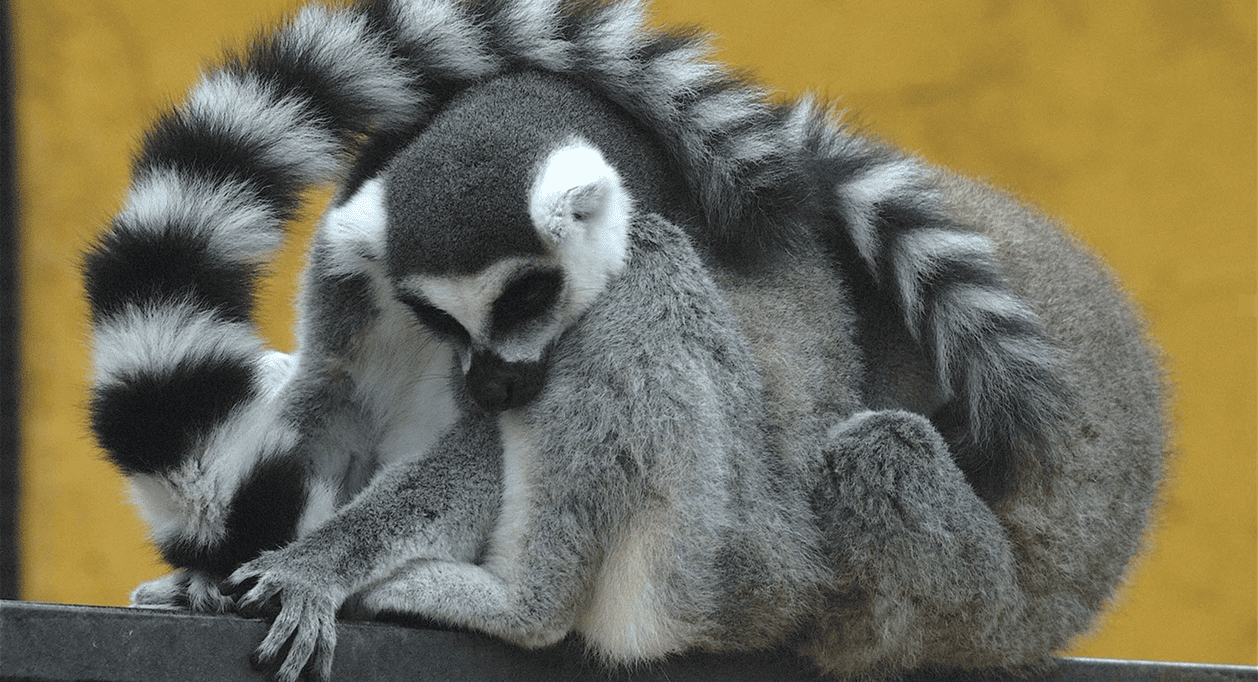
Ring-tailed lemurs, also known scientifically as Lemur catta, are one of the world's most iconic and recognisable primates. However, despite their popularity, these animals are in a rather delicate state of conservation.
IUCN classification
The International Union for Conservation of Nature (IUCN) classifies ring-tailed lemurs as an endangered species. This classification is due to a number of threats that are putting these species at risk.
Main threats
The main threats to the survival of ring-tailed lemurs are deforestation, poaching and habitat loss. In addition, capture for the pet trade is also putting these species at risk.
Deforestation and fires have destroyed most of their natural habitat. Urban development, overgrazing by livestock and logging have also contributed to habitat loss.
Conservation Measures
Despite threats, measures are being taken to protect ring-tailed lemurs. They are found in several protected areas, including the Beza Mahafaly Special Reserve and the Berenty Private Reserve.
Current population of ring-tailed lemurs
In Madagascar: The population of ring-tailed lemurs in Madagascar has declined by more than 50% in the last 30 years due to the reduction of space in their natural habitat. According to the IUCN Red List of Threatened Species, it is estimated that approximately 2,000 to 2,400 ring-tailed lemurs remain in the wild.
In the World: In terms of the world population of ring-tailed lemurs, it breeds easily in captivity and is the lemur with the largest zoo population in the world, with about 2,000 individuals. However, it is important to note that these numbers are estimates and may vary.
These data highlight the importance of conservation efforts to protect ring-tailed lemurs and their habitat in Madagascar. Deforestation, poaching and illegal animal trade are serious threats to their survival, and it is crucial that action is taken to address these problems.
Our work at Monkey Park
At Monkey Park, we are proud to house over 20 ring-tailed lemurs, organised in groups and pairs to promote their social well-being. Our main aim is to provide them with a safe, comfortable and optimal breeding environment, as we strongly believe in the importance of maintaining and protecting this species.
Our commitment to the conservation of ring-tailed lemurs goes back many years. This commitment is not just a responsibility, but a passion that we share with every member of our team.
We are very pleased to share that our efforts have paid off. At Monkey Park, our lemurs have not only found a home, but also a place to thrive. We have had the joy of witnessing the birth of new offspring, thus contributing to the increase in the total number of individuals of this species.
Conclusion
It is crucial that we continue conservation efforts to protect ring-tailed lemurs. Despite the threats they face, there is hope for these animals if we work together to protect their habitat and put an end to poaching and the pet trade.