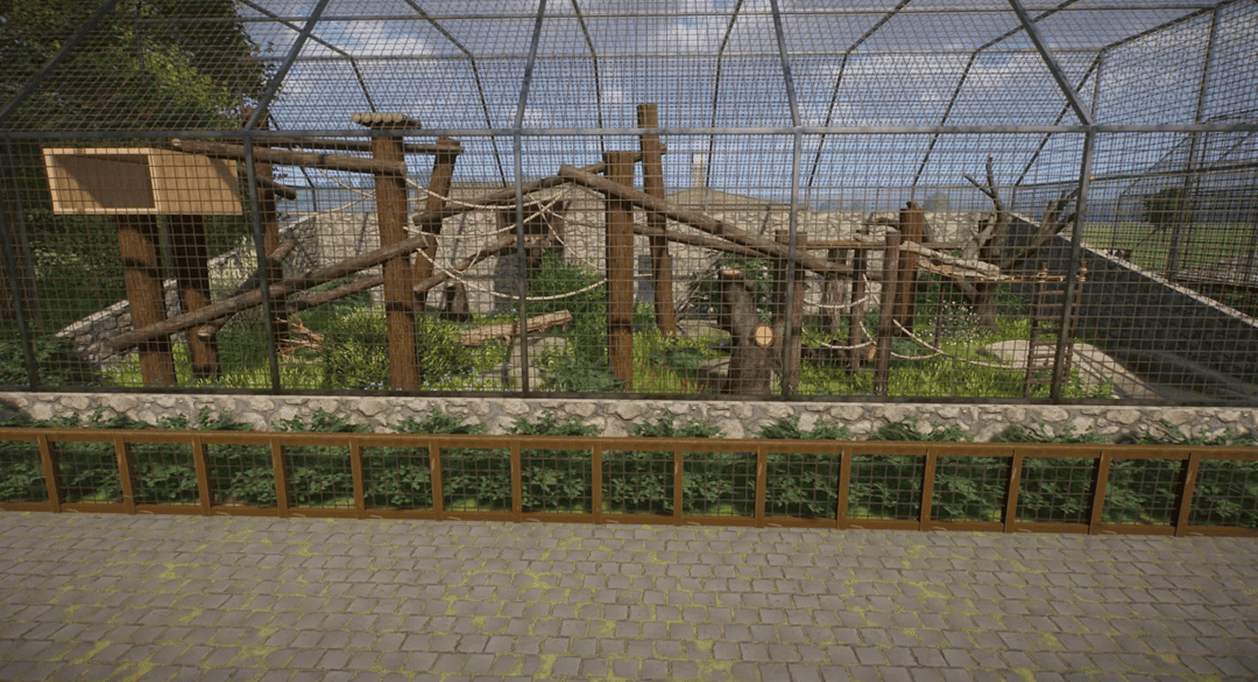
In a world where concern for animal welfare is constantly growing, at Monkey Park we have made a bold and informed choice: we have opted for wire mesh habitats rather than islands to house our animals. In this post, we will explore the reasons behind this choice, highlighting the importance of ensuring a safe and healthy environment for our animals.
Animal welfare as a priority
Our primary concern is the welfare of the animals at Monkey Park. We believe that all zoos have a responsibility to provide an environment that meets the physical and emotional needs of its inhabitants. The global community is increasingly aware of the importance of this issue, and we are no exception.
Aesthetics vs. animal welfare
While we understand that islands may appear more aesthetically appealing to our visitors, we firmly believe that visual beauty should not trump the welfare of our animals. Our primary focus is to provide an environment that meets their needs.
Education and awareness-raising
This choice gives us the opportunity to educate our visitors about the importance of animal welfare and the reasons behind our design decisions. We want everyone who visits Monkey Park to understand that we are committed to the lives of our residents and that this is our top priority.
Long-term commitment
Our commitment to animal welfare does not stop here. We will continue to invest in environmental enrichment, research and conservation programmes. We are constantly looking for ways to improve and enrich the lives of our animals and contribute to the conservation of endangered species.
Disadvantages of island cages for monkeys
Despite the aesthetic appeal that island cages can offer our visitors, it is important to recognise that this type of environment can bring significant challenges for our monkeys and other animals:
1. Limited usable space
Island habitats often provide more limited usable space compared to wire mesh habitats. This can restrict the monkeys' ability to move and explore, which is not ideal for their welfare.
2. Fear of water
Most monkeys have an innate fear of water. Island habitats, being surrounded by water, can cause them stress and anxiety, which does not contribute to their well-being.
3. Risk of falls
The presence of water around the islands can lead to deep separation pits. In cases of a fall, monkeys can be seriously injured. The depth of water in these cages can be dangerous for non-aquatic animals.
4. Limitations on environmental enrichment
Islands can make it difficult to implement adequate environmental enrichment for monkeys, as space is limited and the environment is more rigidly configured. This can negatively affect their mental and physical stimulation.
5. Difficulties in health monitoring
Monitoring and health care of monkeys in island habitats can be more challenging due to the geographical layout of the environment. This may delay detection of medical or behavioural problems.
6. Constraints to socialisation
For most monkey species, socialisation is fundamental to their emotional well-being. Island habitats can make it difficult for individuals to interact with each other, which can negatively affect their mental and emotional health.
7. Restrictions on habitat diversity
Island habitats often offer limited and homogenous space compared to wire mesh cages, which does not allow for the same diversity of plants and natural elements that monkeys might encounter in the wild. This can limit their ability to perform natural behaviours.
8. Increased difficulty for conservation
In zoos involved in breeding and conservation programmes for endangered species, islands can make it difficult to manage, monitor reproduction and care for the animals, which is essential for the preservation of endangered species.
9. Isolation from social groups
For monkey species living in social groups, islands can physically separate individuals, which can lead to isolation and negatively affect their group dynamics and well-being.
10. Constraints to rehabilitation and rescue
In situations where injured or orphaned monkeys are rescued or rehabilitated, wire mesh habitats allow for better adaptation and preparation for reintroduction into the wild, as they offer a more versatile and secure environment for this purpose.
11. Flood risk and climate change
Islands, being surrounded by water, may be more susceptible to flooding, especially in areas prone to extreme weather changes. This could expose monkeys to dangerous situations during adverse weather events.
12. Difficulty in the distribution of food and water.
Delivering food and water to monkeys on islands can be more complicated and require special logistics. This could lead to delays in feeding and difficulties in ensuring adequate access to these essential resources.
13. Stress due to lack of privacy
Constant exposure to the view of visitors on islands may cause stress for some monkeys, as they may feel continuously observed. Wire-mesh habitats offer greater privacy, which may be beneficial to the welfare of the animals.
14. Increased wear and tear on installations
Islands can be exposed to extreme weather conditions, which can cause faster wear and tear on structures and require constant maintenance.
15. Increased wear and tear on installations
The isolation provided by islands can make it difficult to control pests and prevent disease, which is essential to ensure the health of monkeys and other animals.
In conclusion
In summary, while islands may have visual appeal, it is important to consider the disadvantages they present to the monkeys' welfare. At our zoo, we have opted for wire mesh cages as an alternative that prioritises the health and welfare of our animals, allowing them more usable space, security and enrichment opportunities.
Considering these disadvantages, our choice of wire mesh habitats is based on the premise of providing a safer and healthier environment for our monkeys and other zoo residents. Our commitment to animal welfare and conservation remains a constant priority in our zoological management approach.