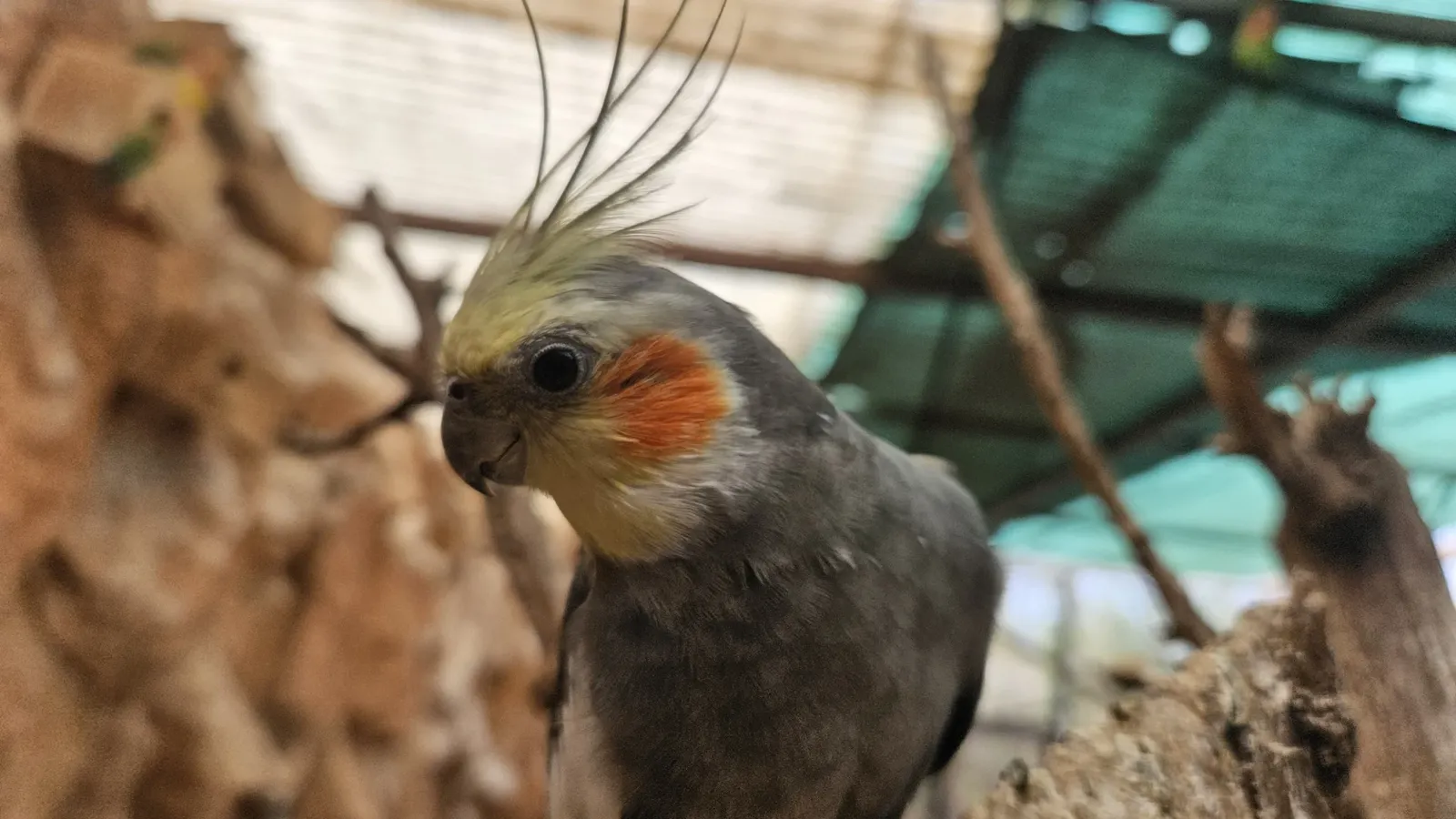
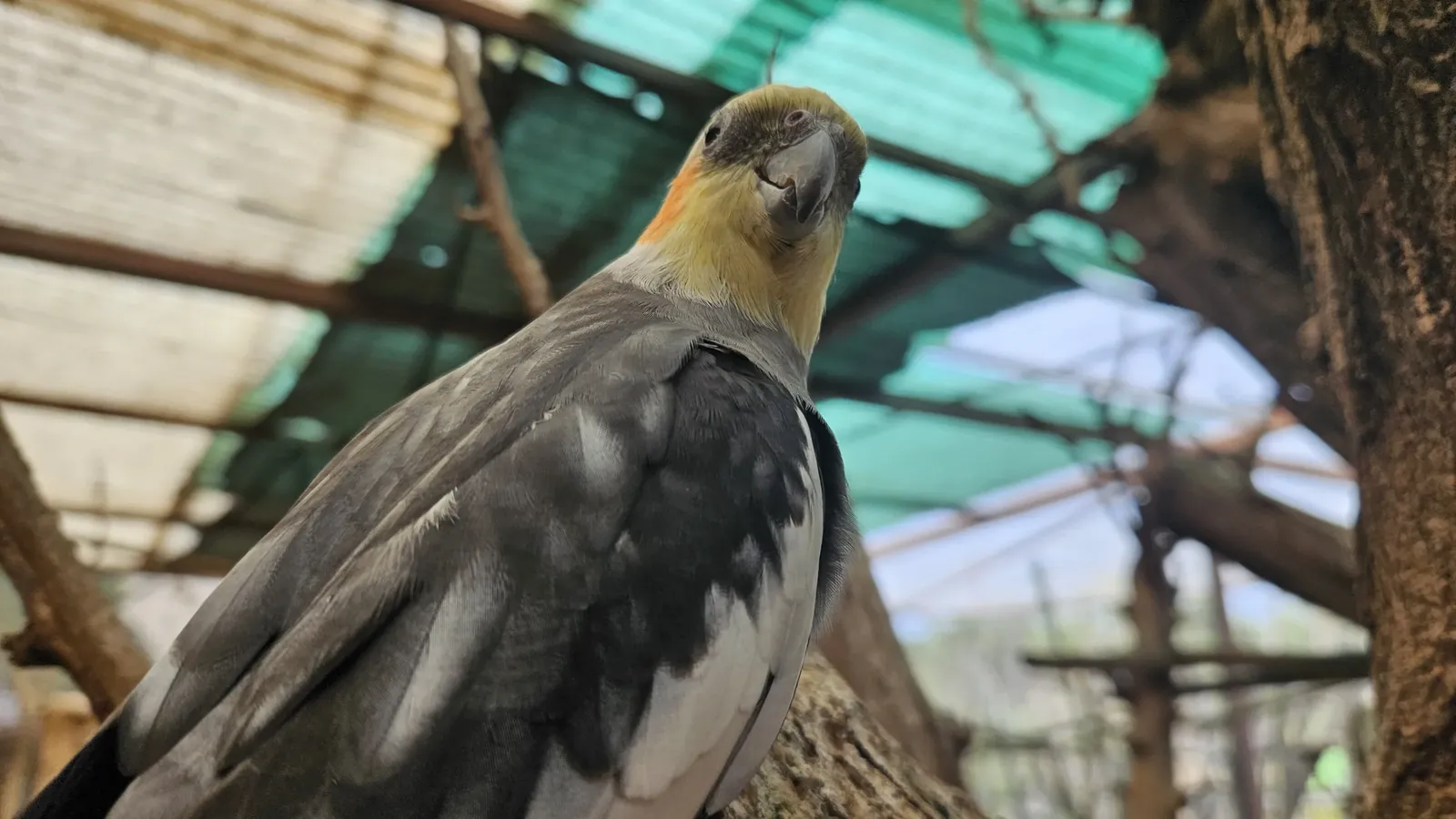
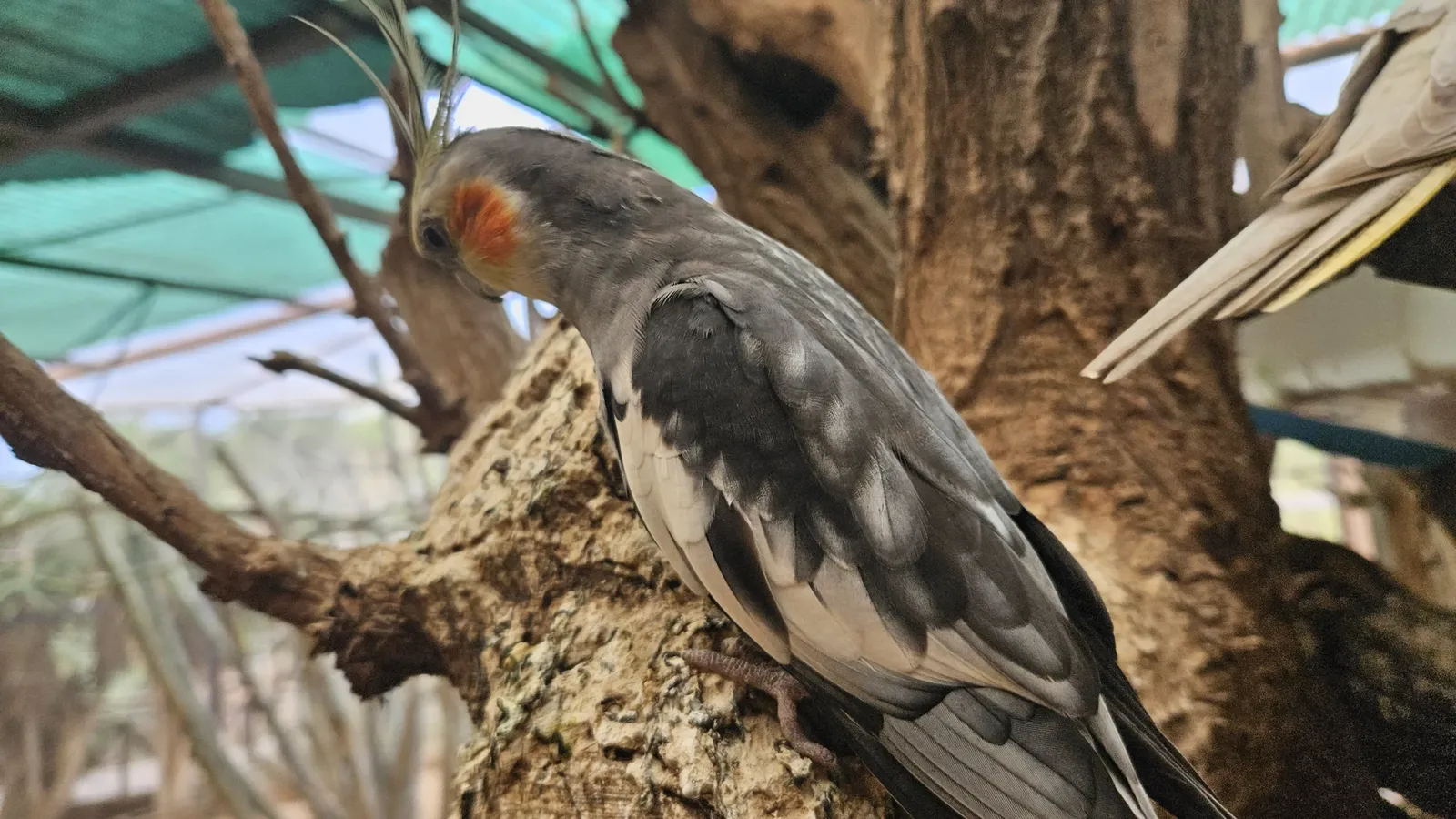
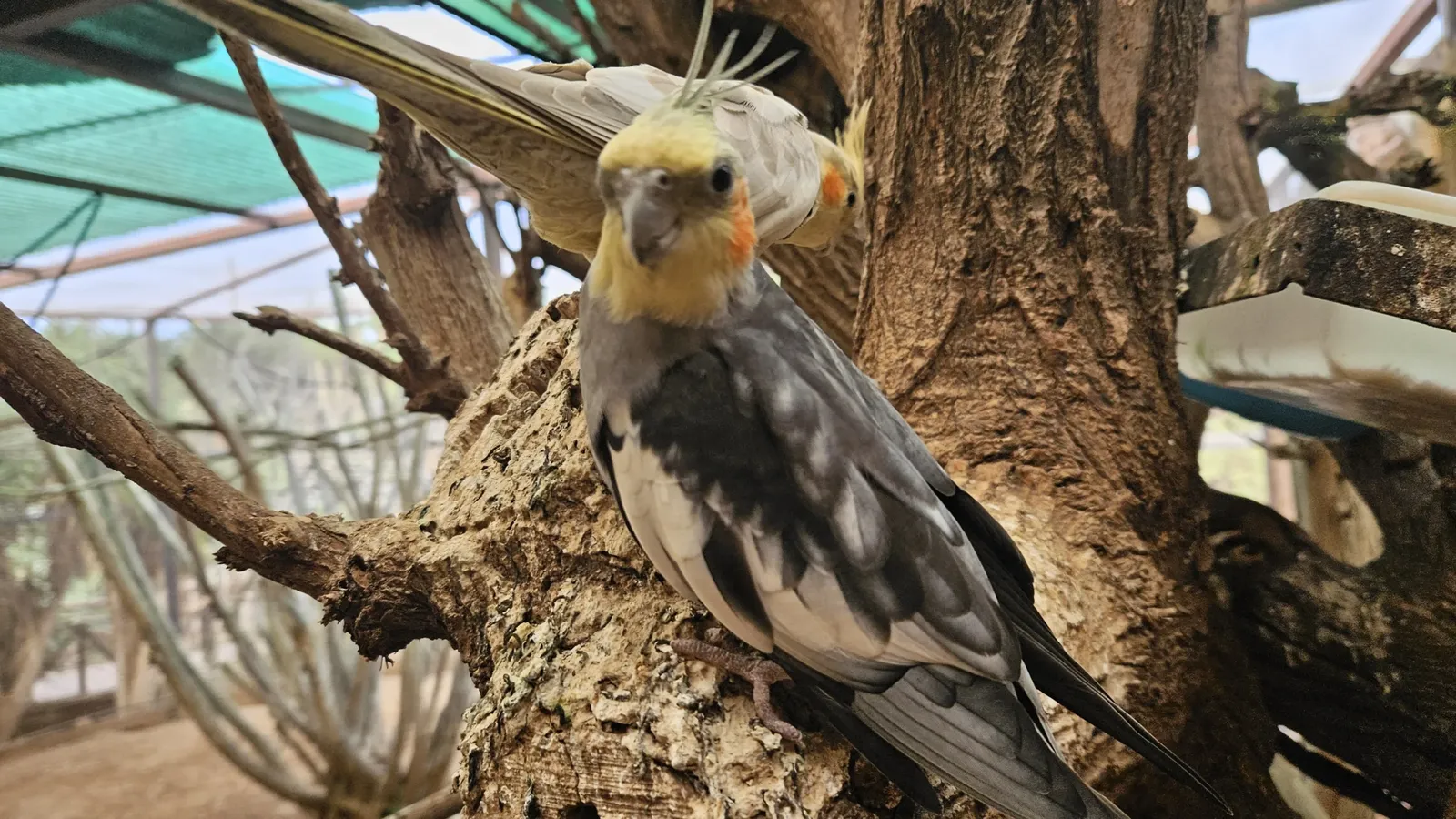
It is a charming species of bird belonging to the cockatoo family.
Native to Australia, these birds are named for their smaller size compared to other cockatoos, as well as their colourful and distinctive tufts of feathers on their heads.
With predominantly white plumage and soft-toned cheeks, the nymph cockatoo is known for its playful and social personality.
These birds make excellent companions and can learn to imitate sounds and words, making them popular pets.
They have an erectile crest and long tail feathers. Their plumage is generally grey, with an orange patch on each cheek. There are different plumage varieties (white nymph, pearly, grey, etc.).
The species is relatively secure in the wild and faces no immediate risk of extinction.
Reproduction
They can breed from the age of 7 months, but it is recommended to wait at least one year. They lay eggs all year round, but ideally not more than three times a year.
Behaviour
In the wild, they move in groups of up to 100 birds in search of water and food.
Threats
Peregrine falcons and bold eagles are natural predators. So are monitor lizards, which climb into the nymphs' nests.
Feeding
The right diet is critical to their health. It should include a mixture of fresh seeds, fruits, vegetables and bird-specific vitamin supplements.
Distribution
VU (Vulnerable)
It is at high risk of extinction in the medium term.
NT (Near Threatened)
It is not yet at risk, but could be soon if conditions worsen.
ALL
Not Used
EX (Extinct)
There are no longer any living individuals of the species.
EW (Extinct in the wild)
Only specimens survive in captivity or in scientific collections.
EN (Endangered)
It has a very high risk of disappearing in the wild if conservation measures are not taken.
CR (Critically Endangered)
It faces an extremely high risk of extinction in the near future.