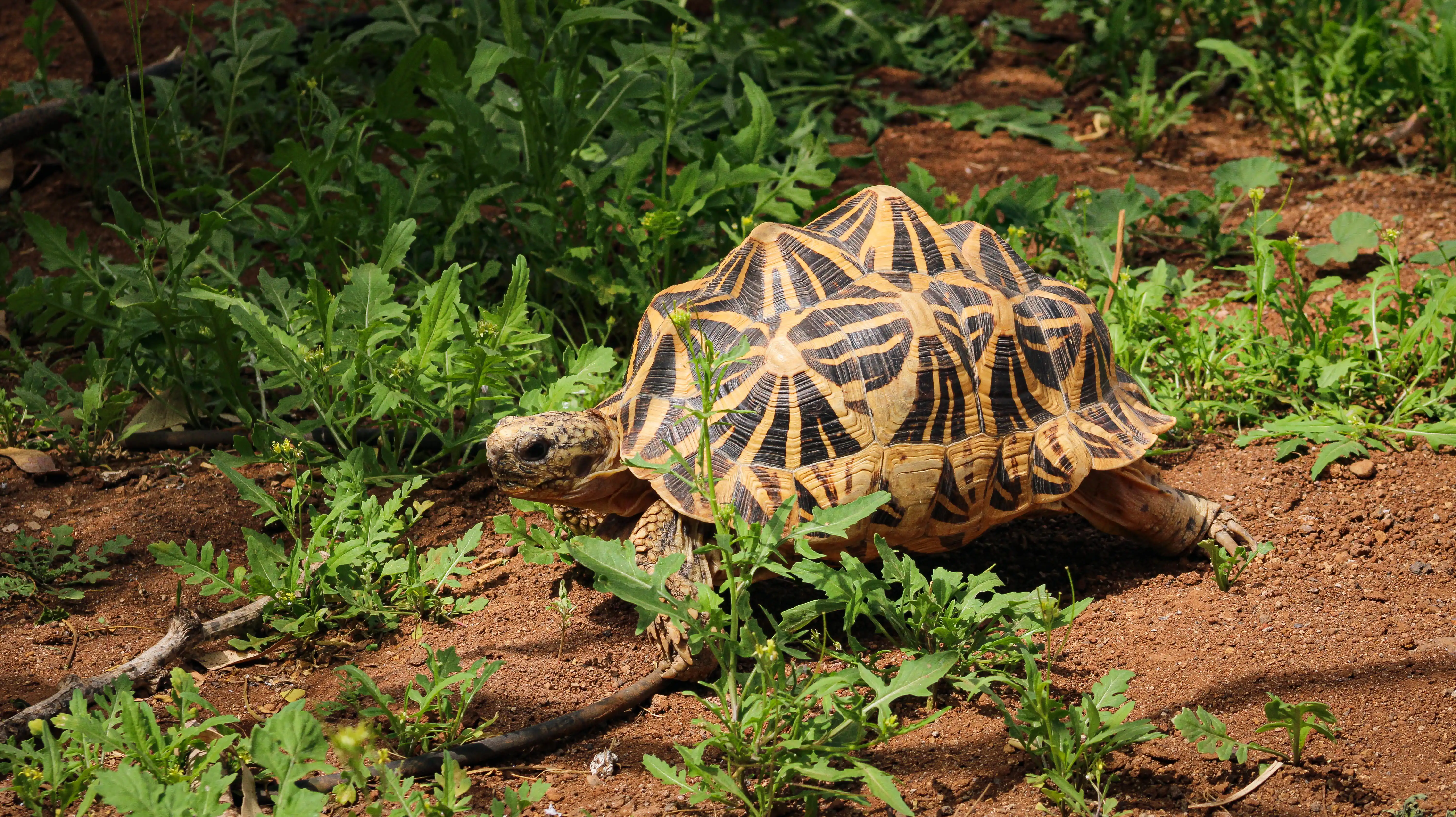
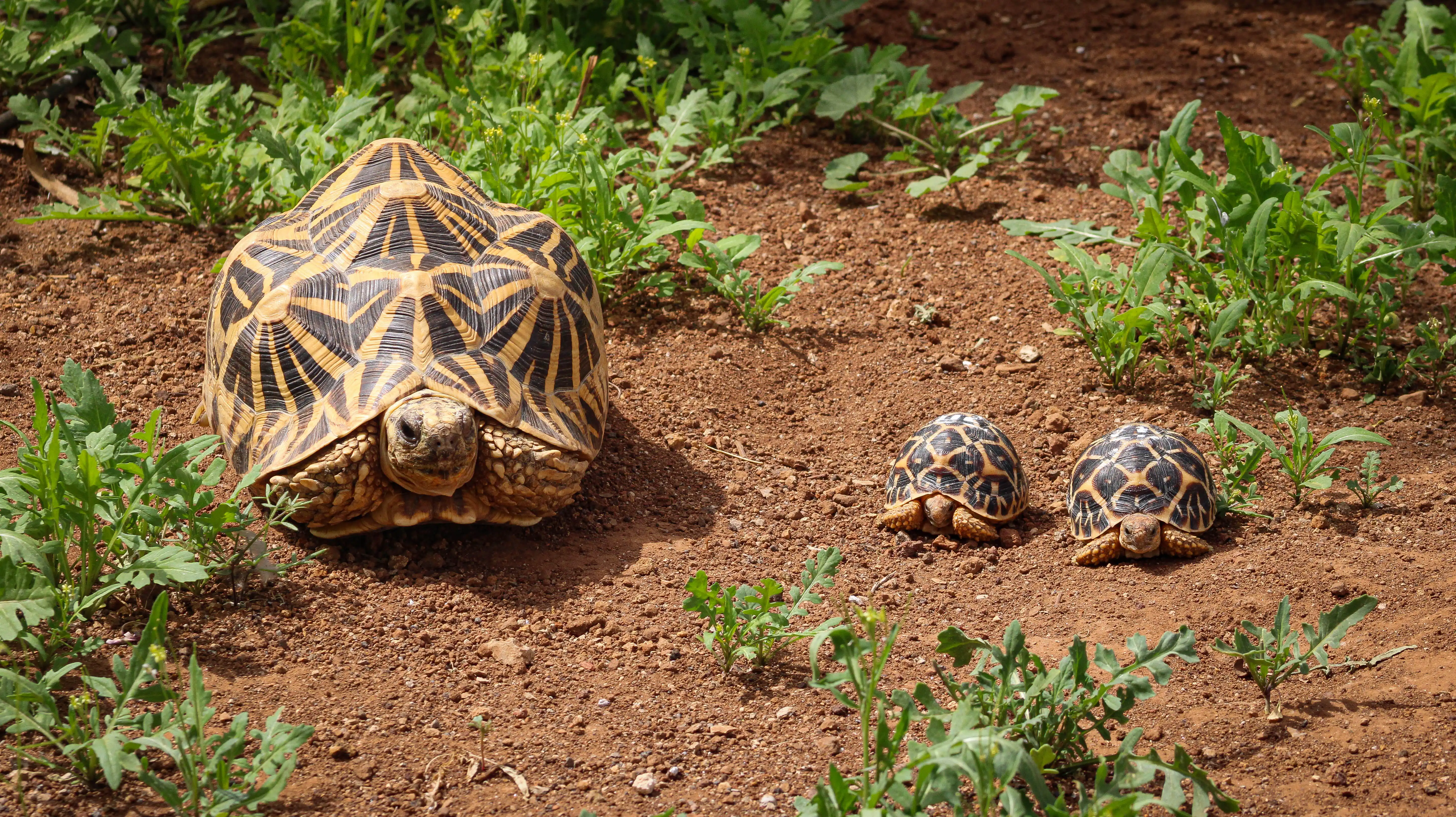
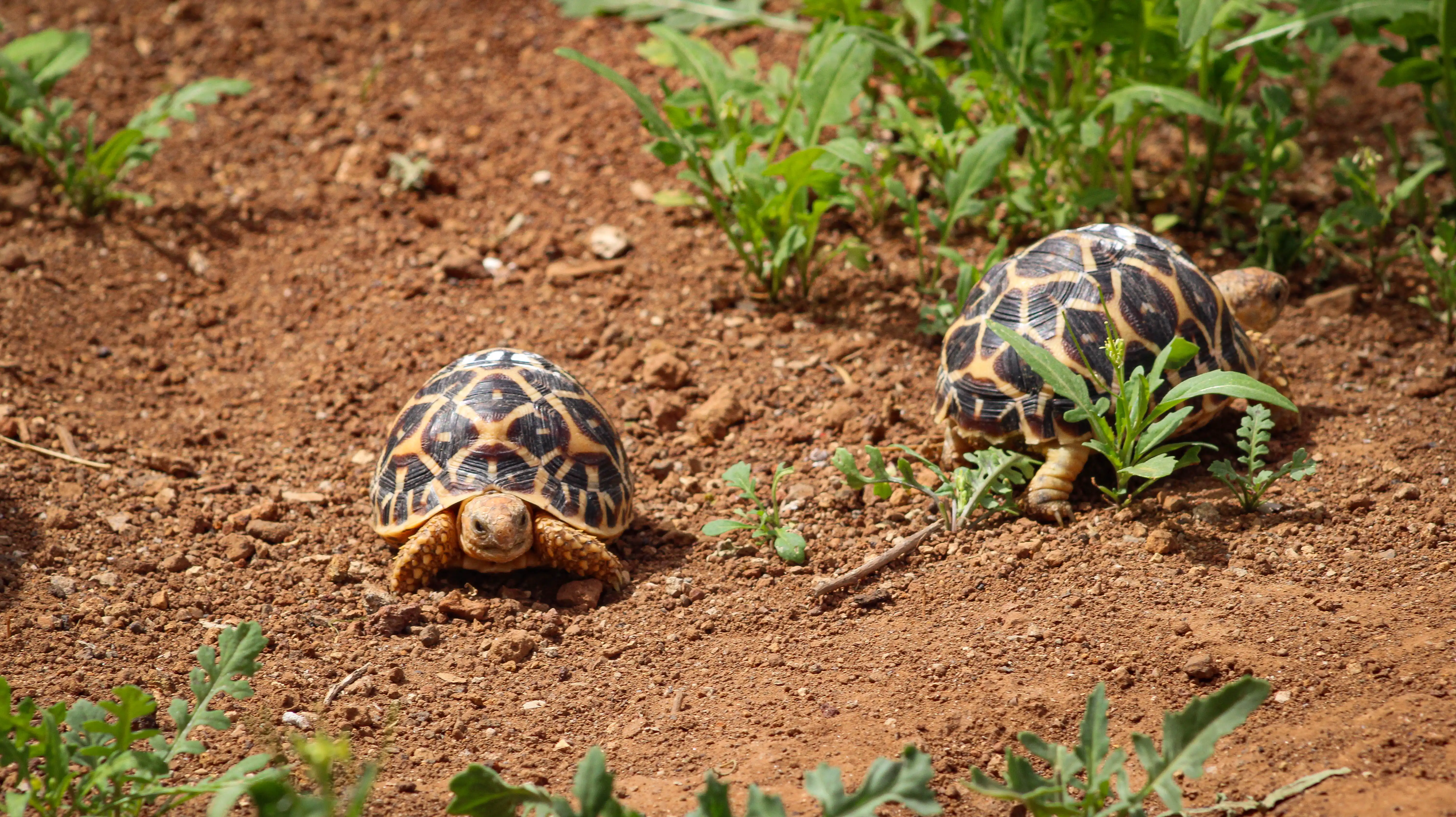
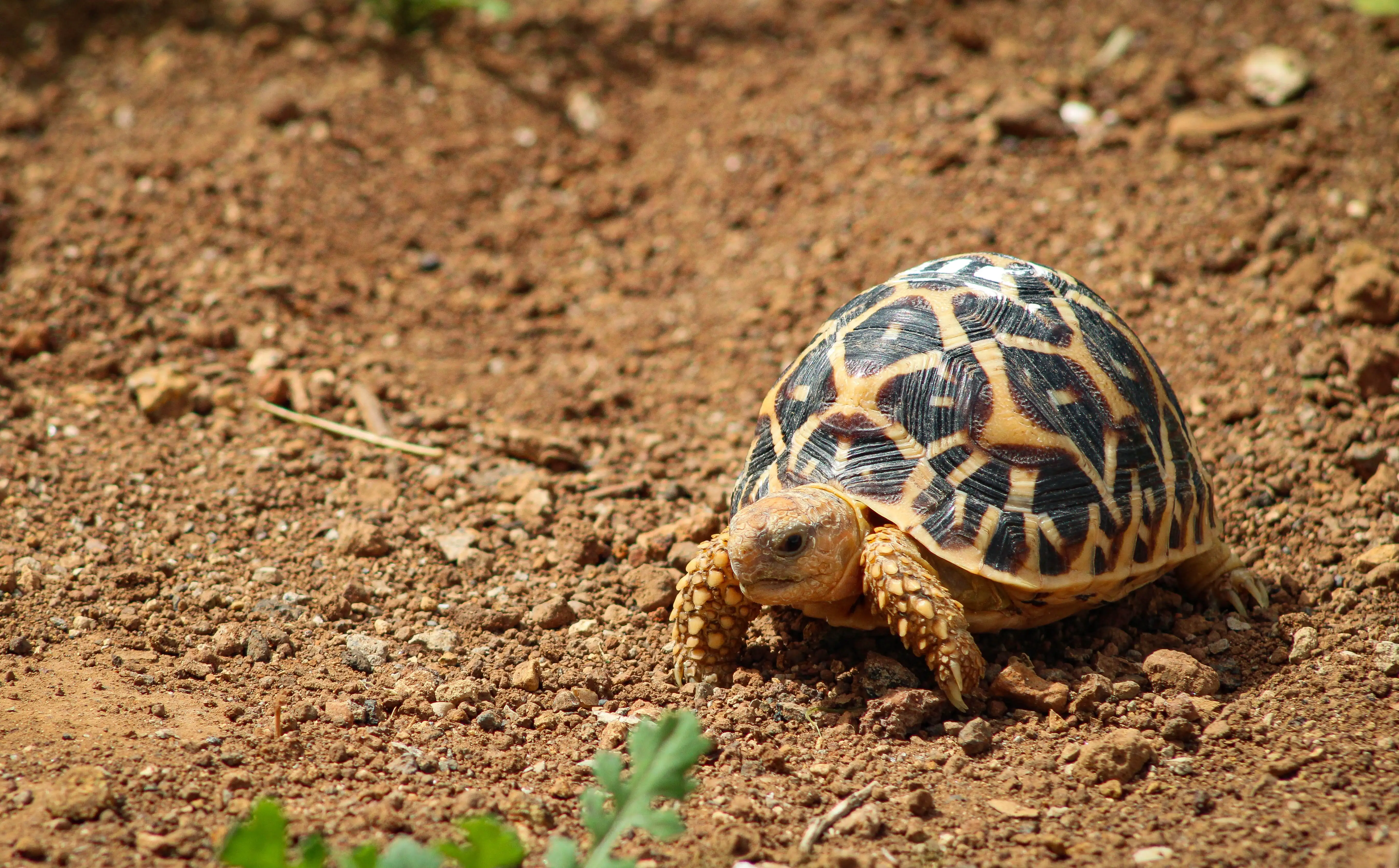
Geochelone elegans is one of the world's most iconic reptiles, famous for the spectacular radial pattern on its shell that serves as an artistic camouflage in the arid areas of the Indian subcontinent.
Peaceful and herbivorous, this species stands out not only for its geometric beauty, but also for its marked sexual dimorphism and remarkable longevity, which requires precise environmental conditions for its well-being.
It has a very high risk of disappearing in the wild if conservation measures are not taken.
Reproduction
Reproduction of the Indian star tortoise is closely linked to the arrival of the monsoon, when the rains trigger courtship by males, who may become competitive and ram each other. After mating, females usually lay between two and ten eggs in nests dug in soft ground, and may lay several clutches during the season. The incubation period is variable and depends directly on the environmental temperature, which determines not only the hatching time, but also the sex of the young.
Behaviour
It is an animal with mainly crepuscular habits, showing its greatest activity during dawn and dusk to avoid the hours of extreme heat. During the monsoon season, its behaviour changes drastically, becoming much more active and dedicated to foraging and mating thanks to the humidity. They are solitary and territorial reptiles that spend the central hours of the day sheltering under bushes or dense vegetation to regulate their body temperature, demonstrating a cautious and peaceful nature that leads them to retreat into their shells at any sign of threat.
Threats
It faces serious risks that have endangered its wild populations, being classified as Vulnerable by the IUCN. Its main threat is illegal trafficking for the exotic pet market, due to the high demand for the beauty of its shell, coupled with the loss of its habitat due to agricultural expansion and urbanisation. In addition, in some regions they suffer from local human consumption and climate change, which alters the rain cycles essential for their survival.
Feeding
The diet of Geochelone elegans is strictly herbivorous and should be very high in fibre and calcium, but low in protein and sugars. Its ideal diet is based on a variety of wild plants, dried herbs and grasses, occasionally supplemented with dark leafy greens such as endive or dandelion. It is essential to avoid fruit, as their digestive system is not equipped to process sugar, which could cause serious long-term health problems.
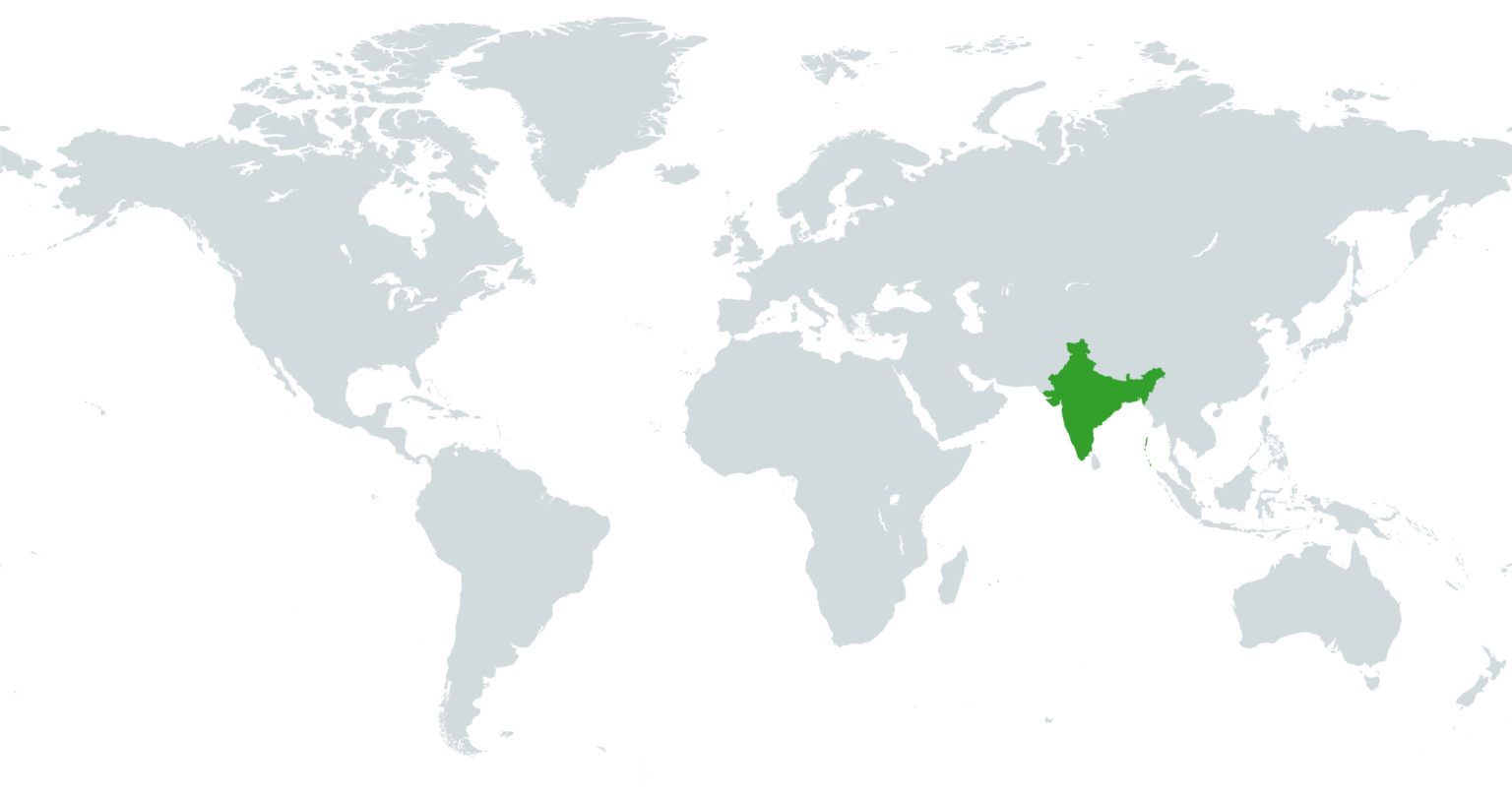
Distribution
VU (Vulnerable)
It is at high risk of extinction in the medium term.
NT (Near Threatened)
It is not yet at risk, but could be soon if conditions worsen.
ALL
Not Used
EX (Extinct)
There are no longer any living individuals of the species.
EW (Extinct in the wild)
Only specimens survive in captivity or in scientific collections.
CR (Critically Endangered)
It faces an extremely high risk of extinction in the near future.
LC (Least Concern)
The species is relatively secure in the wild and faces no immediate risk of extinction.