1. Introduction
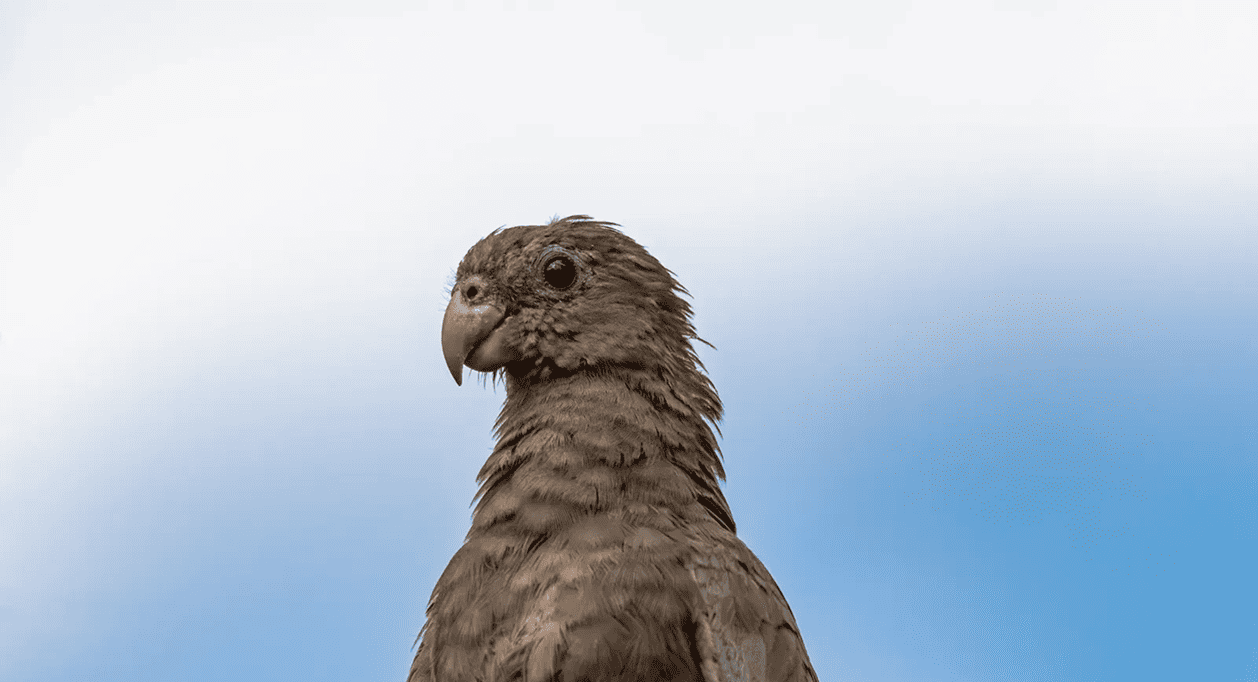
In our park you will be able to find two vasa parrots, male and female, forming an interesting pair for the conservation of the species as its population in the wild is decreasing.
Many of our visitors are startled to see our female vasa parrot without her characteristic plumage on her head, being completely bald, and also to see our male vasa parrot with a large protrusion near his anus. (See the following pictures.Spoiler: this only occurs during the reproductive stage)
With this blog entry we want to educate our visitors, show how curious the fauna of our planet can be and prevent them from thinking that our parrots are suffering from stress or any situation that affects their wellbeing.
2. General information on the vasa parrot
We invite you to visit all the information about the vasa parrot in our animals section.
3. Characteristics of the female vasa parrot during the mating period
Females are larger than males, although many parrot pairs are monogamous, the female Vasa parrot has several sexual partners, up to 8.
During the reproductive stage, females moult their head plumage, which leaves them completely bald, thus acquiring an orange colouration. This makes them easily recognisable to males and more attractive in their species.
4. Characteristics of the male vasa parrot during the mating period
Males have evolved one of the largest phalluses in parrots. This allows them to perform two types of copulation:
- Short: 1 to 3 seconds.
- Prolonged: 30 minutes on average, this is achieved by a copulation coupling.
During the breeding season, part of the phallus can be seen on the lower part of the male's body, which may look like an inflammation but it is not.
5. Conclusion
It is true that a behaviour that is usually a sign of stress or discomfort in some parrots is the fact that they pull out their feathers, the case of the Vasa parrot is not like this as we have learned, there are also certain pathologies that inflame the anal area of parrots but in the case of the Vasa parrot this is not the case either.
This particular case only increases our fascination for the animal world and our knowledge about them.