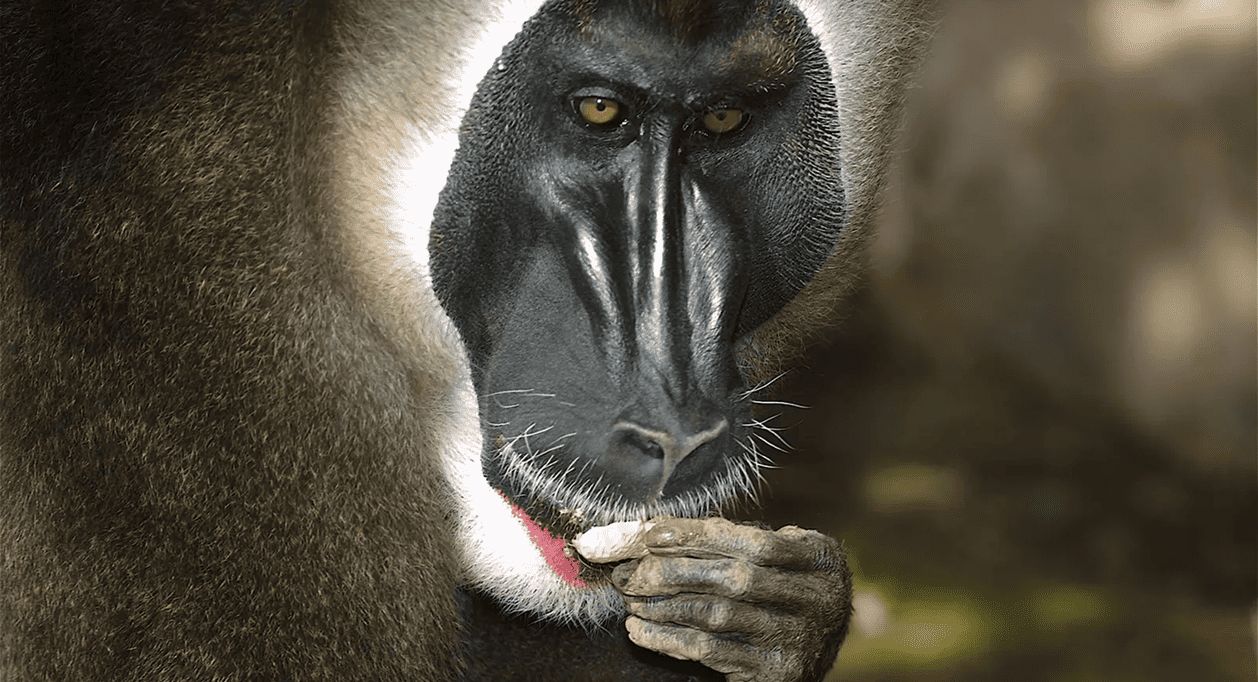
On 22 September 2024 Balombe, our male Drill (Mandrillus leucophaeus), passed away. This news has been a hard blow for the whole team of Monkey Park Tenerife as we have shared 24 years together.
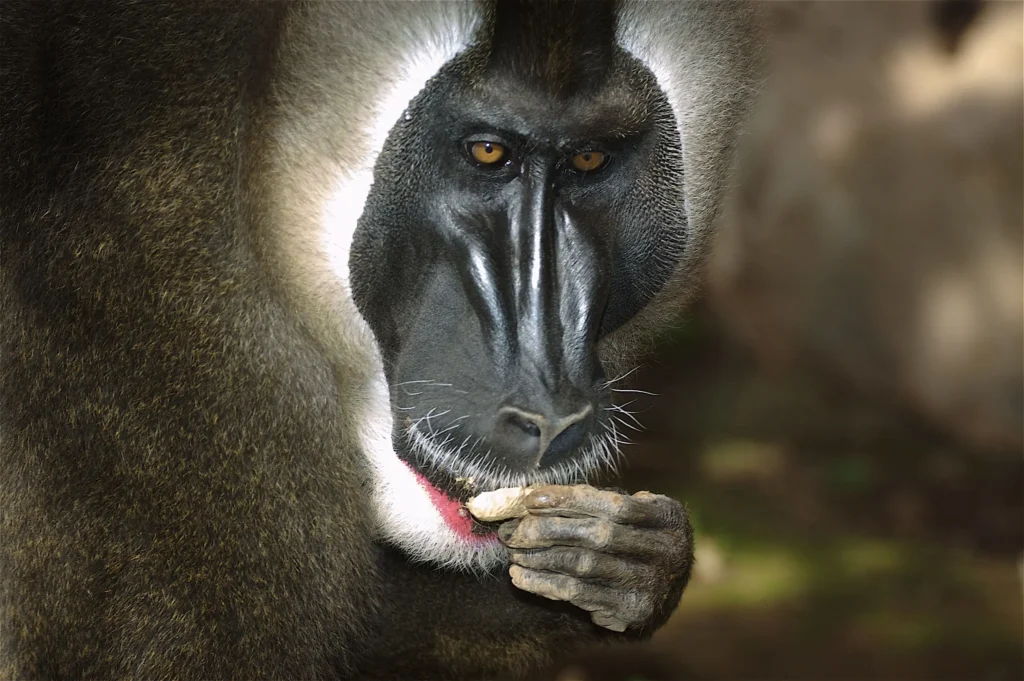
The story of Balombe
Born in 1994 in Hannover Zoo, he arrived at our park in 2000 as an international cooperation project, as he belonged to Barcelona Zoo.
In our park there were two females with whom we thought it would be wonderful to join Balombe and thus generate a new bloodline with which to maintain the species as it is endangered and highly protected.
Balombe did not accept our two females in any way, something that was totally unexpected, we put all our effort into creating a small group, but Balombe refused at all times. Just when we thought we had succeeded Balombe ended the lives of the two females without giving us the option to intervene. We understood then that he wanted to be alone, this is not necessarily a bad thing, even AWA does not consider it a bad thing for the welfare of an animal. He was alone because he had to be alone, he was always a danger for the rest of the members of his species because we cannot allow the loss of females when we want to keep a species that is in danger of extinction.
Even so, Balombe was always included in the international conservation programme, i.e. he was still important for the future of his species, so we always kept him in the best conditions, and we were always ready to find a better place for him.
He was always in daily contact with the park keepers, visitors and his neighbours (Brazza Monkeys and Pata Monkeys). As for the daily routines he was always very kind and polite, both in feeding and cleaning, we never had any problems.
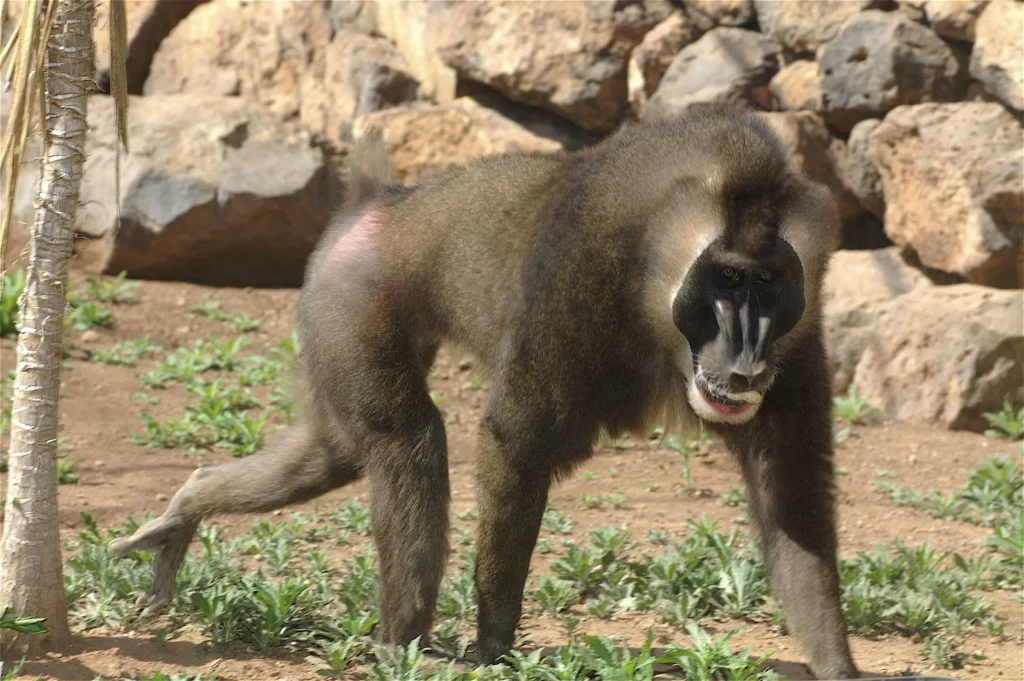
You may remember certain behavioural patterns, such as always walking around the front of the habitat next to the glass, grabbing his paws threatening to bite himself (he never bit himself as he never had any injuries) or banging on the glass. Anyone would think that he was suffering from some kind of psychic illness or high levels of stress that caused repetitive behaviours. We spent a lot of time on these questions, we wanted to know what was wrong with him, in the end we came to the conclusion that it was simply a peculiarity of his, he interacted like that.
We believe we gave our visitors a great opportunity to observe one of the most unique species of monkeys in the world at close quarters. Being able to observe every detail of his anatomy and every detail of his movements, it was always a spectacle to watch and care for him.
Necropsy findings
It is concluded that Balombe died of natural causes related to his advanced age. Given that he lived just the average lifespan expected for his species, it is reasonable to conclude that the deterioration of his liver health is an expected consequence of his ageing. There was no evidence of poor diet or lack of well-being that could have contributed to his condition. The elevated GGT value and histopathological observations confirm the presence of mild chronic hepatitis, which is likely in animals of his age. In summary, Balombe enjoyed a full and healthy life and died of natural causes linked to ageing.
In conclusion
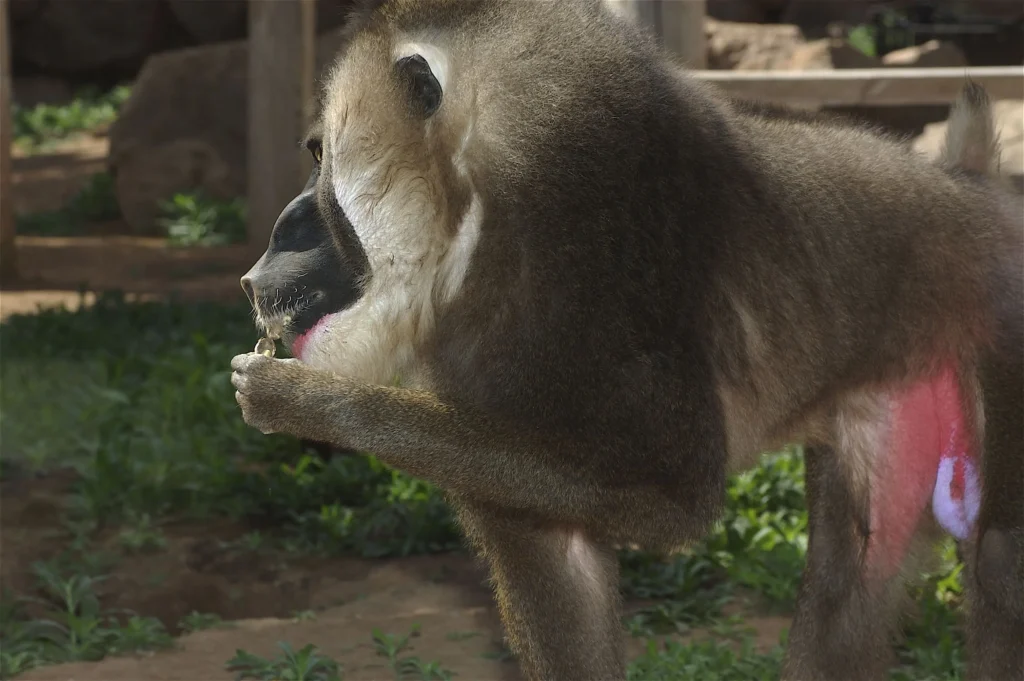
Balombe lived what a member of his species usually lives, 30 years, he spent most of his life with us, we can proudly say that we did our best to ensure his well-being during his stay in our park.
He leaves us with great sorrow and we wish him to rest in peace.