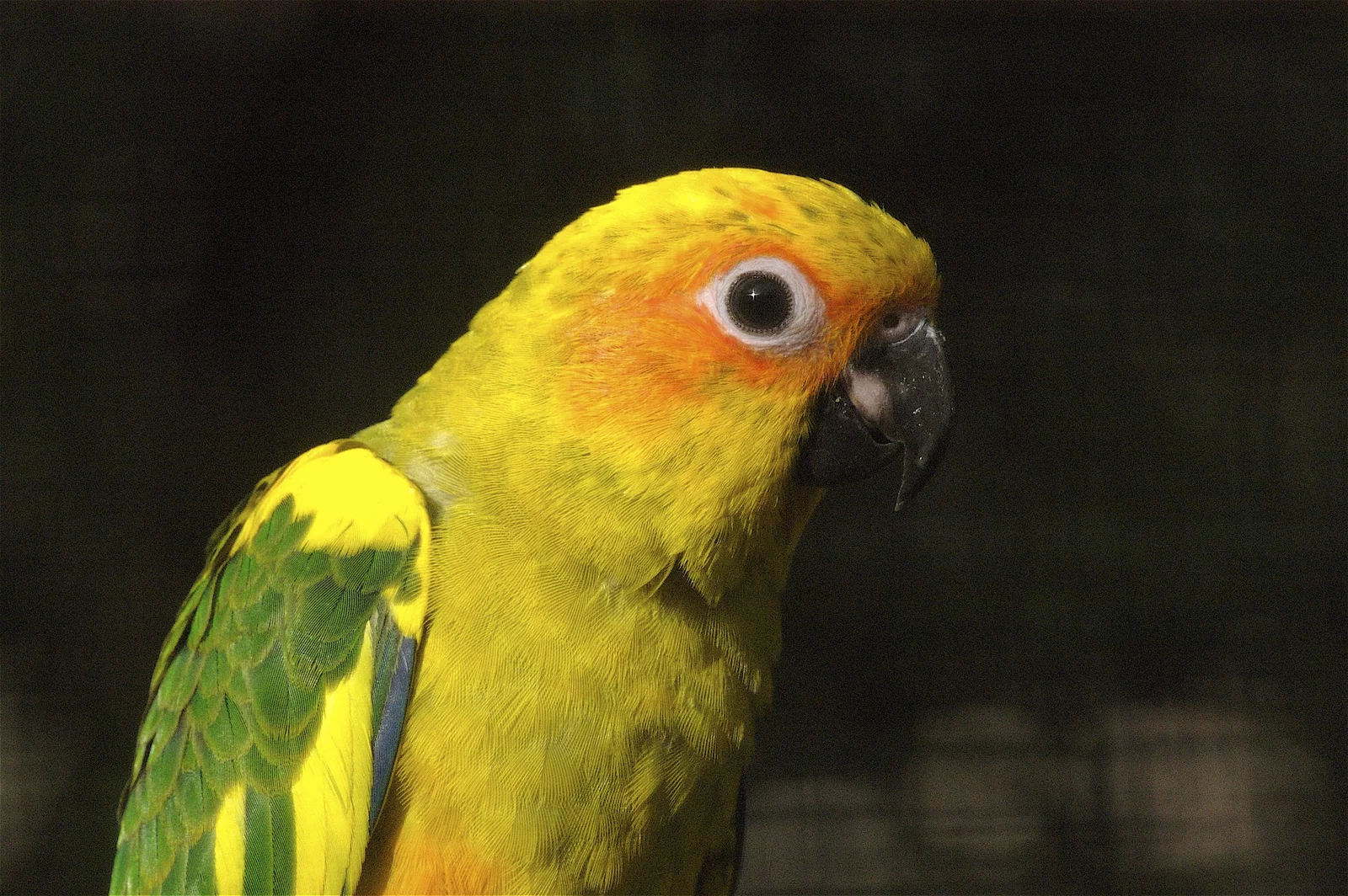
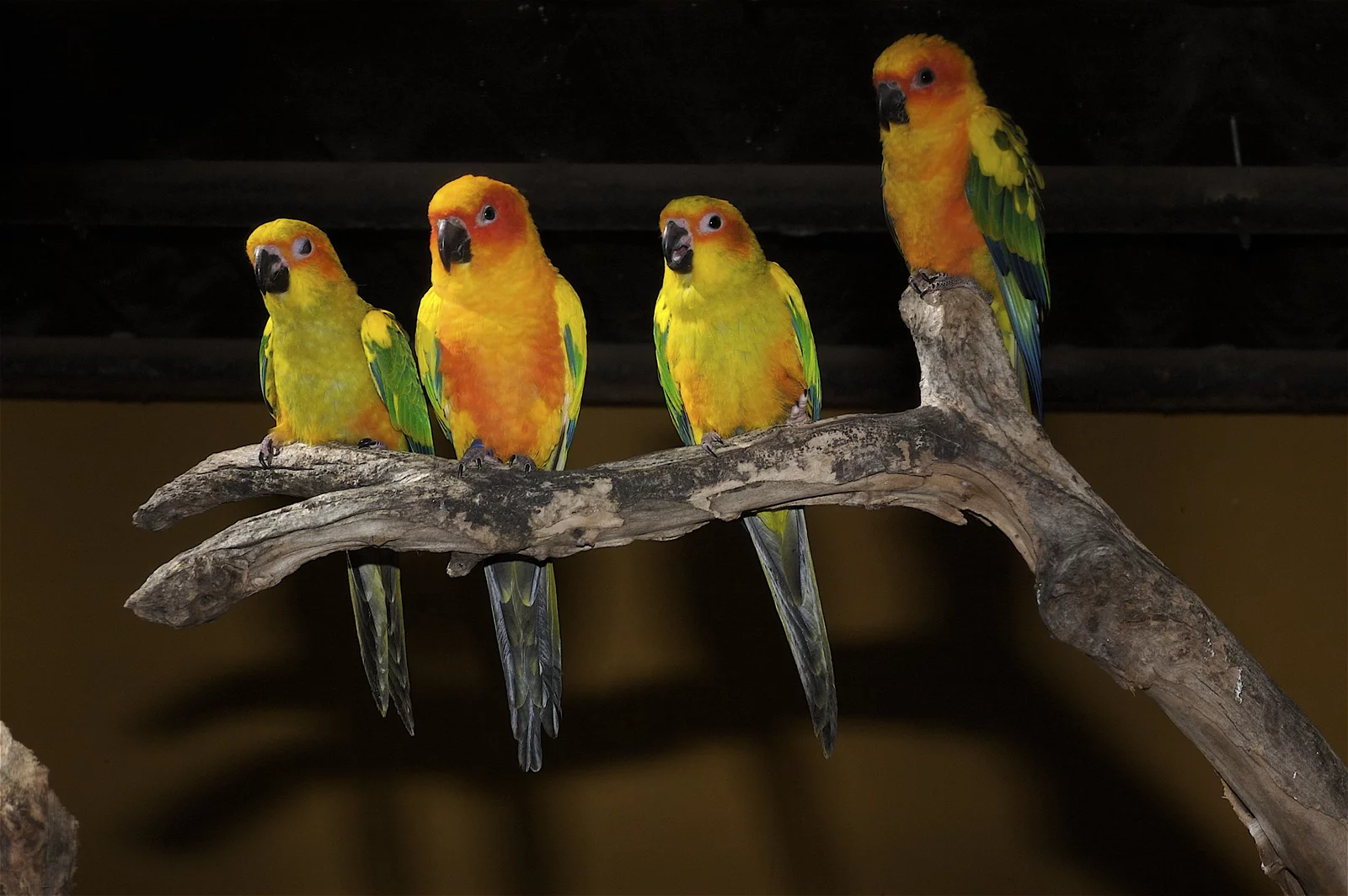
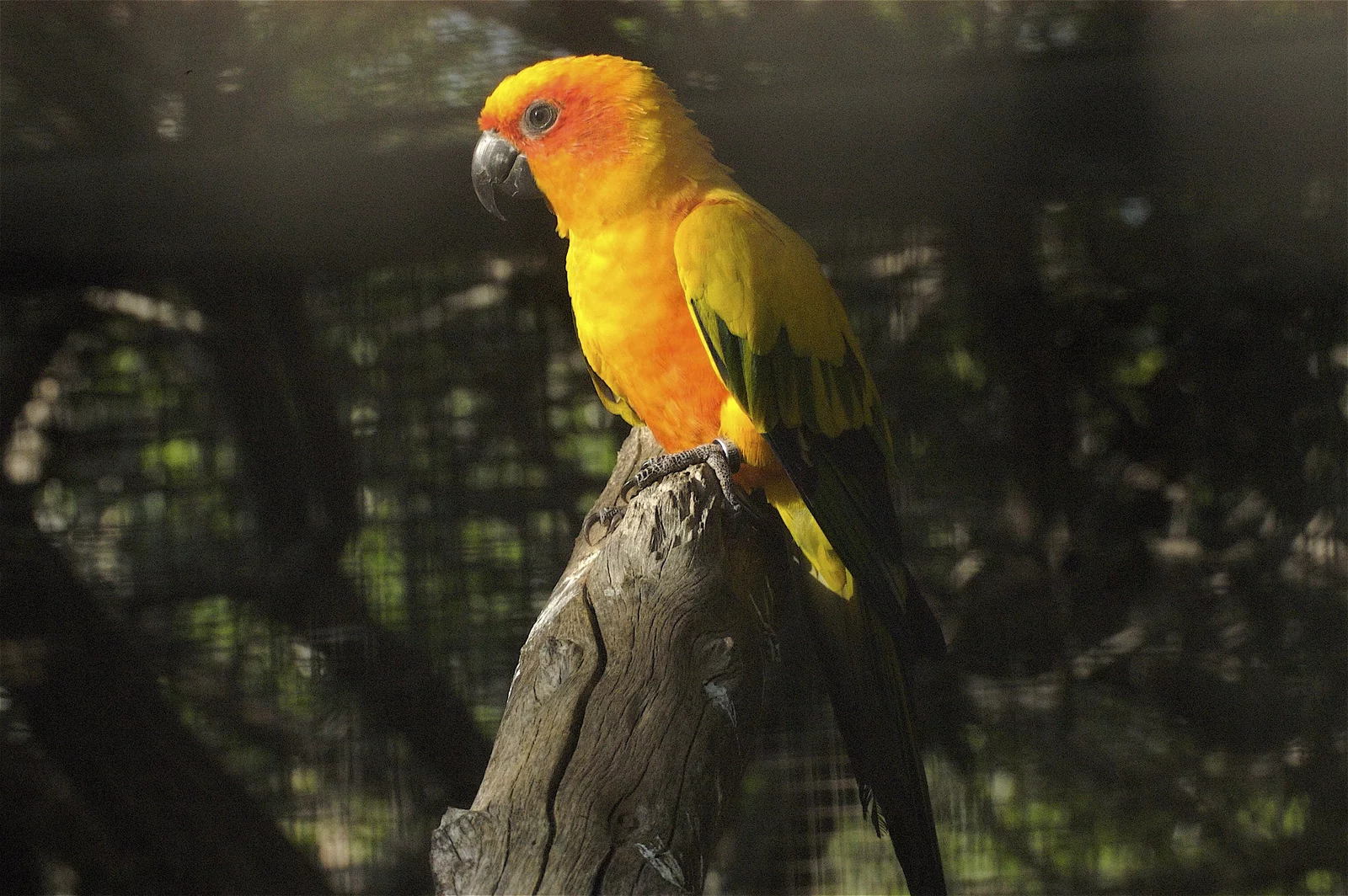
The Aratinga solstitialis is a very energetic and curious bird, with a great capacity for learning.
It has a fast and agile flight and often communicates with loud vocalisations.
It is a monogamous species, forming long-lasting pair bonds.
Its eyesight and coordination are excellent, allowing it to manipulate objects with ease.
It has a very high risk of disappearing in the wild if conservation measures are not taken.
Reproduction
Aratinga solstitialis reaches sexual maturity at 2 years of age. It nests in tree cavities and lays 3-5 eggs, which it incubates for 23-27 days. Both parents care for the chicks.
Behaviour
Aratinga solstitialis is sociable, active and very noisy. It likes to live in groups, is playful and needs mental stimulation. It can be affectionate with its owners in captivity.
Threats
The main threats to Aratinga solstitialis are habitat loss and illegal trade. It is classified as Endangered by the IUCN due to declining wild populations.
Feeding
Aratinga solstitialis feeds on fruits, seeds, nectar, flowers and some insects. In captivity, its diet should include pellets, fresh fruits, vegetables and nuts in small quantities.
Distribution
Feeding
In their herbivorous diet, green iguanas feed mainly on leaves, flower buds and some fruits. It is important to note that feeding on insects can reduce their lifespan by half, so it is essential to maintain a plant-based diet.
VU (Vulnerable)
It is at high risk of extinction in the medium term.
NT (Near Threatened)
It is not yet at risk, but could be soon if conditions worsen.
ALL
Not Used
EX (Extinct)
There are no longer any living individuals of the species.
EW (Extinct in the wild)
Only specimens survive in captivity or in scientific collections.
CR (Critically Endangered)
It faces an extremely high risk of extinction in the near future.
LC (Least Concern)
The species is relatively secure in the wild and faces no immediate risk of extinction.