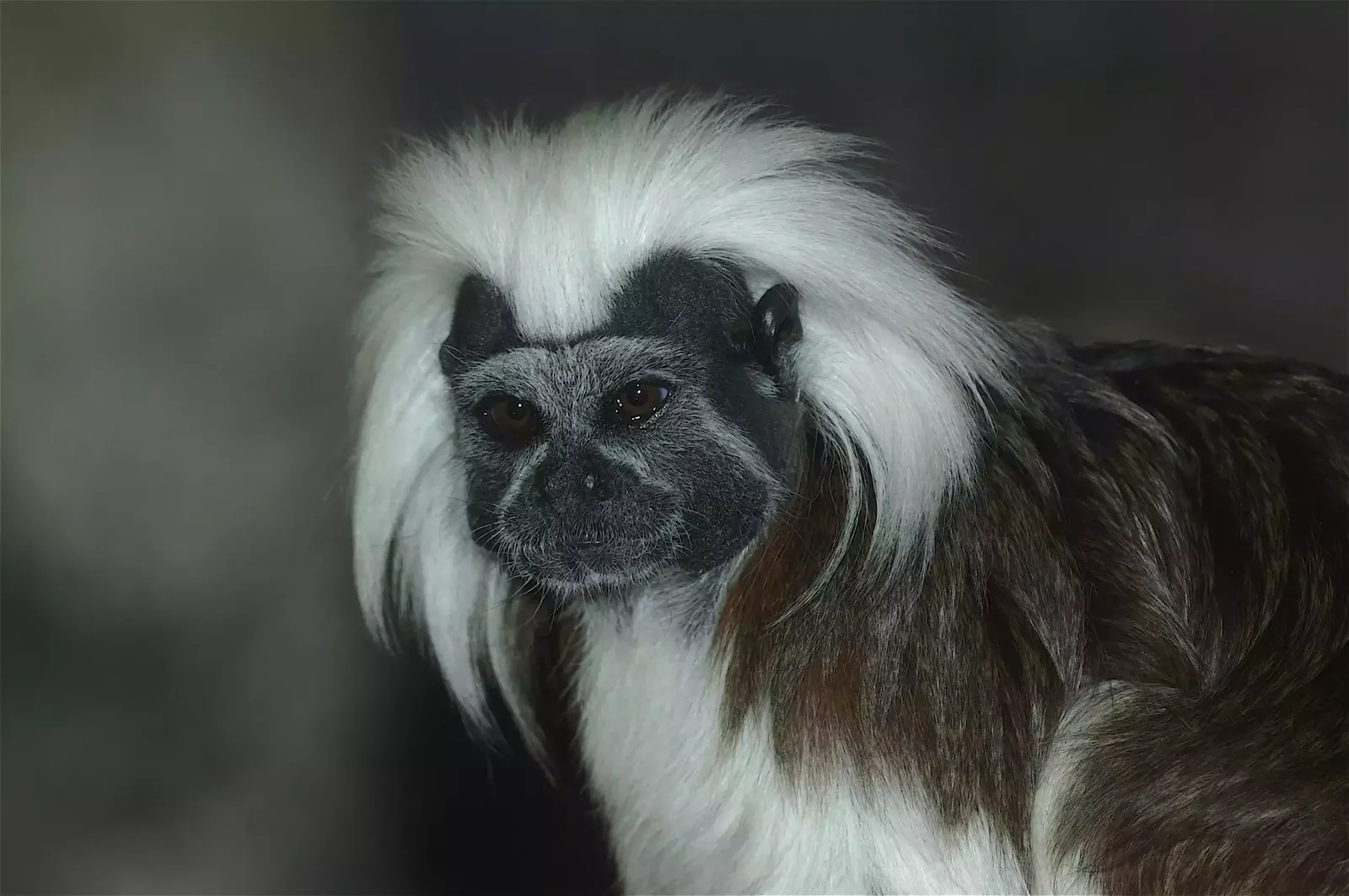
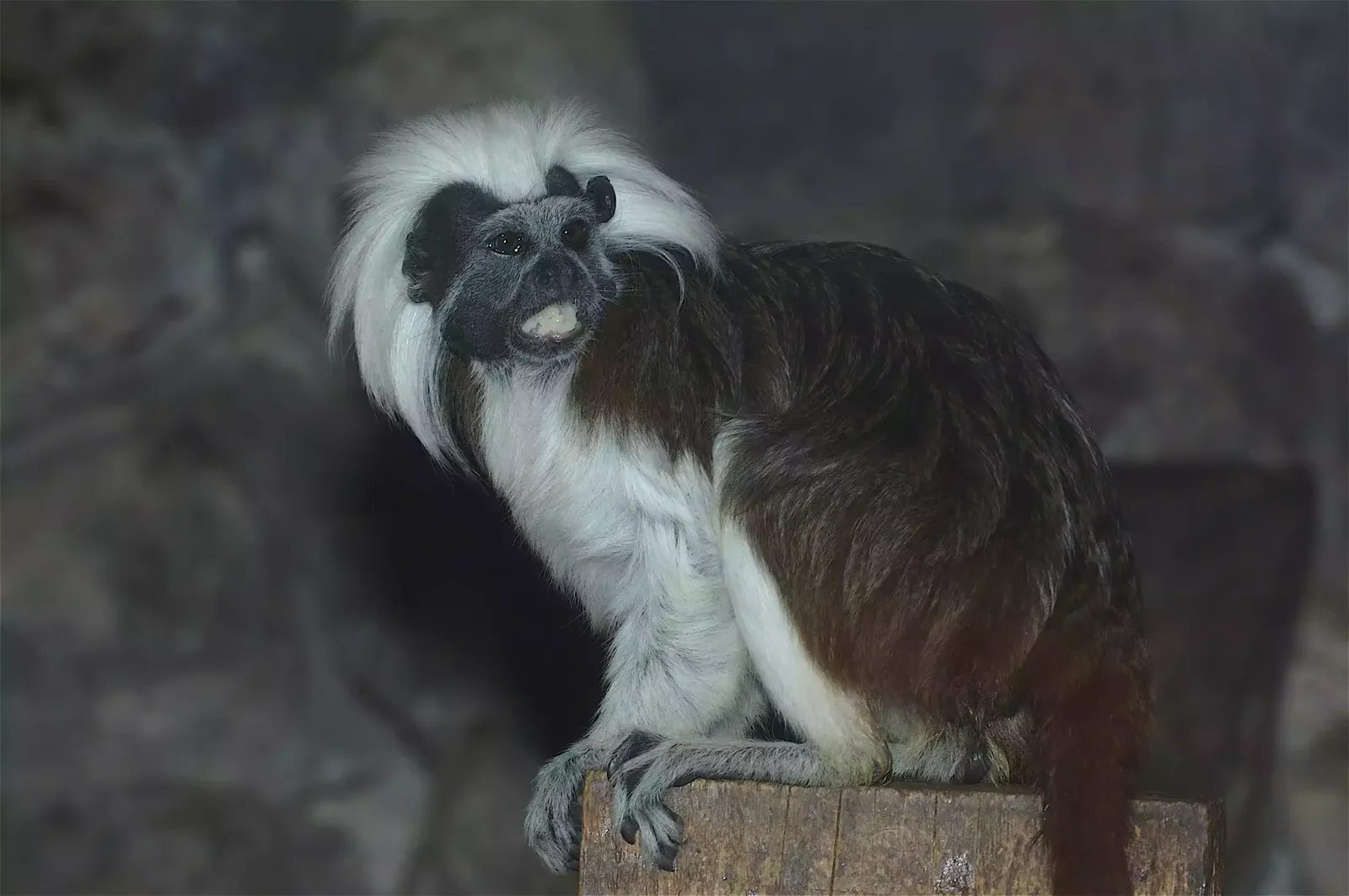
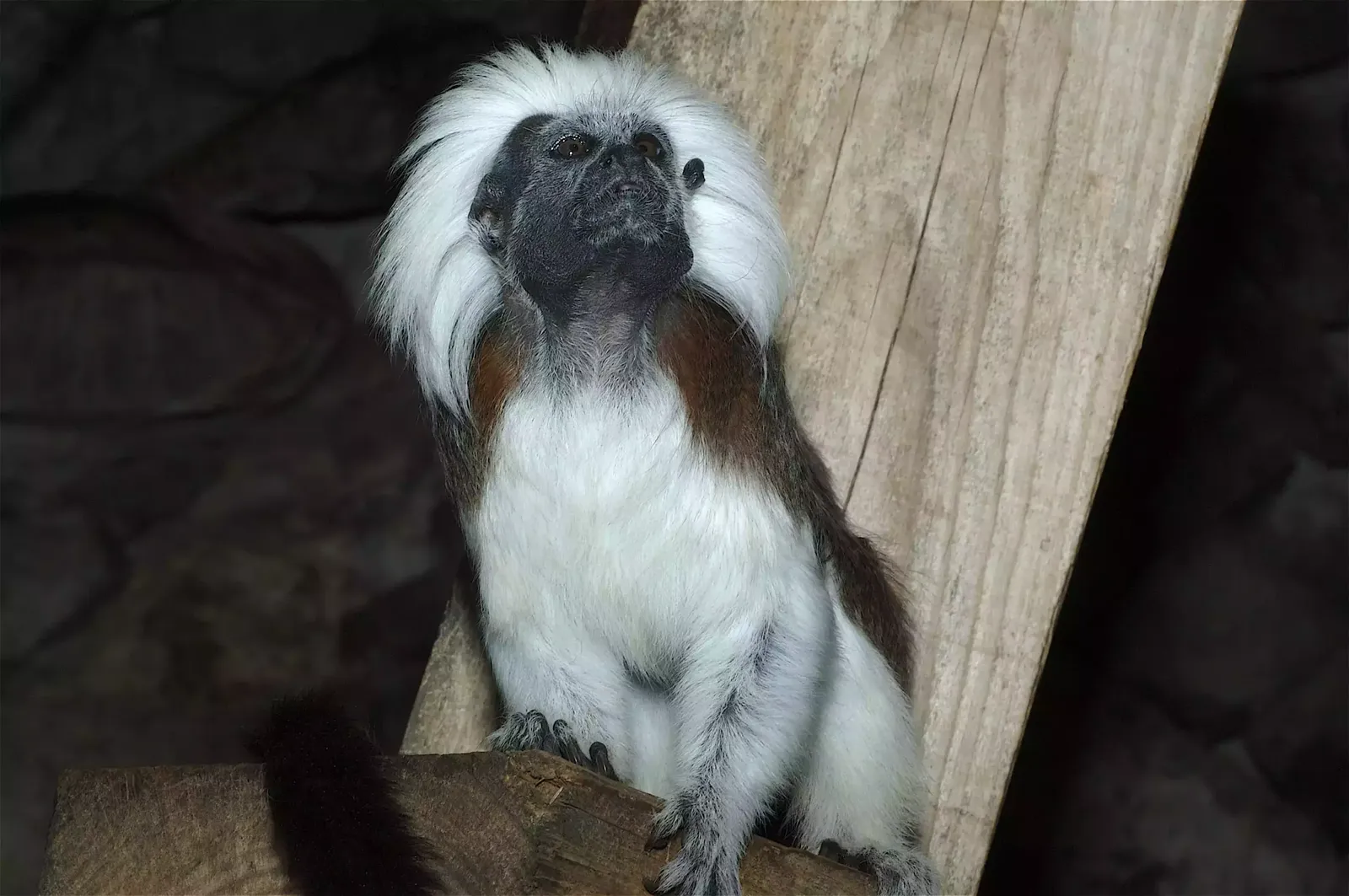
These titis are distinguished by their soft white fur on the head and neck, which gives them their characteristic name.
The rest of their body is usually dark shades, such as black or brown.
They are small, agile animals with large, expressive eyes that give them a charming appearance.
It faces an extremely high risk of extinction in the near future.
Reproduction
They have one or two oestrus per year, gestation lasts about 150 days.
Behaviour
Cotton-top titis are highly social animals that live in close-knit family groups. You will observe how they interact with grace and affection, communicating through soft vocalisations and delicate gestures. They are known for their cooperative behaviour and their ability to forage in trees in search of fruit and other food.
Threats
Habitat loss due to deforestation and capture for the pet trade.
Feeding
Fruits, nectar, insects, small vertebrates, tree gums and plant exudates.
Distribution
VU (Vulnerable)
It is at high risk of extinction in the medium term.
NT (Near Threatened)
It is not yet at risk, but could be soon if conditions worsen.
ALL
Not Used
EX (Extinct)
There are no longer any living individuals of the species.
EW (Extinct in the wild)
Only specimens survive in captivity or in scientific collections.
EN (Endangered)
It has a very high risk of disappearing in the wild if conservation measures are not taken.
LC (Least Concern)
The species is relatively secure in the wild and faces no immediate risk of extinction.