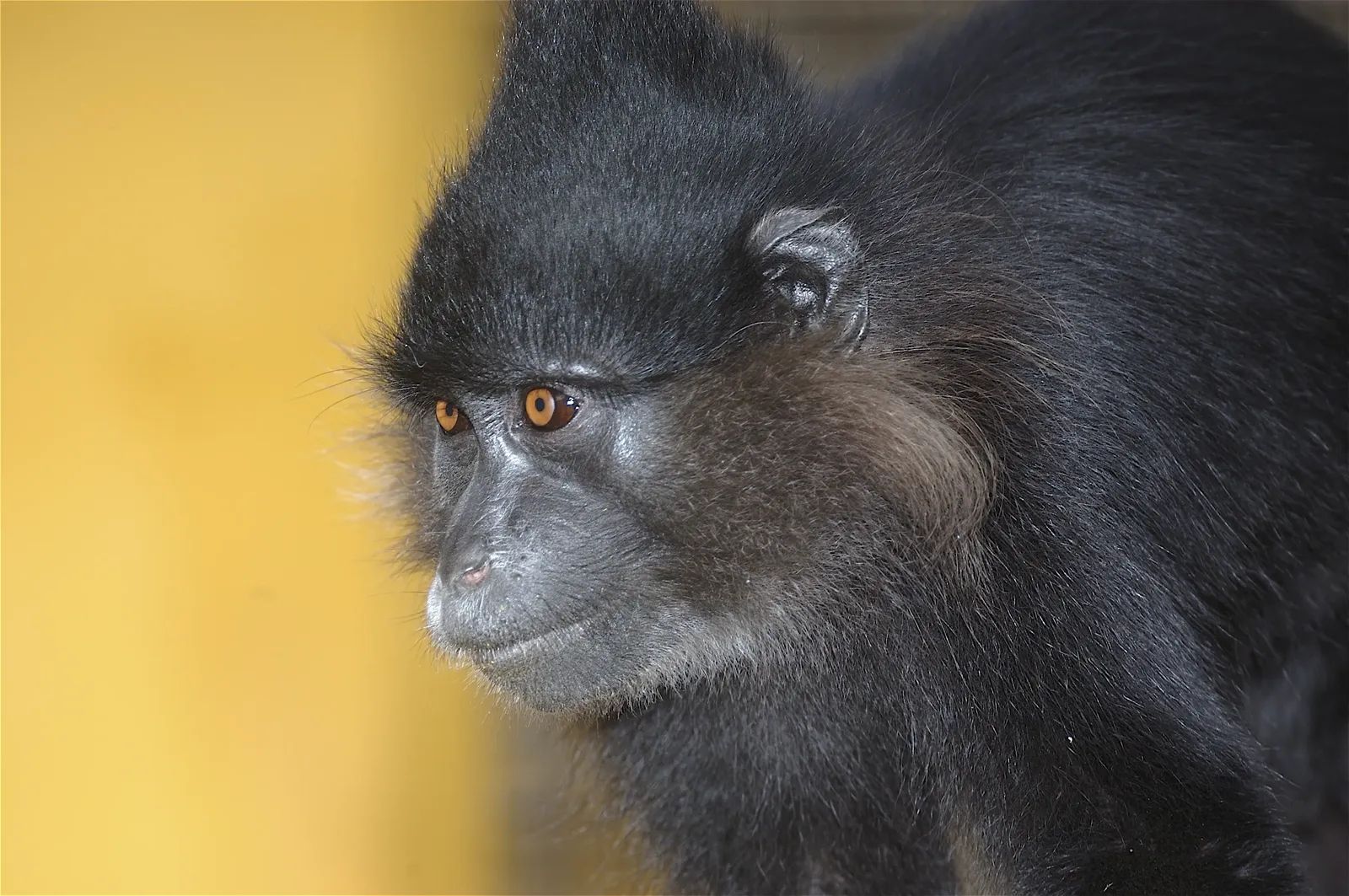
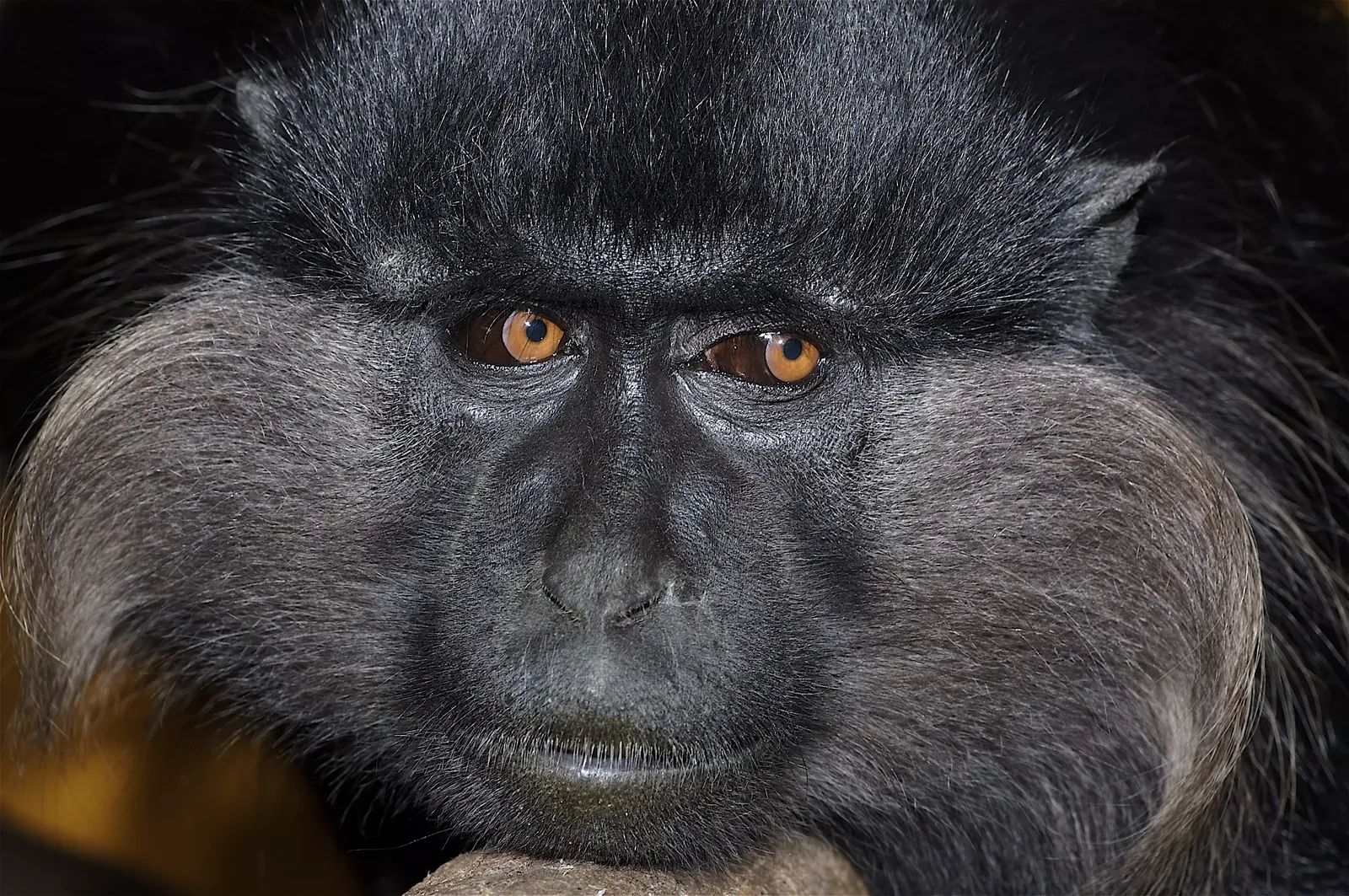
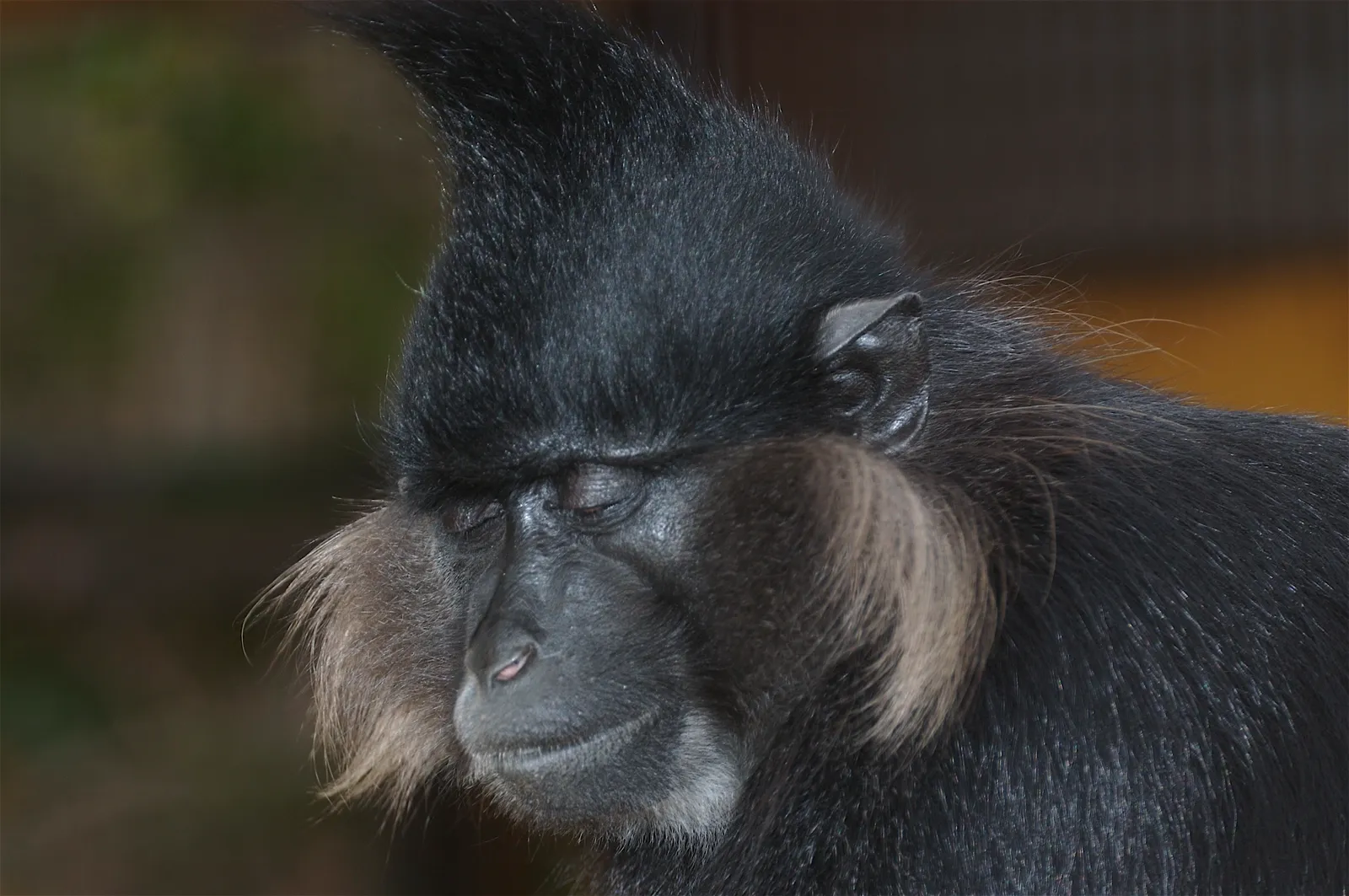
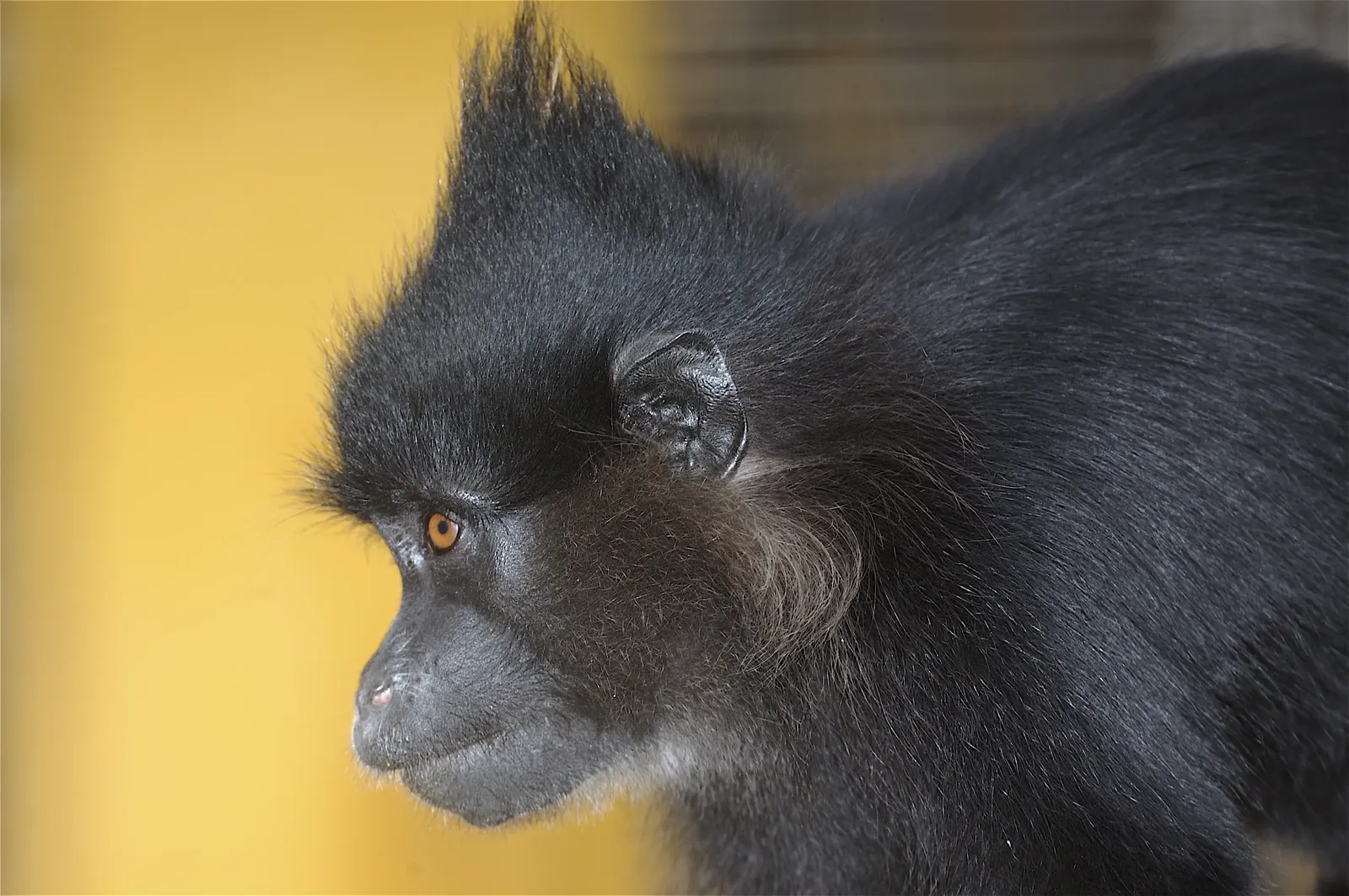
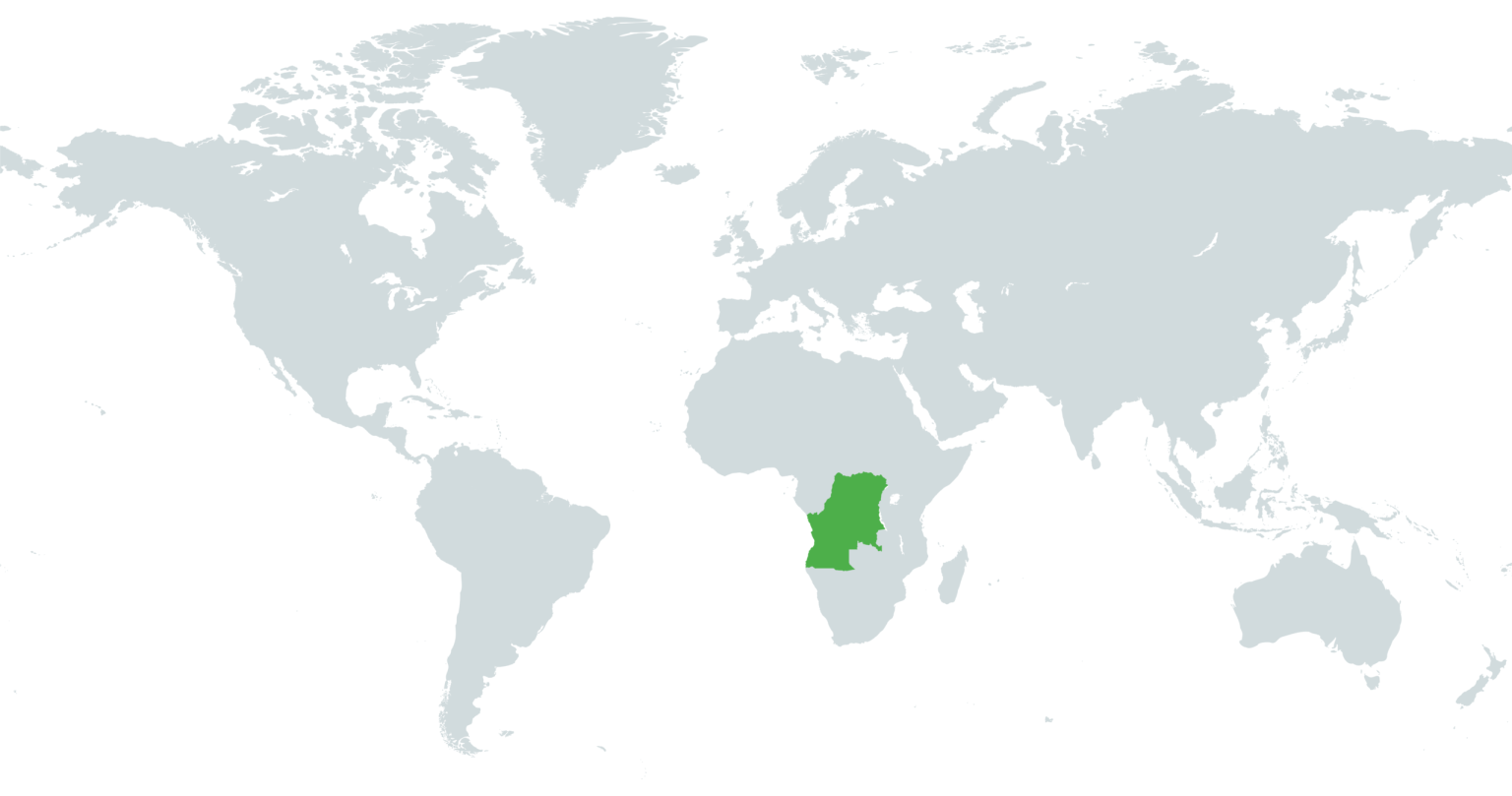
The black-crested mangabey is a catarrhine primate found in Angola and the Democratic Republic of Congo. They have thick, coarse fur, usually dark grey or black in colour, with a crest of hair on their forehead. Their tail is long and prehensile.
It is at high risk of extinction in the medium term.
Reproduction
In terms of reproduction, Old World monkeys, such as the mangabey, have a gestation period lasting between five and seven months, and births are usually single, although twins can occasionally occur.
Behaviour
The black-crested mangabey is a catarrhine primate found in Angola and the Democratic Republic of Congo. They are gregarious animals, spending less time on the ground and using their long, prehensile tails to balance and climb among the branches. They are omnivorous, consuming mainly plants, fruits and seeds, and have pouches on both sides of their jaws that they use as "pockets" to store food. .
Threats
The black-crested mangabey faces various threats to its survival. Its large body size makes it attractive to hunters, especially in the Democratic Republic of Congo (DRC), where firearms are readily available. In addition, habitat loss due to deforestation and human expansion also affects this species.
Feeding
The black crested mangabey is an omnivorous primate found in Angola and the Democratic Republic of Congo. They have thick, coarse fur, usually dark grey or black in colour, with a crest of hair on their forehead. Their diet consists mainly of plants, fruits and seeds. In addition, they have cheek pouches on both sides of their jaws, which function as "pockets" for storing food. Later, they push the full cheek pouches with their hands and pull the pieces of food into their mouths, where they chew and swallow them.
Distribution
NT (Near Threatened)
It is not yet at risk, but could be soon if conditions worsen.
ALL
Not Used
EX (Extinct)
There are no longer any living individuals of the species.
EW (Extinct in the wild)
Only specimens survive in captivity or in scientific collections.
EN (Endangered)
It has a very high risk of disappearing in the wild if conservation measures are not taken.
CR (Critically Endangered)
It faces an extremely high risk of extinction in the near future.
LC (Least Concern)
The species is relatively secure in the wild and faces no immediate risk of extinction.