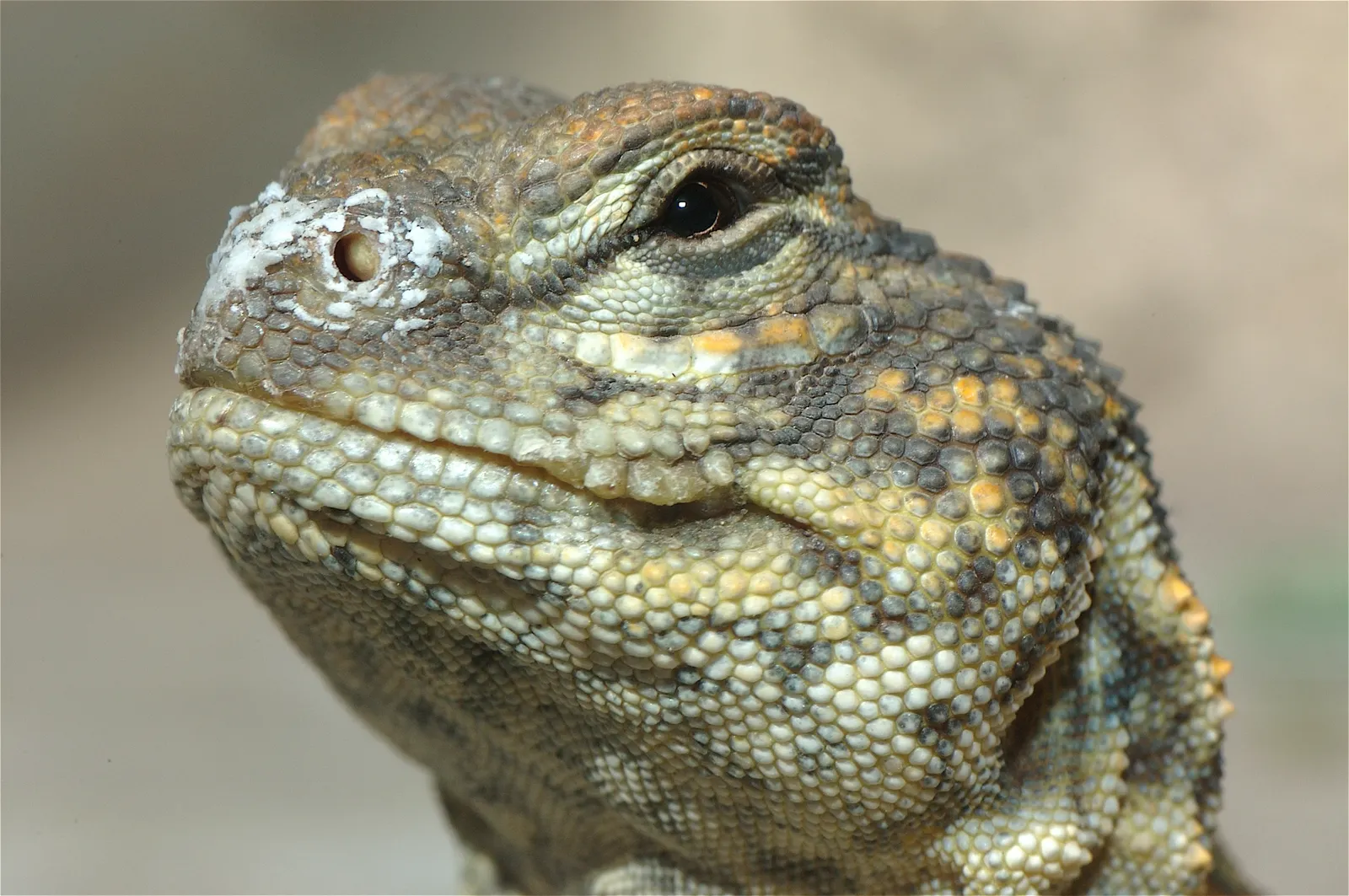
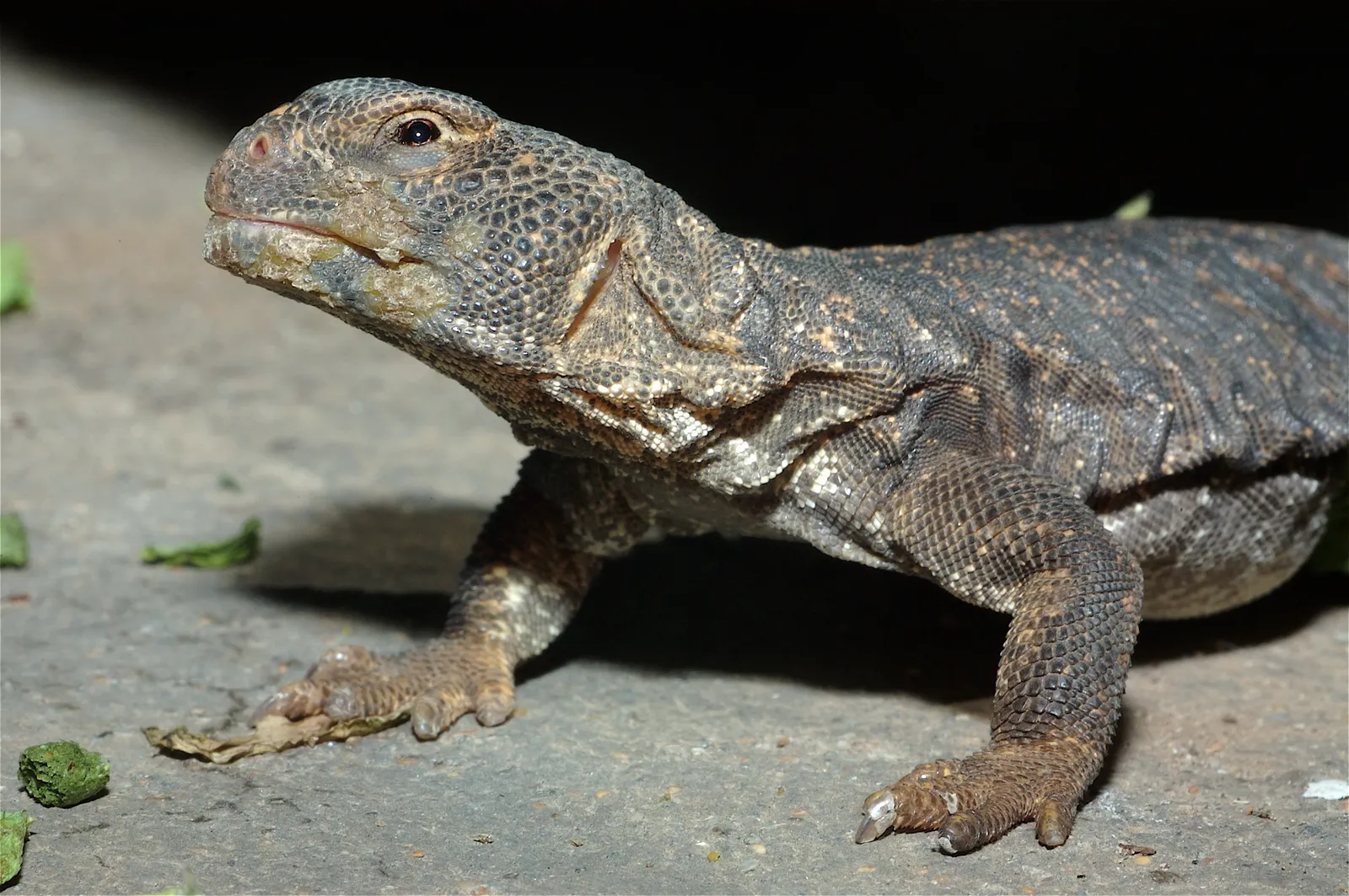
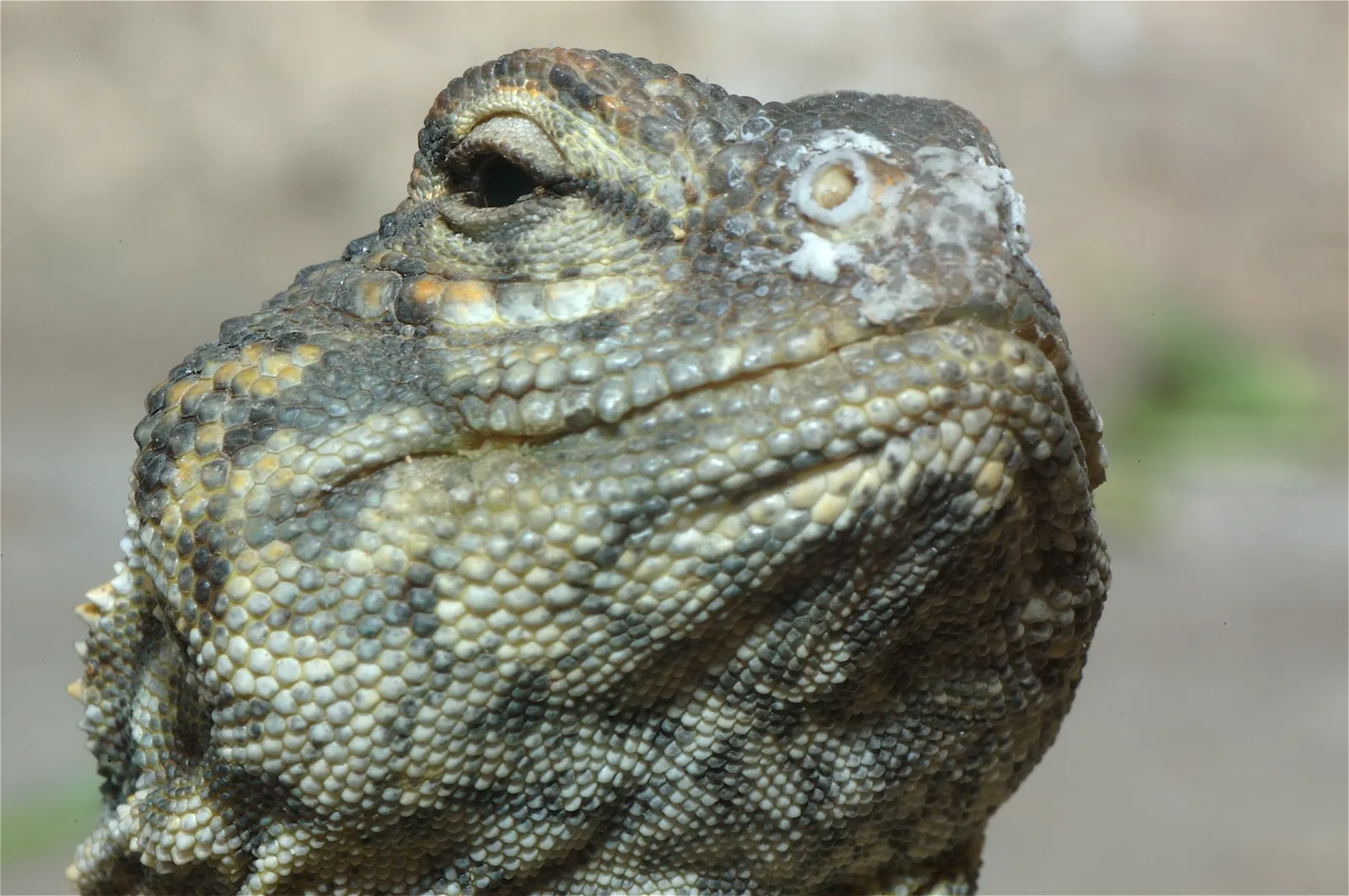
Uromastyx are characterised by their stocky body, rough scales and short tail. Their colouring varies according to the species, from shades of yellow and orange to brown and green.
They also have spines on their tails, which they use to defend themselves against predators.
Their elevated eyes and nostrils allow them to adapt to the desert environment.
The species is relatively secure in the wild and faces no immediate risk of extinction.
Reproduction
Uromastyx reproduction is oviparous, meaning that they lay eggs. Females lay between 2 and 12 eggs per litter, with an average of 6 eggs. These are usually laid in a burrow or crevice, and the female remains with the eggs until they hatch. The young usually emerge about 2 months after being laid.
Behaviour
Uromastyx are specialised herbivorous reptiles that have adapted to survive in arid environments. They have the ability to store water in their tissues, which allows them to withstand long periods of drought. They are also expert burrowers, building burrows to shelter from the scorching heat of the desert.
Threats
Uromastyx populations are still relatively stable in their natural habitats, with no major threats affecting their survival at present. However, due to their popularity as exotic pets, some species face risks of overexploitation. In addition, over-collection and habitat loss are factors that may affect these fascinating lizards in the wild.
Feeding
Uromastyx are primarily herbivorous lizards that feed on dark leafy greens, vegetables such as carrots and courgettes, and fruits in small quantities. It is important to maintain a good calcium-phosphorus ratio in their diet for bone health.
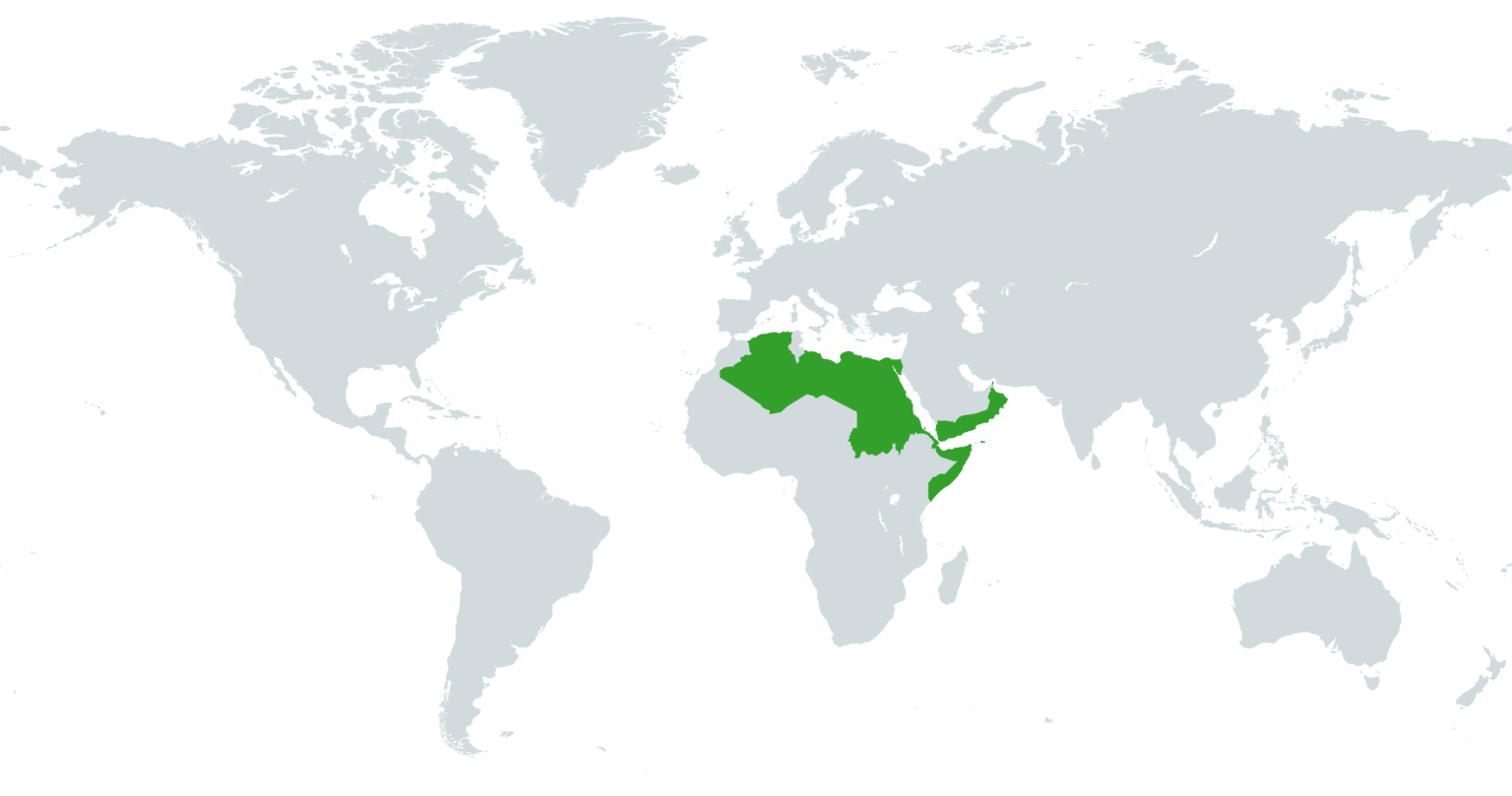
Distribution
VU (Vulnerable)
It is at high risk of extinction in the medium term.
NT (Near Threatened)
It is not yet at risk, but could be soon if conditions worsen.
ALL
Not Used
EX (Extinct)
There are no longer any living individuals of the species.
EW (Extinct in the wild)
Only specimens survive in captivity or in scientific collections.
EN (Endangered)
It has a very high risk of disappearing in the wild if conservation measures are not taken.
CR (Critically Endangered)
It faces an extremely high risk of extinction in the near future.