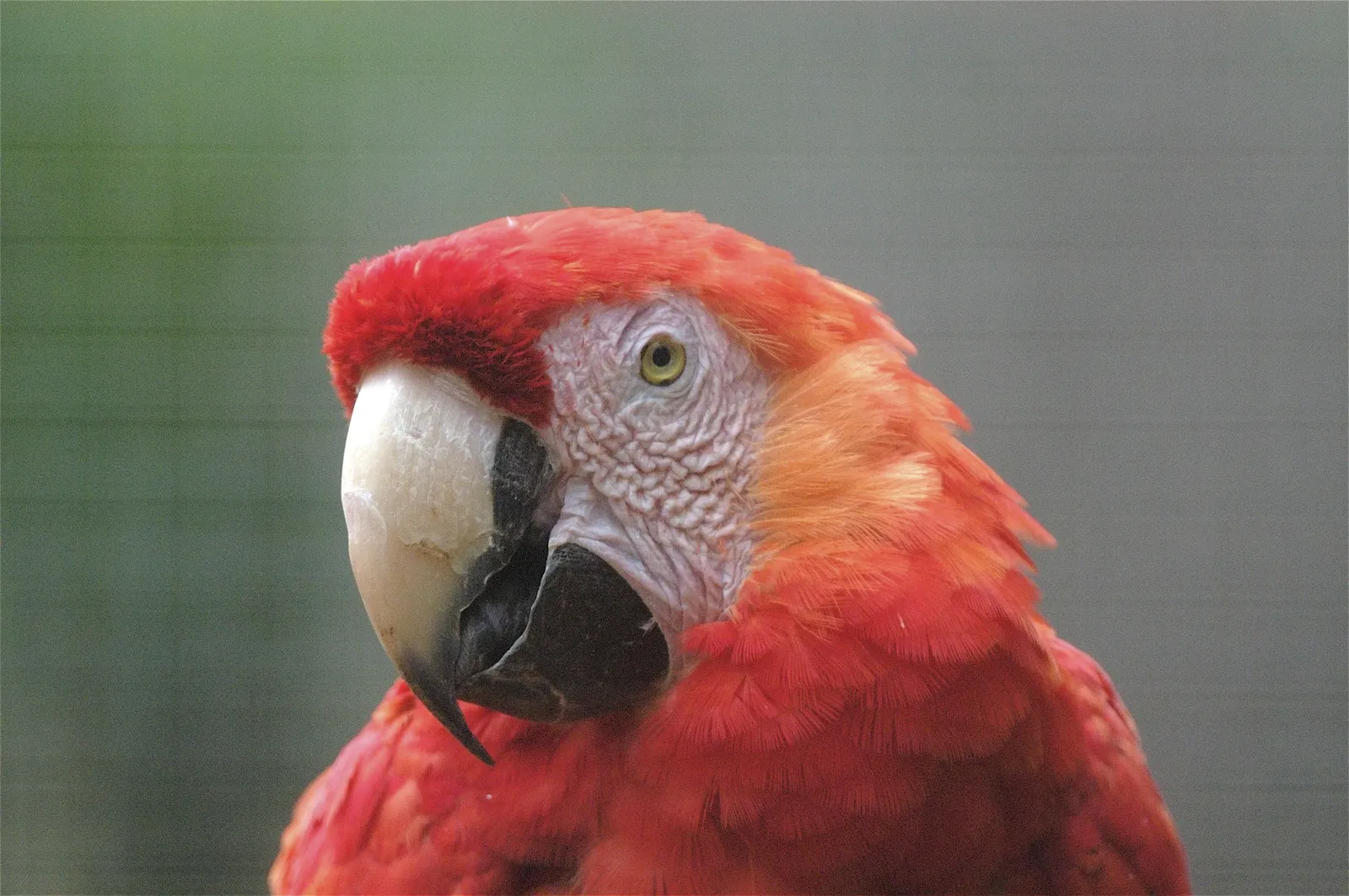
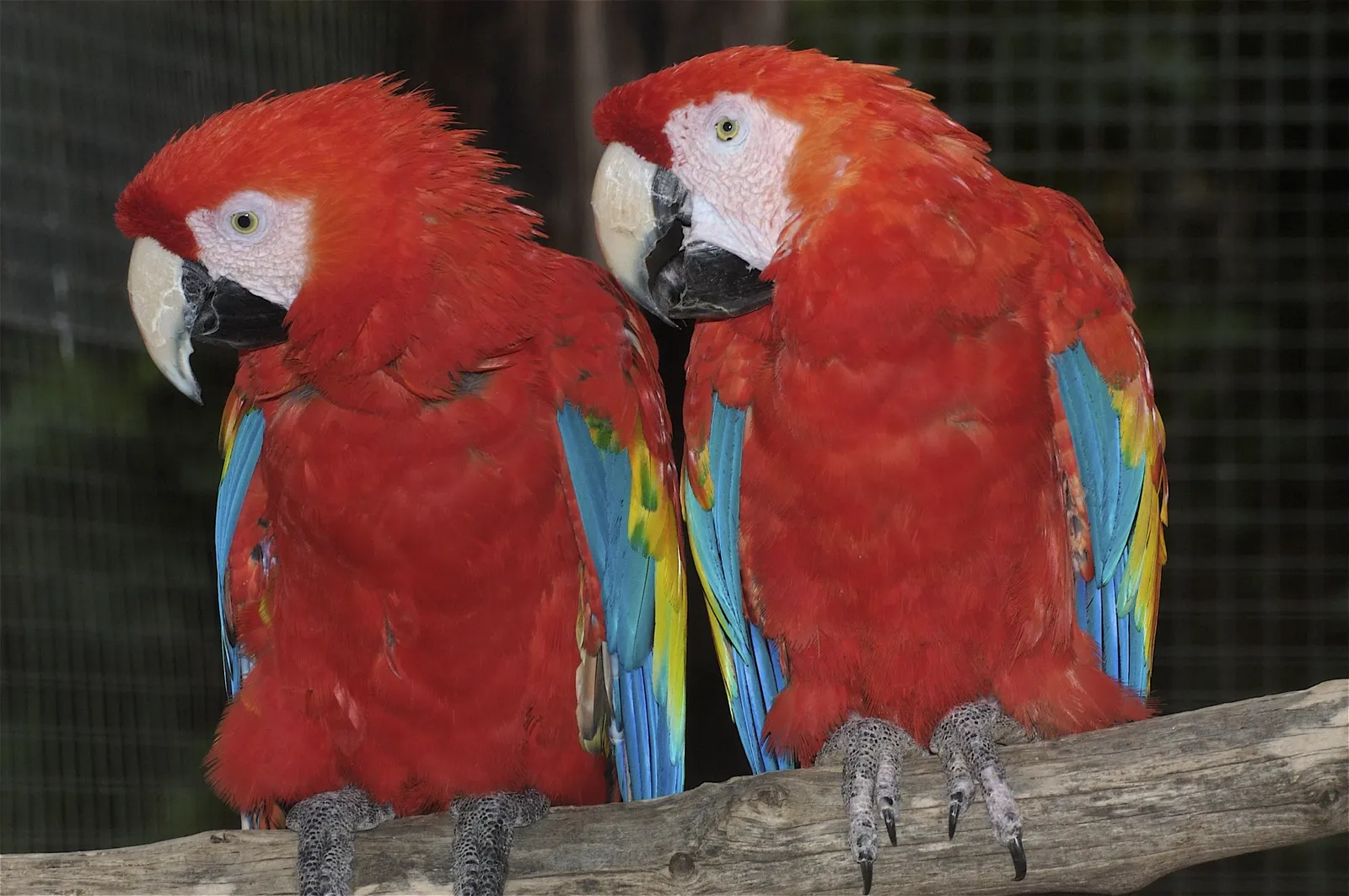
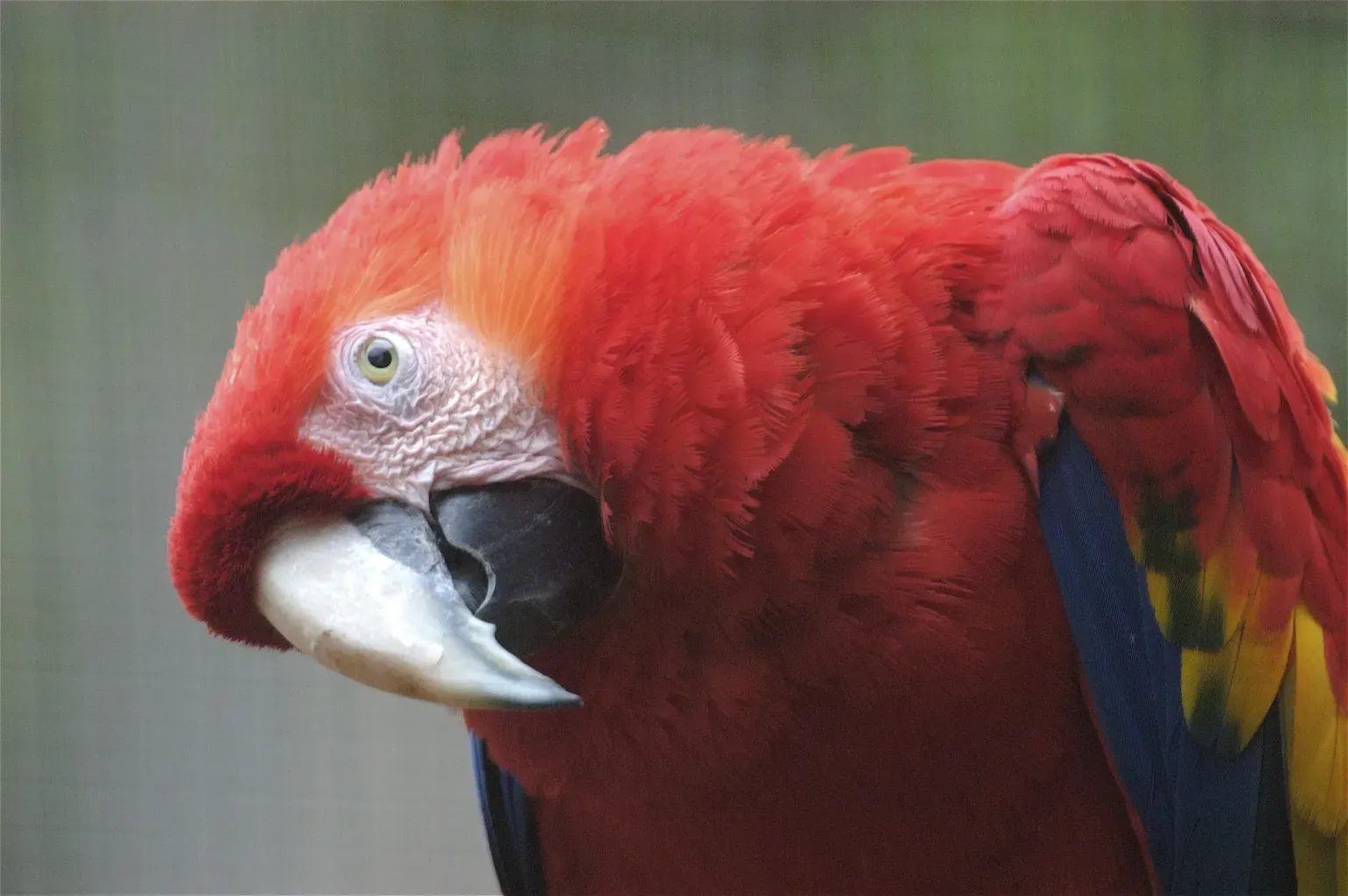
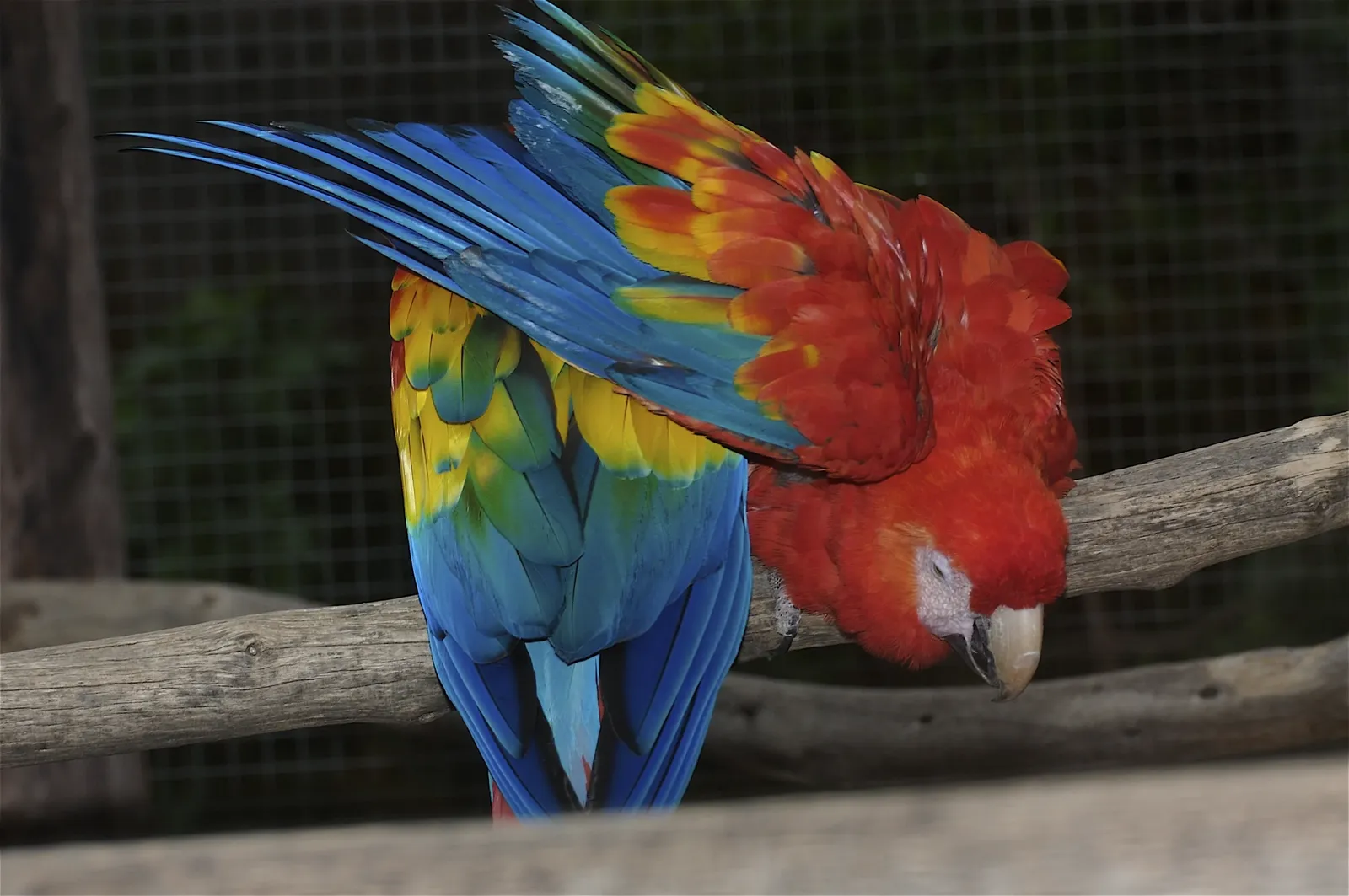
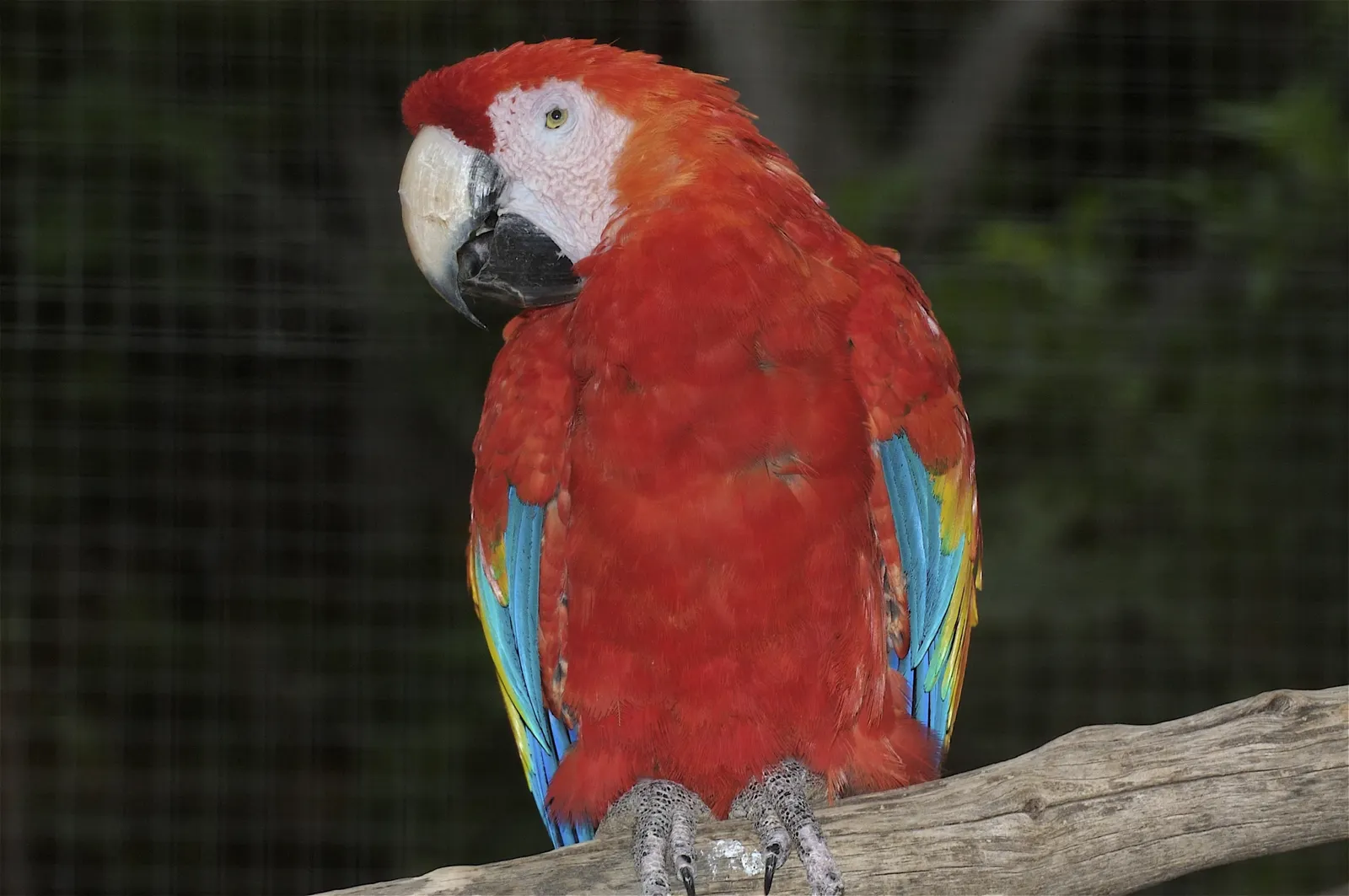
This bird is a spectacle of brilliant colours. Its robust body is covered with predominantly red feathers, which are mixed with shades of blue and yellow on the wings and tail, creating an impressive visual display.
Its strong, curved bill is an essential tool for its survival, allowing it to crack nuts and hard seeds. In addition, its strong wings allow it to soar deftly through the skies of the rainforests.
The species is relatively secure in the wild and faces no immediate risk of extinction.
Reproduction
The scarlet macaw breeds from the age of four years. In the breeding season, the female lays up to four eggs, which she incubates for 24-28 days. The chicks remain in the nest for about three to four months. Macaws are social birds that form large flocks.
Behaviour
The scarlet macaw is a diurnal and very social bird. It is characterised by its loud vocalisations during flight, which are important for communication. Pairs form lifelong bonds. At night, related groups form roosts in the vegetation of the trees.
Threats
The scarlet macaw faces several threats to its survival. The main threat is the loss of their natural habitat due to deforestation and fragmentation of tropical forests. This has reduced their living space, leaving them without suitable nesting and breeding sites. Another major threat is illegal animal trafficking. In addition, macaws in general are threatened by illegal wildlife trafficking and are one of the species banned for trade by the Convention on International Trade in Endangered Species of Wild Fauna and Flora (CITES).
Feeding
Its main food source is seeds, nuts and other dried fruits. In addition, it also consumes nectar, fruit and vegetation, such as flowers. This bird has the ability to ingest clay, especially on days when food is scarce and they need to ingest more toxic foods. Its strong, hooked beak allows it to open seeds and nuts, dig for small insects and collect various fruits.
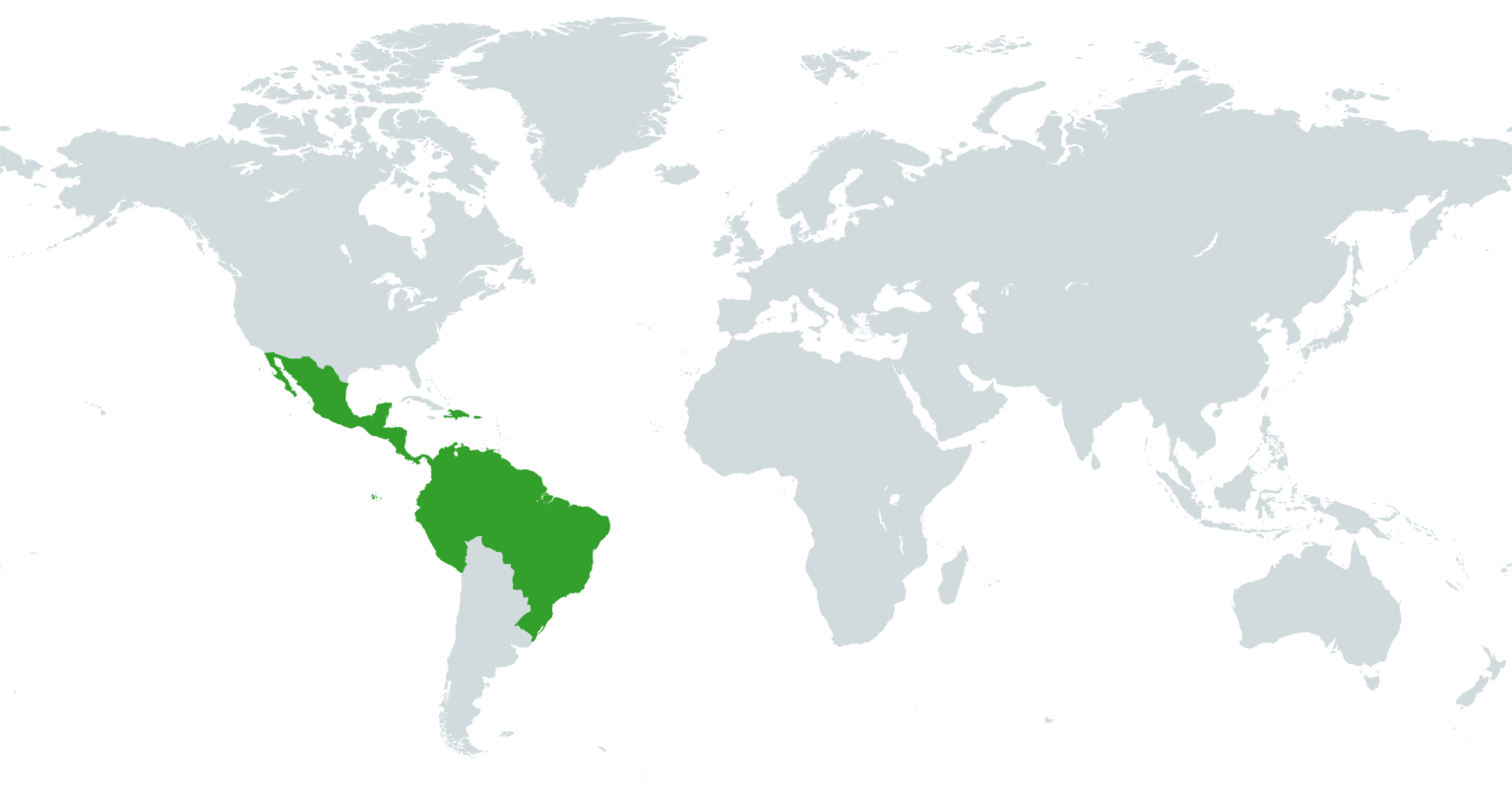
Distribution
VU (Vulnerable)
It is at high risk of extinction in the medium term.
NT (Near Threatened)
It is not yet at risk, but could be soon if conditions worsen.
ALL
Not Used
EX (Extinct)
There are no longer any living individuals of the species.
EW (Extinct in the wild)
Only specimens survive in captivity or in scientific collections.
EN (Endangered)
It has a very high risk of disappearing in the wild if conservation measures are not taken.
CR (Critically Endangered)
It faces an extremely high risk of extinction in the near future.