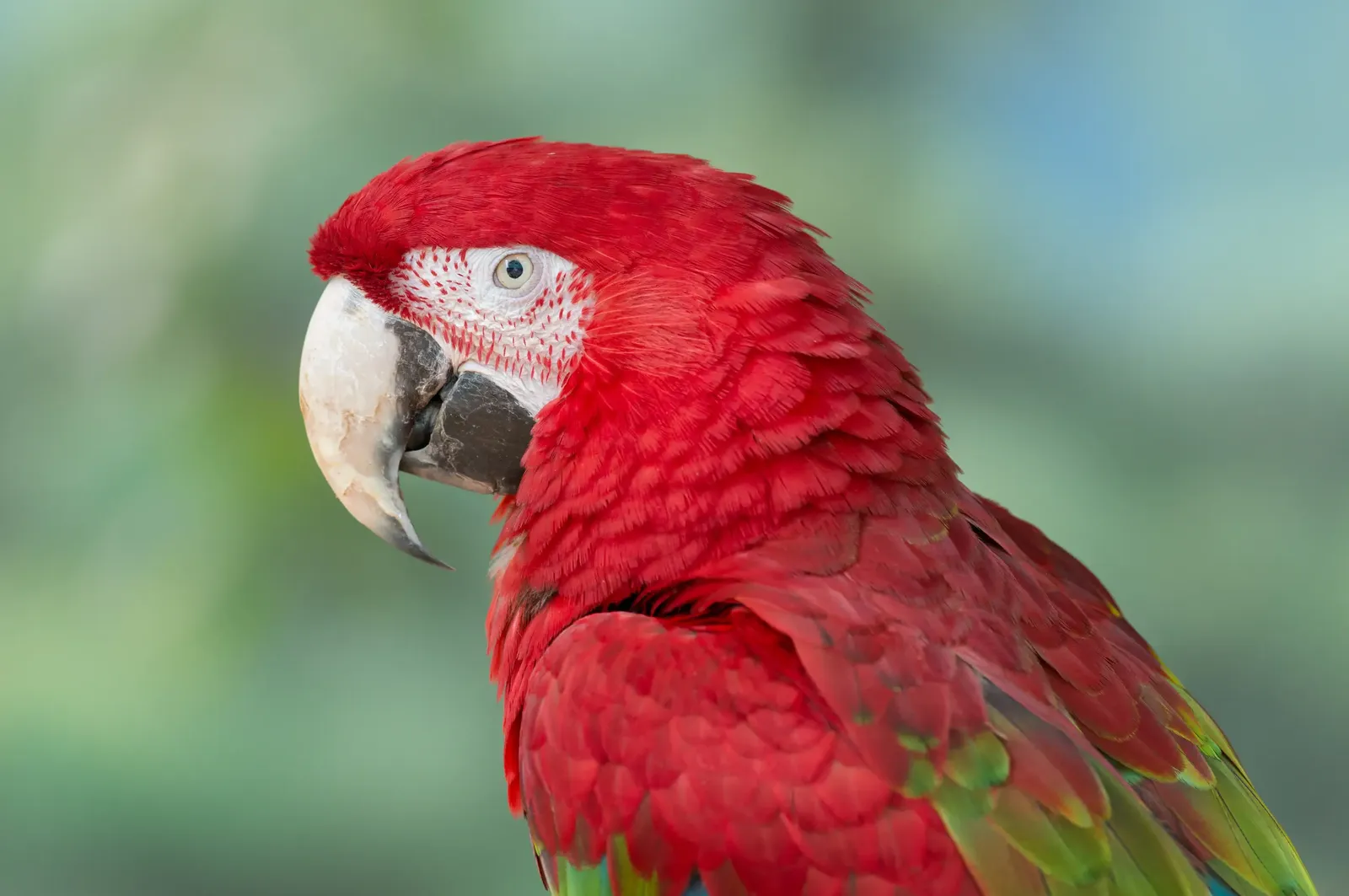
Its plumage is intensely red, with white areas on the face and small red feathers all around.
It also has red shoulders and dorsal part, green and navy blue wings, and a long tail with a blue tip.
Its strong bill is adapted for cracking nuts.
The eyes are yellow, the legs are dark, and the toes of the left leg act as hands for handling food.
The species is relatively secure in the wild and faces no immediate risk of extinction.
Reproduction
Pairs are monogamous and nest in cavities high up in trees. The clutch consists of 2-3 eggs that hatch in about 28 days.
Behaviour
It is social and forms small flocks. Forages for minerals (clay) in groups. Communicates with loud vocalisations.
Threats
Habitat loss: Deforestation and the expansion of agriculture and livestock reduce their living space.
Illegal hunting and trade: The scarlet macaw is a sought-after species in the exotic pet market. Illegal capture and trade severely affect their populations.
Feeding
It feeds mainly on nuts, dried fruits and seeds, as well as fruits.
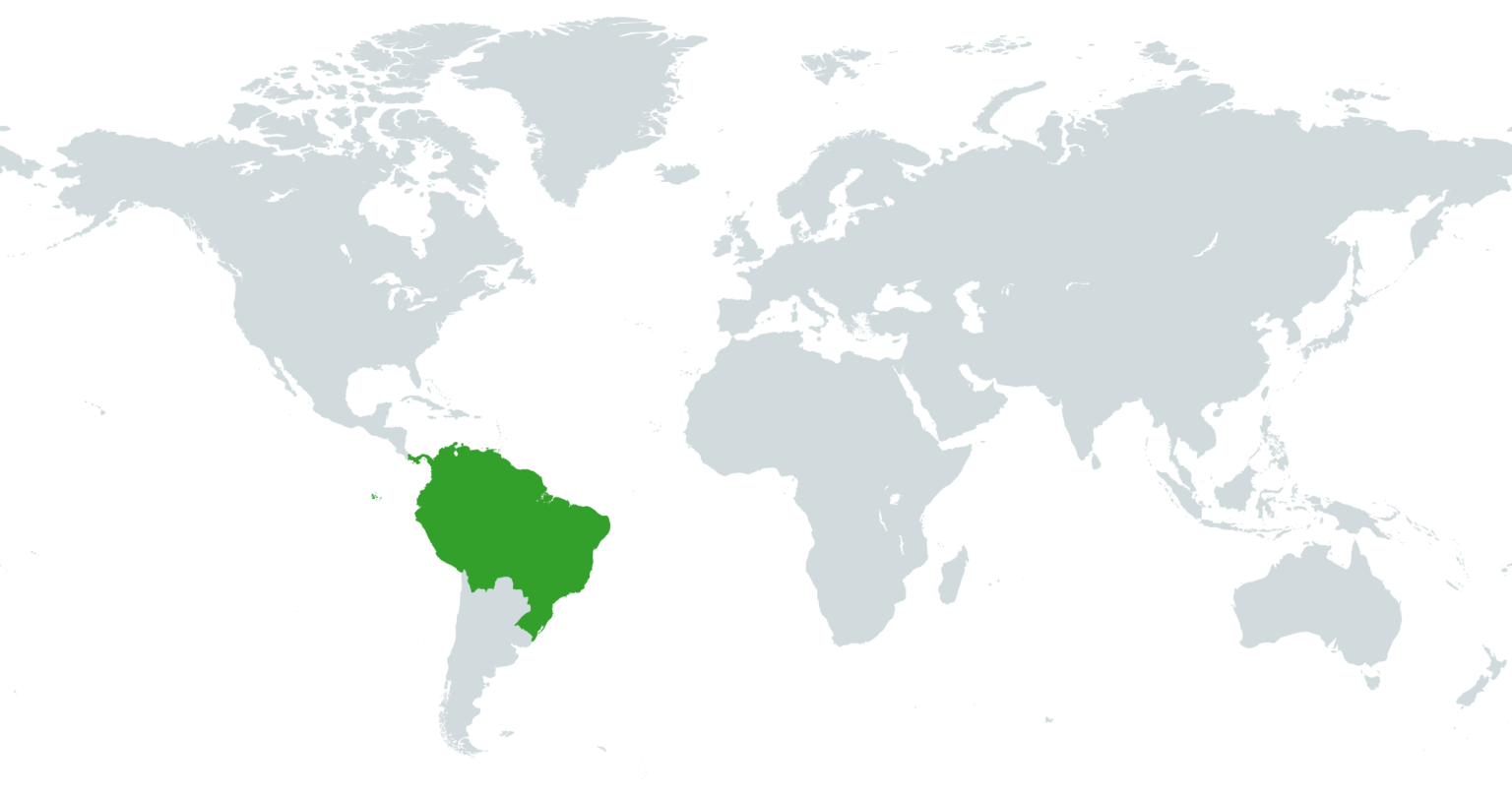
Distribution
Feeding
Their diet consists mainly of insects, small mammals, birds and reptiles.
They also hunt mice and other rodents
VU (Vulnerable)
It is at high risk of extinction in the medium term.
NT (Near Threatened)
It is not yet at risk, but could be soon if conditions worsen.
ALL
Not Used
EX (Extinct)
There are no longer any living individuals of the species.
EW (Extinct in the wild)
Only specimens survive in captivity or in scientific collections.
EN (Endangered)
It has a very high risk of disappearing in the wild if conservation measures are not taken.
CR (Critically Endangered)
It faces an extremely high risk of extinction in the near future.