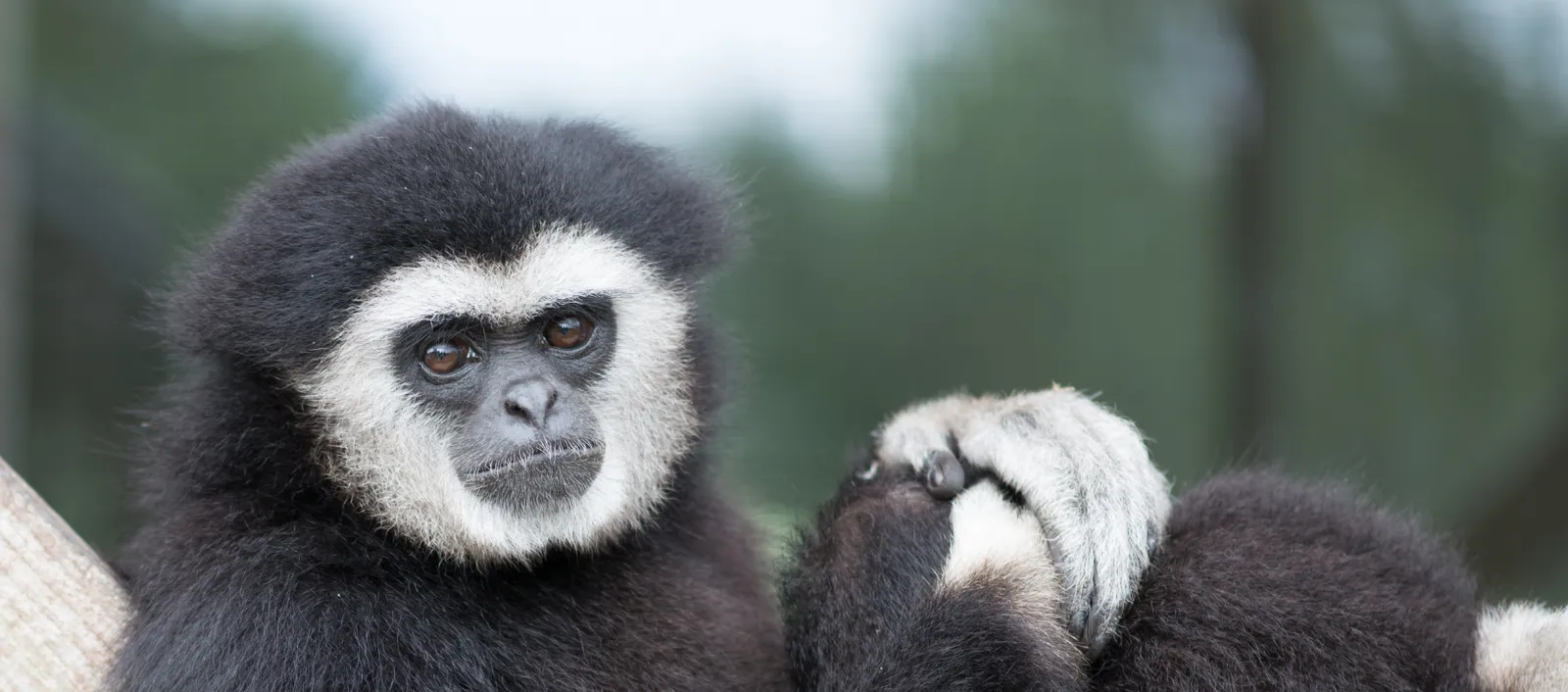
The white-handed gibbon, or Hylobates lar, is a hominoid primate of the family Hylobatidae. This ape is known for its slender appearance, slender body, relatively long legs and very long arms. It has no tail.
Its fur is dense and can vary in colour from black, dark brown to reddish. A distinctive feature is the white colour of its hands and feet, as well as a ring of white hair surrounding its black face². Both males and females can have all colour variations.
In addition, this gibbon has special adaptations for its arboreal life. Its long arms and elongated, hooked fingers are ideal for holding on to branches. Its wrist also has adaptations, where the ball-and-socket joint makes it more flexible and rotatable. With all these adaptations, its life in the trees is easier.
It has a very high risk of disappearing in the wild if conservation measures are not taken.
Reproduction
The white-handed gibbon reaches sexual maturity at 6 to 8 years of age. Breeding can occur at any time of the year. The gestation period is approximately 200 days. Females usually have a single calf every two to four years.
Behaviour
The white-handed gibbon, Hylobates lar, is a social and territorial primate. It lives in monogamous family groups and defends its territory with high-pitched cries. Group members show great affection for each other, often hugging and have a friendly facial expression. This social and territorial behaviour makes it a unique inhabitant of the forests where it lives.
Threats
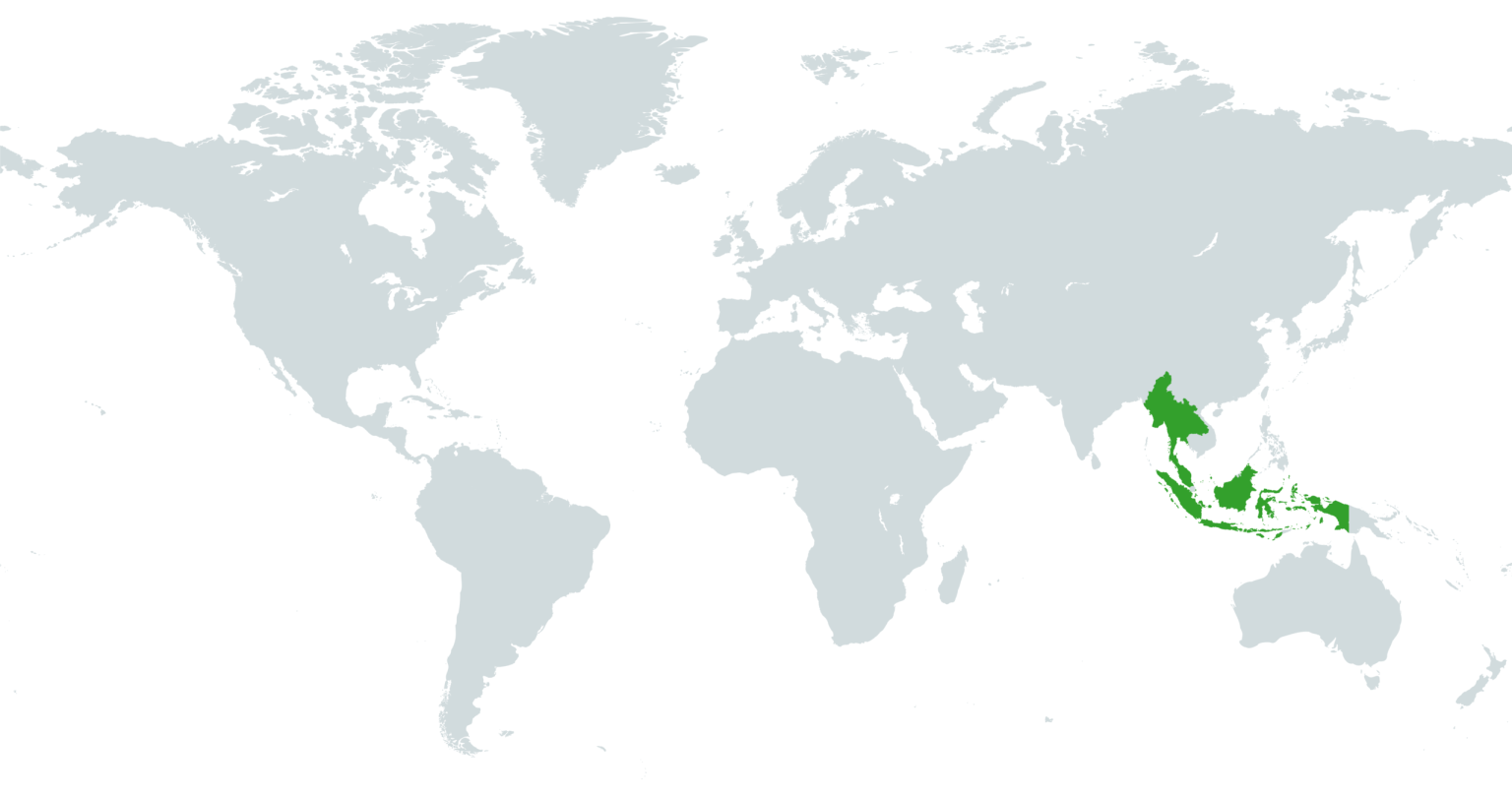
The white-handed gibbon, Hylobates lar, faces several threats that have led to a decline in its population. The main threat is habitat loss due to deforestation and conversion of forests to agricultural land. In addition, hunting for the pet trade and traditional medicine has also contributed to its decline. The historical distribution of this species has been greatly reduced and fragmented, having disappeared from some areas such as China. It is now listed as endangered. It is crucial that conservation measures are taken to protect this species and its habitat.
Feeding
The white-handed gibbon, Hylobates lar, has an omnivorous diet. A large percentage of its diet consists of fruit, especially figs (Ficus), but it also eats grapefruit, mangoes, leaves, flowers and buds. In addition to its plant-based diet, this gibbon also feeds on insects and small birds, which it catches with great agility while swinging in the trees. It also feeds on the eggs of these birds. After the morning cries, the group is on the move in search of food and in the afternoon there is a second meal, before the evening cry session.
Distribution
VU (Vulnerable)
It is at high risk of extinction in the medium term.
NT (Near Threatened)
It is not yet at risk, but could be soon if conditions worsen.
ALL
Not Used
EX (Extinct)
There are no longer any living individuals of the species.
EW (Extinct in the wild)
Only specimens survive in captivity or in scientific collections.
CR (Critically Endangered)
It faces an extremely high risk of extinction in the near future.
LC (Least Concern)
The species is relatively secure in the wild and faces no immediate risk of extinction.