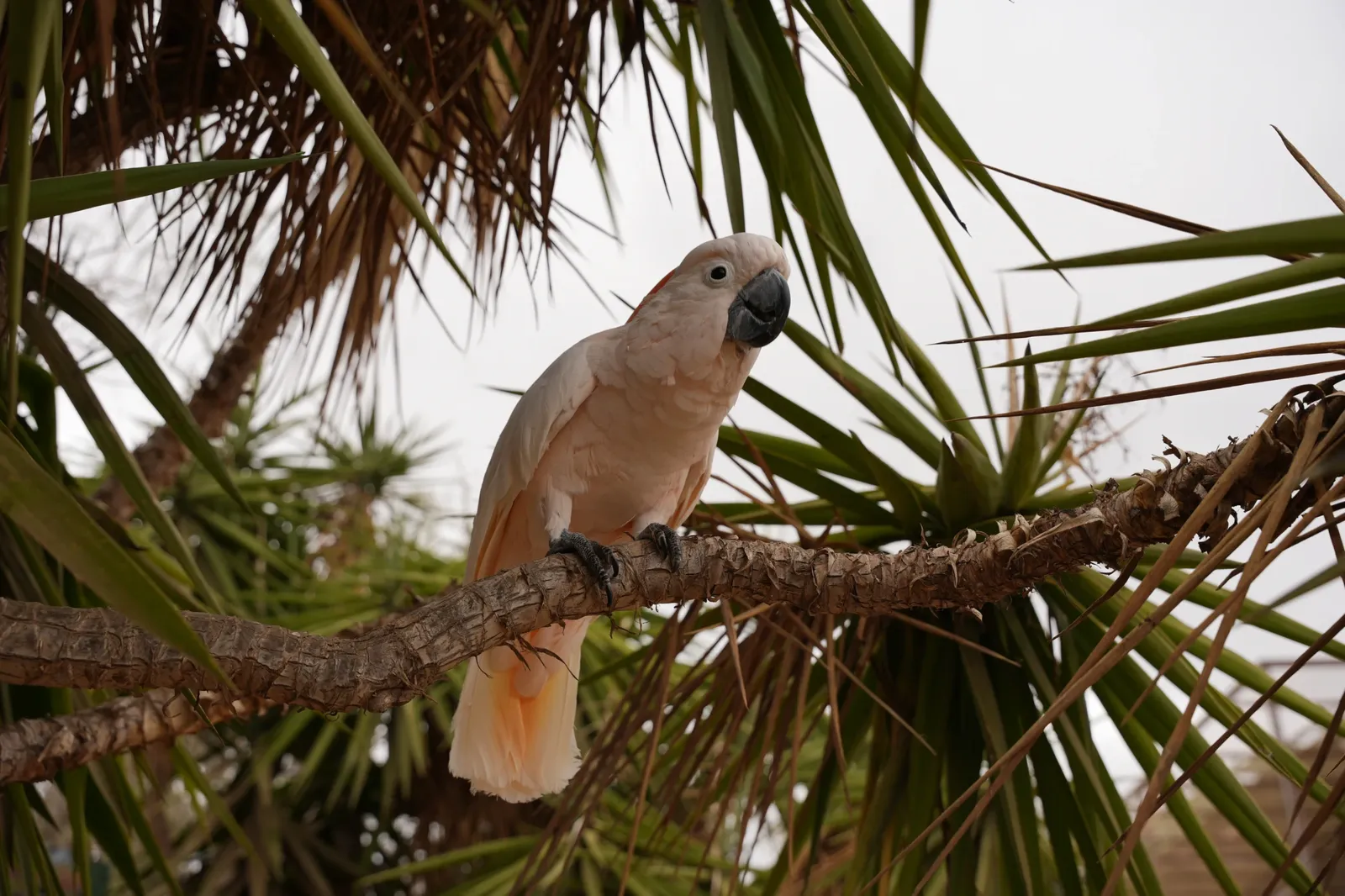
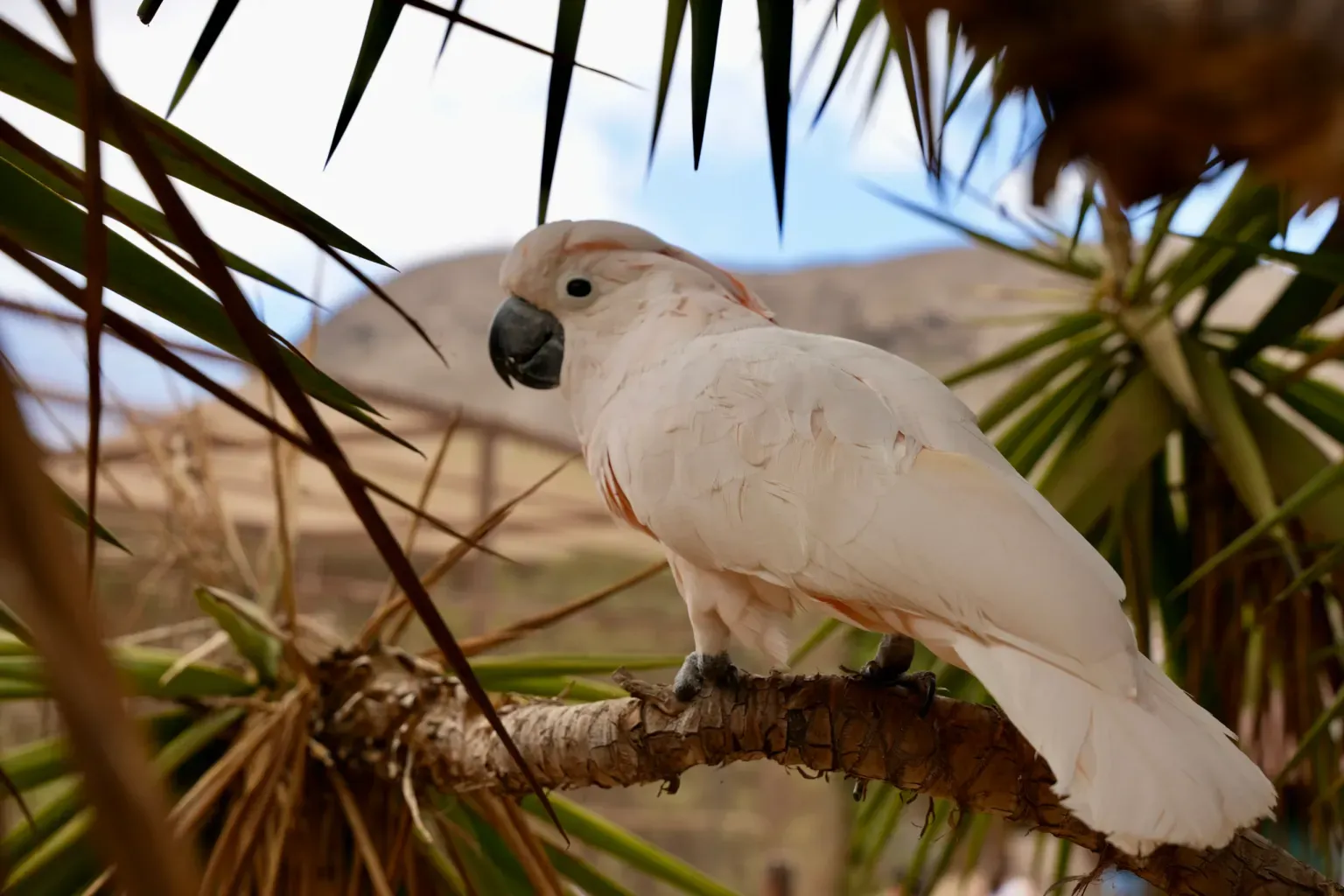
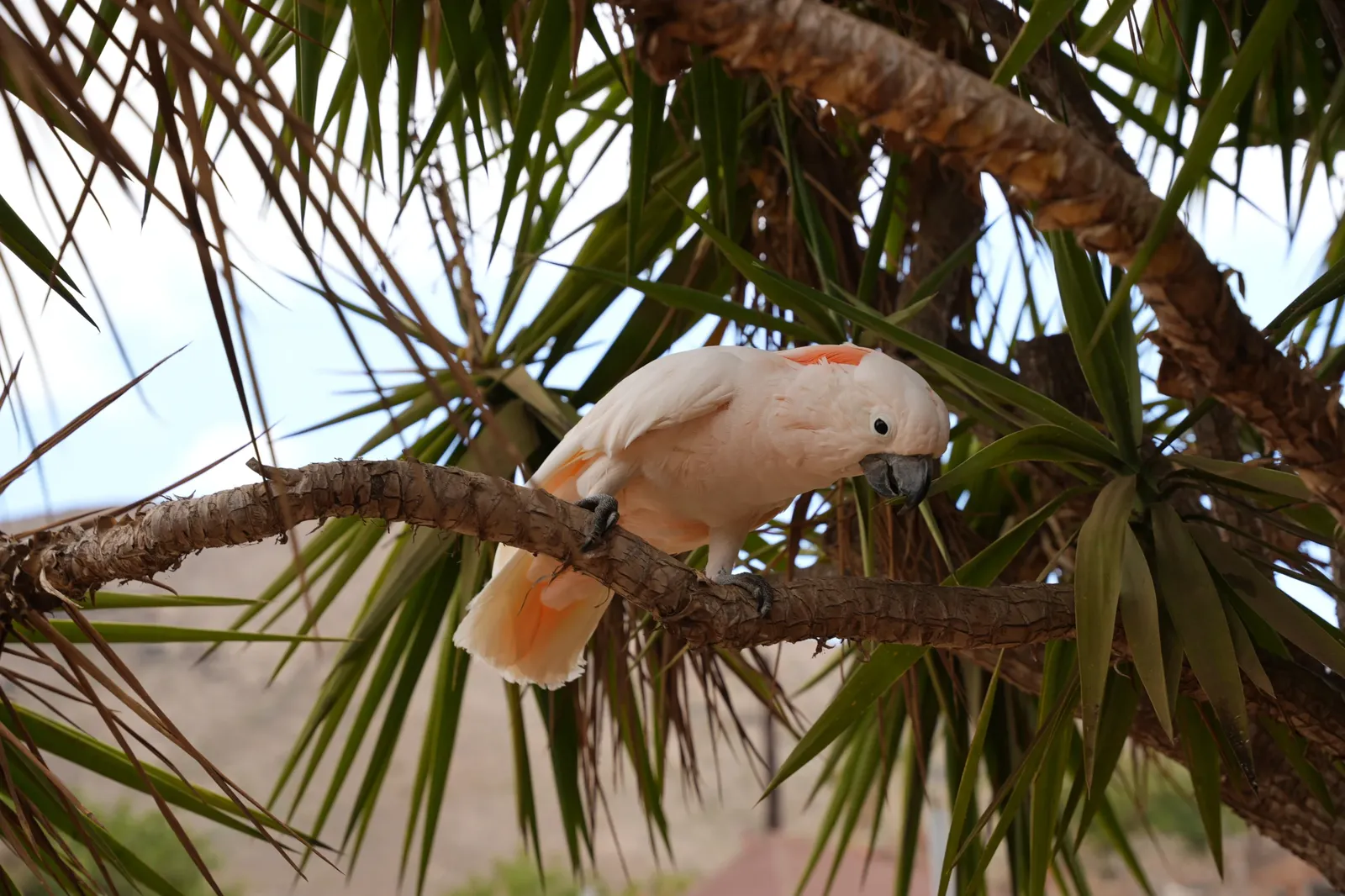
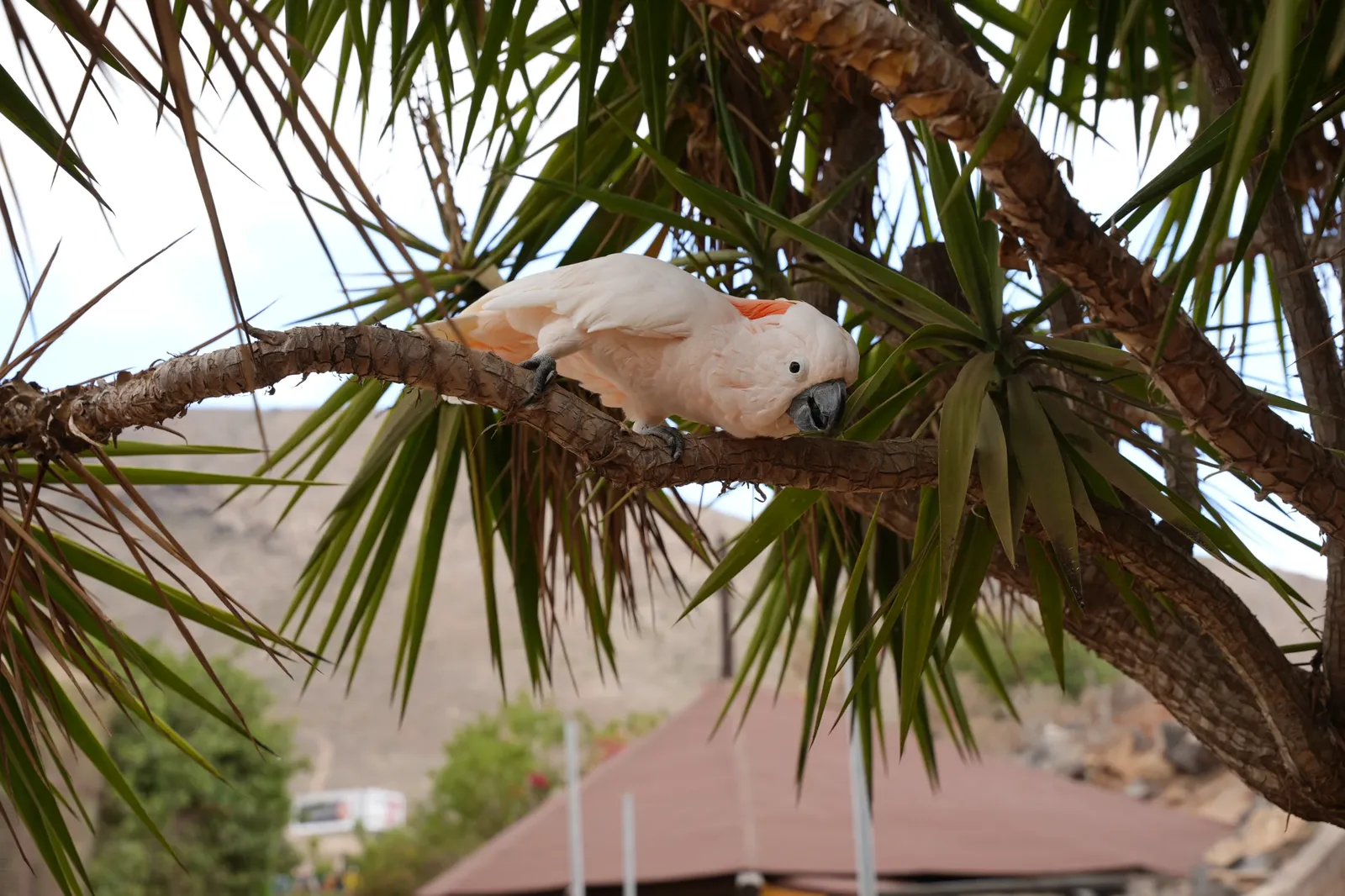
It has pinkish-white feathers with a definite peach sheen, a slight yellow on the underside of the wings and on the underside of the tail feathers.
In addition, like many other cockatoos, it has an erectile crest which it unfurls when it feels attentive or threatened, revealing bright orangey red or salmon-coloured feathers.
It is at high risk of extinction in the medium term.
Reproduction
Generally, the female lays 3 or 4 eggs, which she incubates for about 35 days. The chicks have the same colours as their parents, except for the red reflex, which will only appear after one or two years.
Behaviour
The cockatoo is a social and active bird that communicates by loud and distinctive calls. Their erectile crest reveals their emotional state, and they are excellent fliers. They build nests in tree cavities and are intelligent and curious.
Threats
The cockatoo is listed as a vulnerable species due to capture for the illegal pet trade and habitat loss.
Feeding
Their diet consists mainly of seeds, nuts, fruits, coconuts and insects.
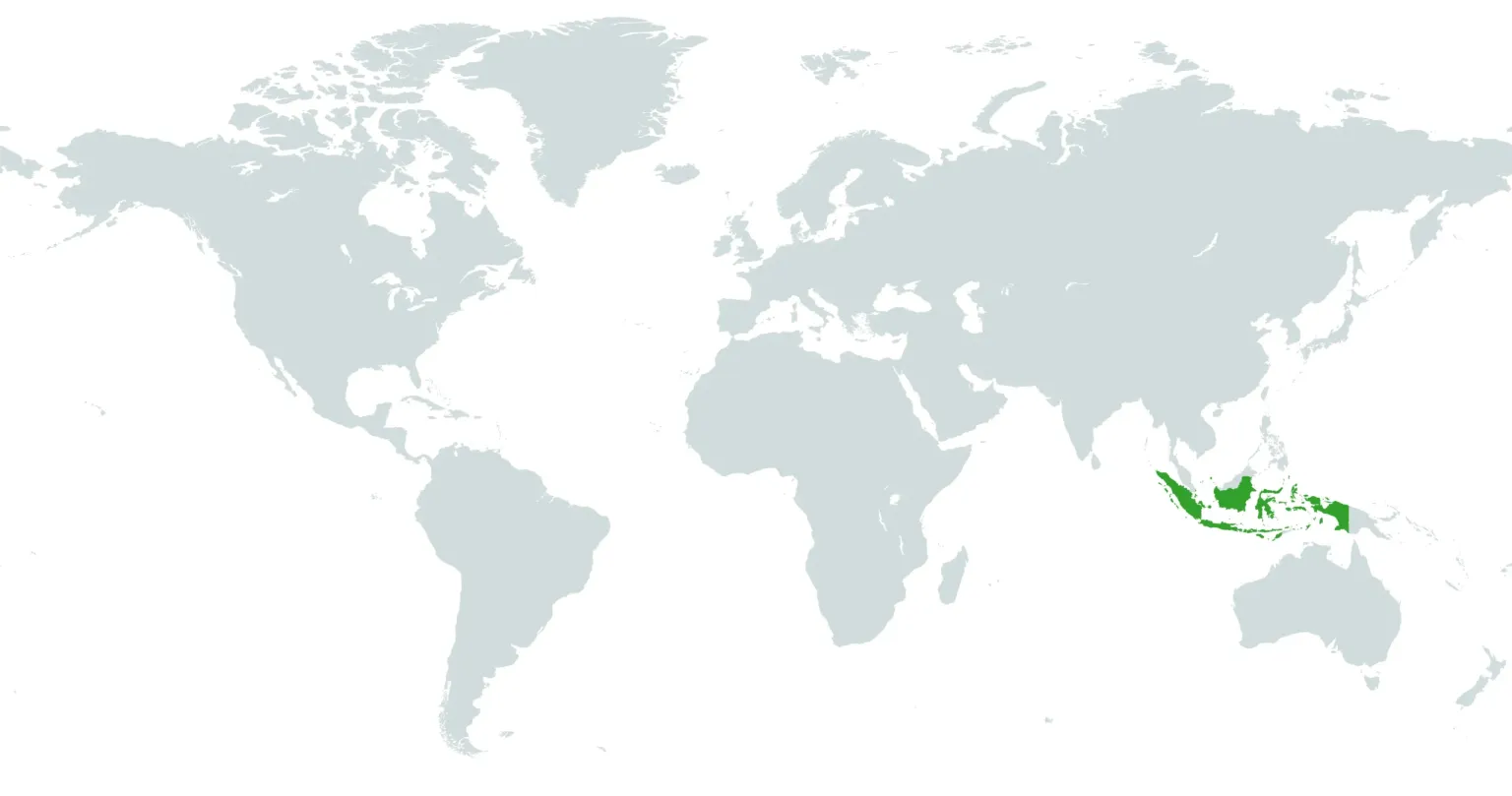
Distribution
NT (Near Threatened)
It is not yet at risk, but could be soon if conditions worsen.
ALL
Not Used
EX (Extinct)
There are no longer any living individuals of the species.
EW (Extinct in the wild)
Only specimens survive in captivity or in scientific collections.
EN (Endangered)
It has a very high risk of disappearing in the wild if conservation measures are not taken.
CR (Critically Endangered)
It faces an extremely high risk of extinction in the near future.
LC (Least Concern)
The species is relatively secure in the wild and faces no immediate risk of extinction.