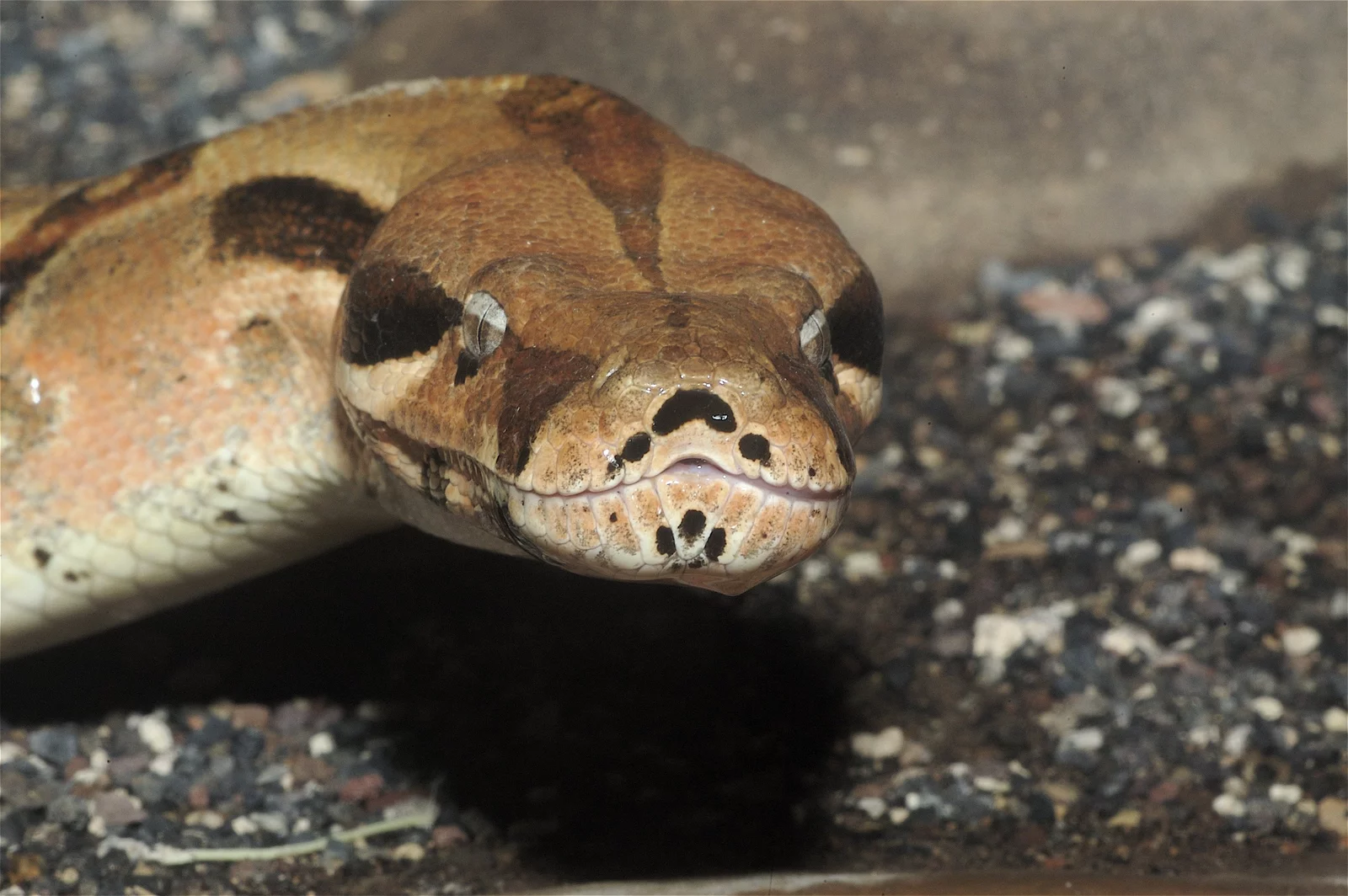
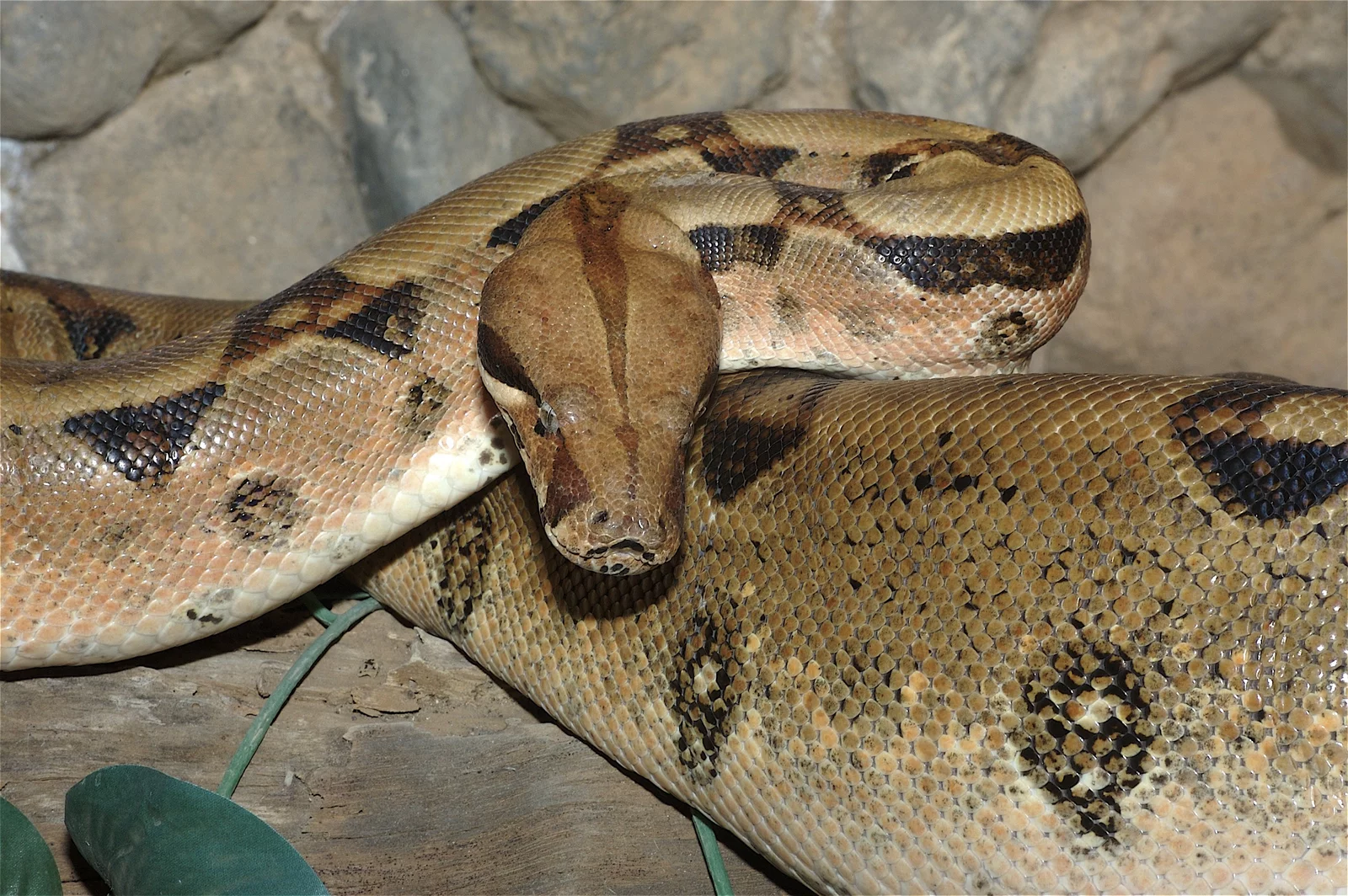
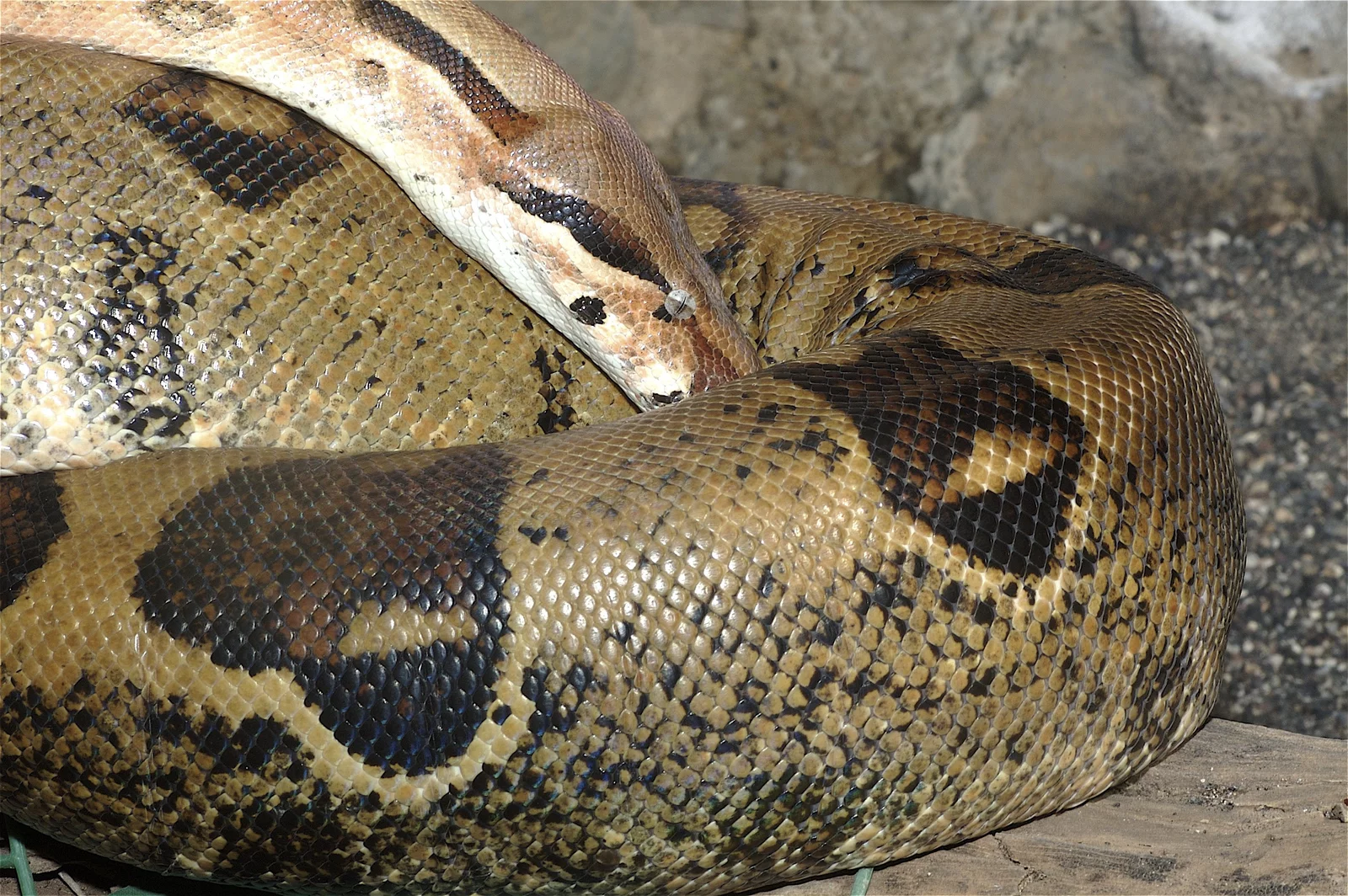
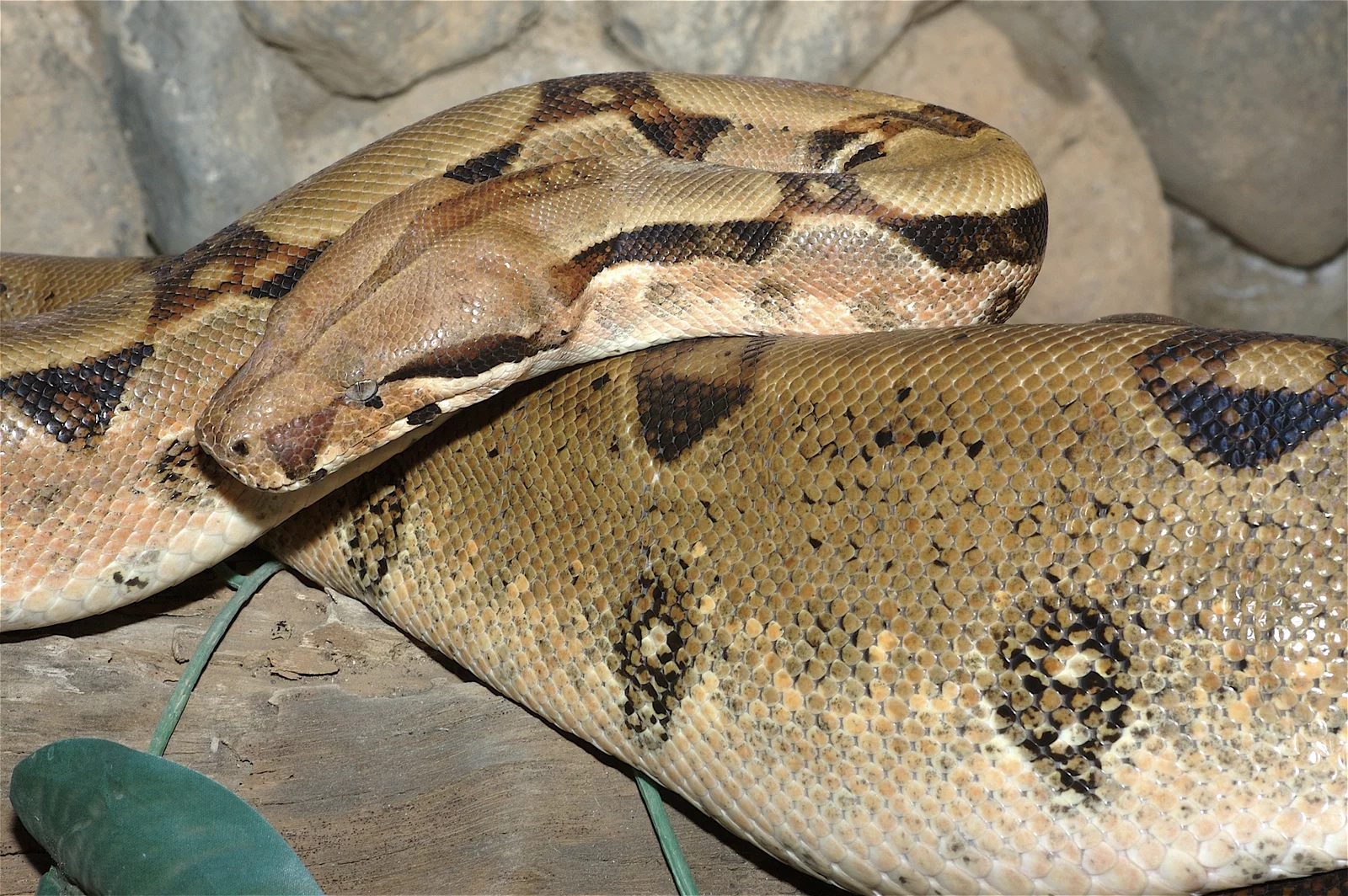
The Boa Constrictor is a snake with a skin that varies in shades of brown, green, yellow or red, with distinctive markings such as ovals, irregular diamonds, lines and circles.
Its jaw is made up of curved teeth, designed to grip its prey. These teeth are constantly replaced.
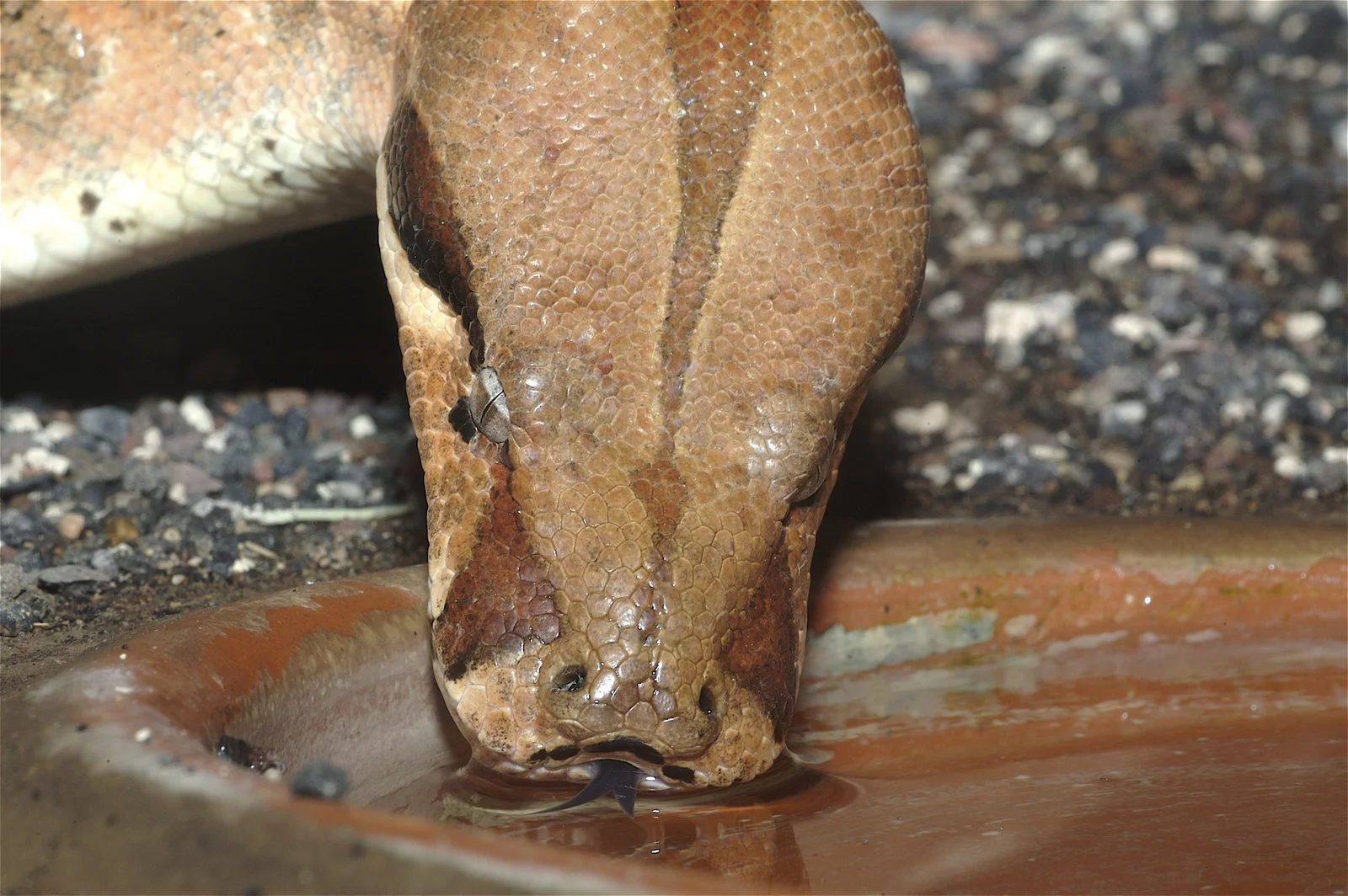
They also have an auxiliary organ called Jacobson's organ, which allows them to analyse particles in the environment through their tongue.
The species is relatively secure in the wild and faces no immediate risk of extinction.
Reproduction
The Boa Constrictor is an ovoviviparous species, which means that the young develop inside eggs that remain inside the mother until they are ready to hatch. The gestation period varies between 5 and 8 months, and the female can give birth to between 10 and 60 offspring in a single litter. This snake reaches sexual maturity between 2 and 4 years of age, and both males and females are polygamous, and may have several mates in the same reproductive period.
Behaviour
The Boa Constrictor is a generally solitary and nocturnal snake. During the day, it usually hides in the branches of trees or in deep hollows of logs. At dusk, it comes out to hunt. It is an excellent swimmer and can also climb trees with ease. It uses its forked tongue to detect scents and is usually a cautious and quiet animal, unless it feels threatened.
Threats
The Boa Constrictor faces several threats. The main one is human activity, which directly and indirectly affects its ability to survive and reproduce in its natural environment. This includes exploitation through illegal trade and capture for use in the leather industry. Land use changes, such as conversion of its habitat to crops, also represent a major risk. In addition, it faces natural hazards, such as predators including birds of prey, big cats and other carnivorous mammals.
Feeding
Boa constrictors are carnivorous and opportunistic in their diet. Its main prey are small mammals such as rodents, bats, birds and lizards. Larger boas may even prey on larger animals such as monkeys, agoutis and coatis. This snake captures its prey by stalking and wraps its own body around them, suffocating them as it kills by constriction. Finally, the animals are swallowed whole, always starting with the head.
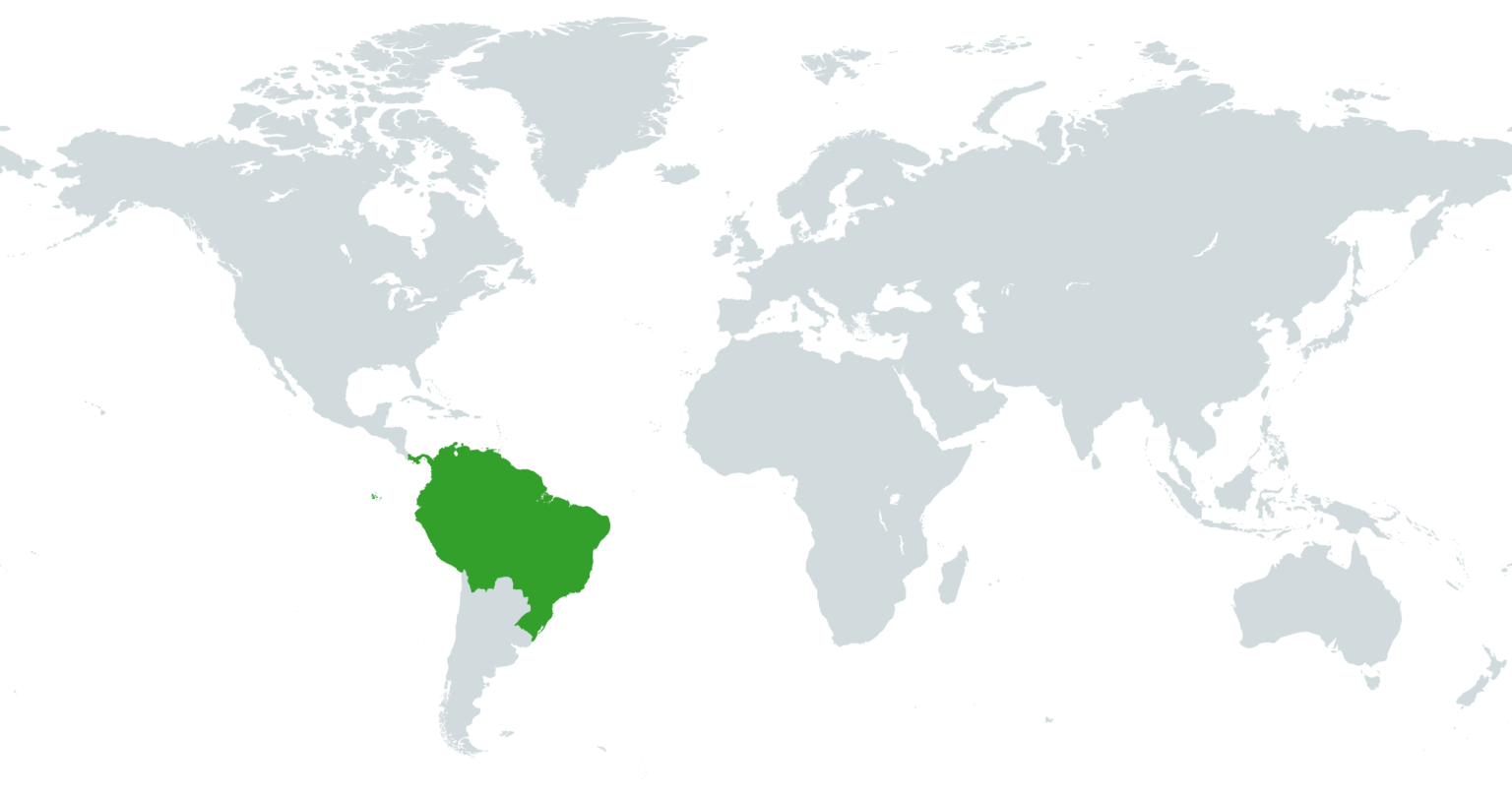
Distribution
VU (Vulnerable)
It is at high risk of extinction in the medium term.
NT (Near Threatened)
It is not yet at risk, but could be soon if conditions worsen.
ALL
Not Used
EX (Extinct)
There are no longer any living individuals of the species.
EW (Extinct in the wild)
Only specimens survive in captivity or in scientific collections.
EN (Endangered)
It has a very high risk of disappearing in the wild if conservation measures are not taken.
CR (Critically Endangered)
It faces an extremely high risk of extinction in the near future.