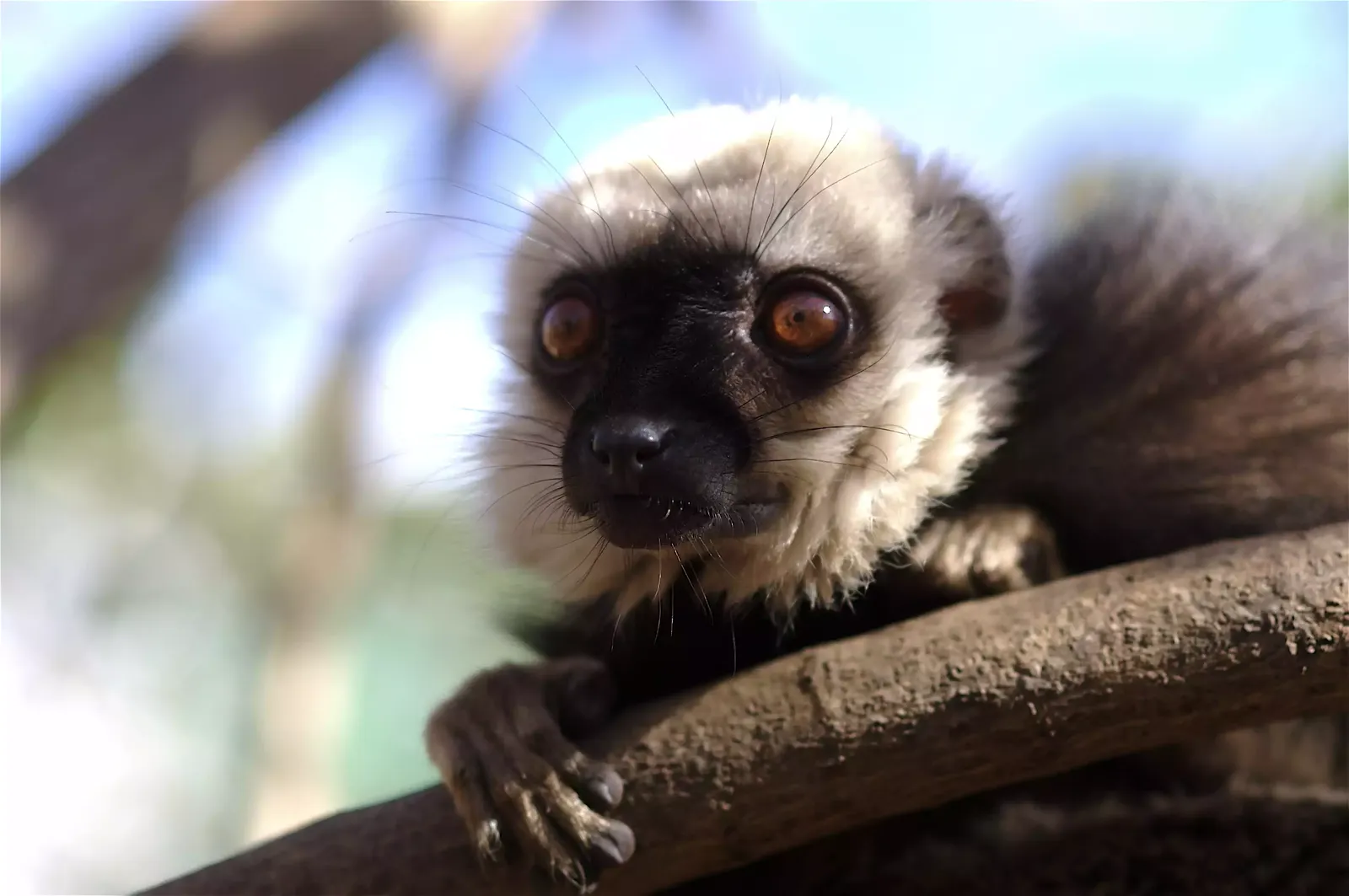
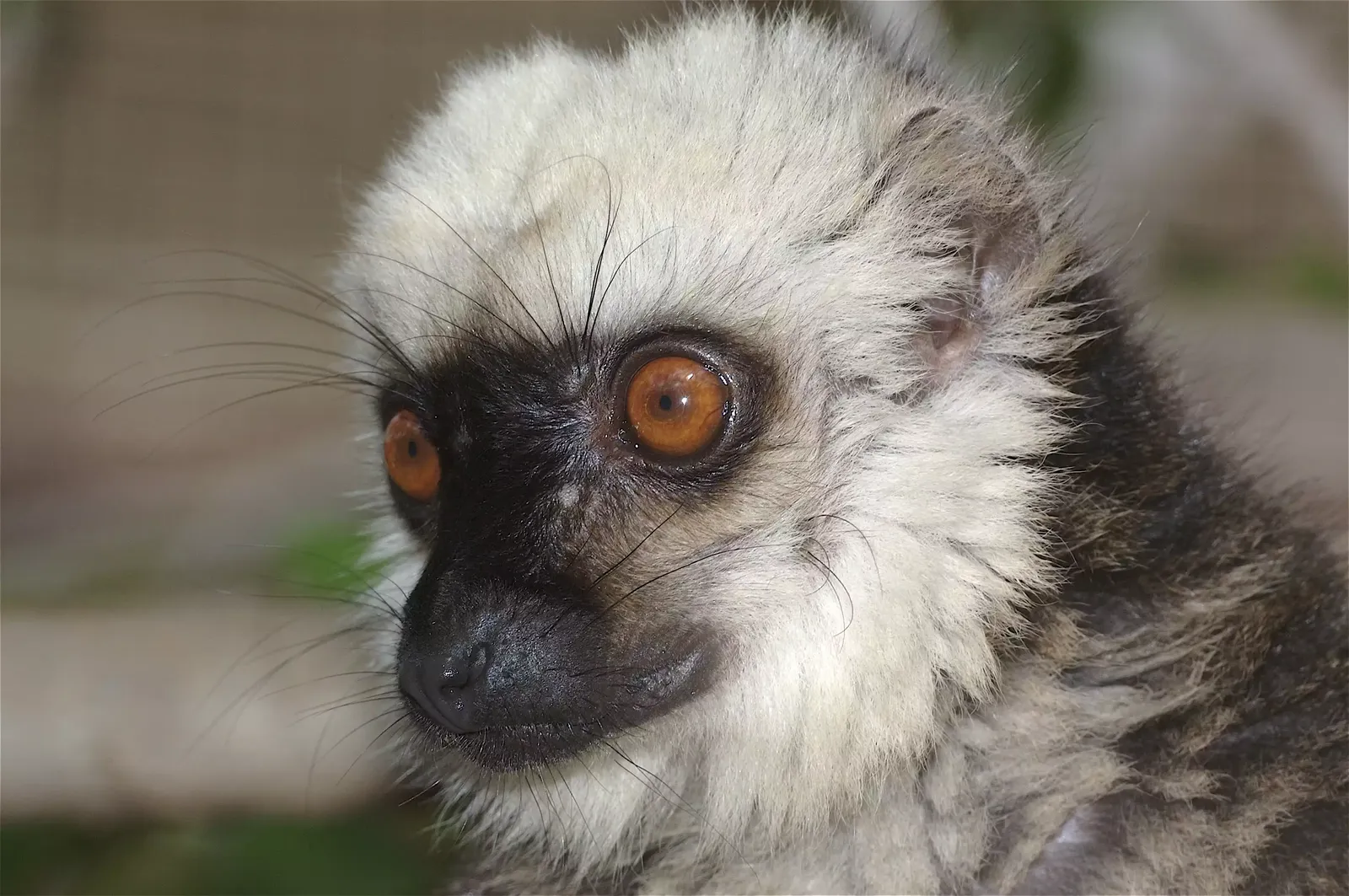
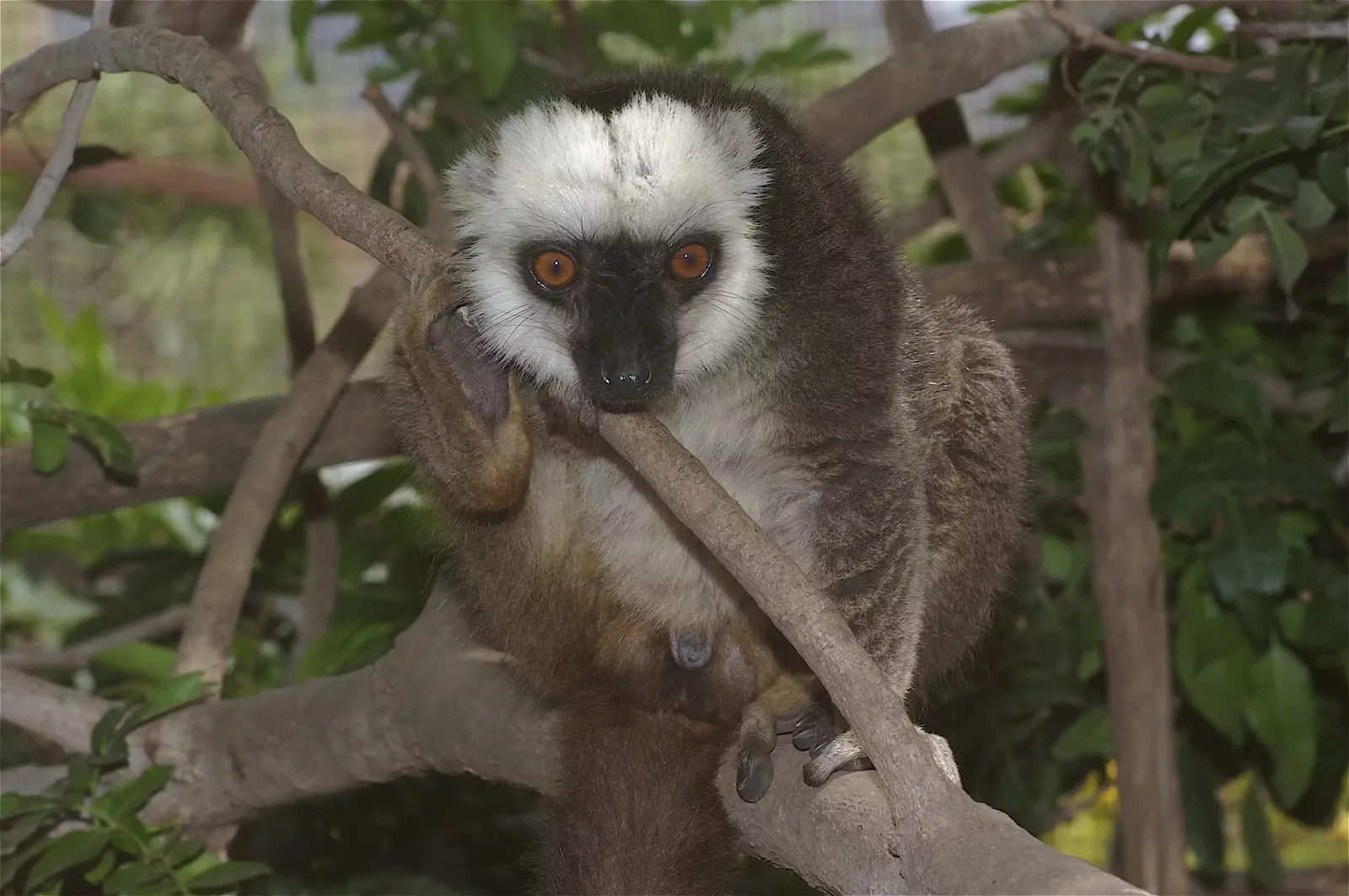
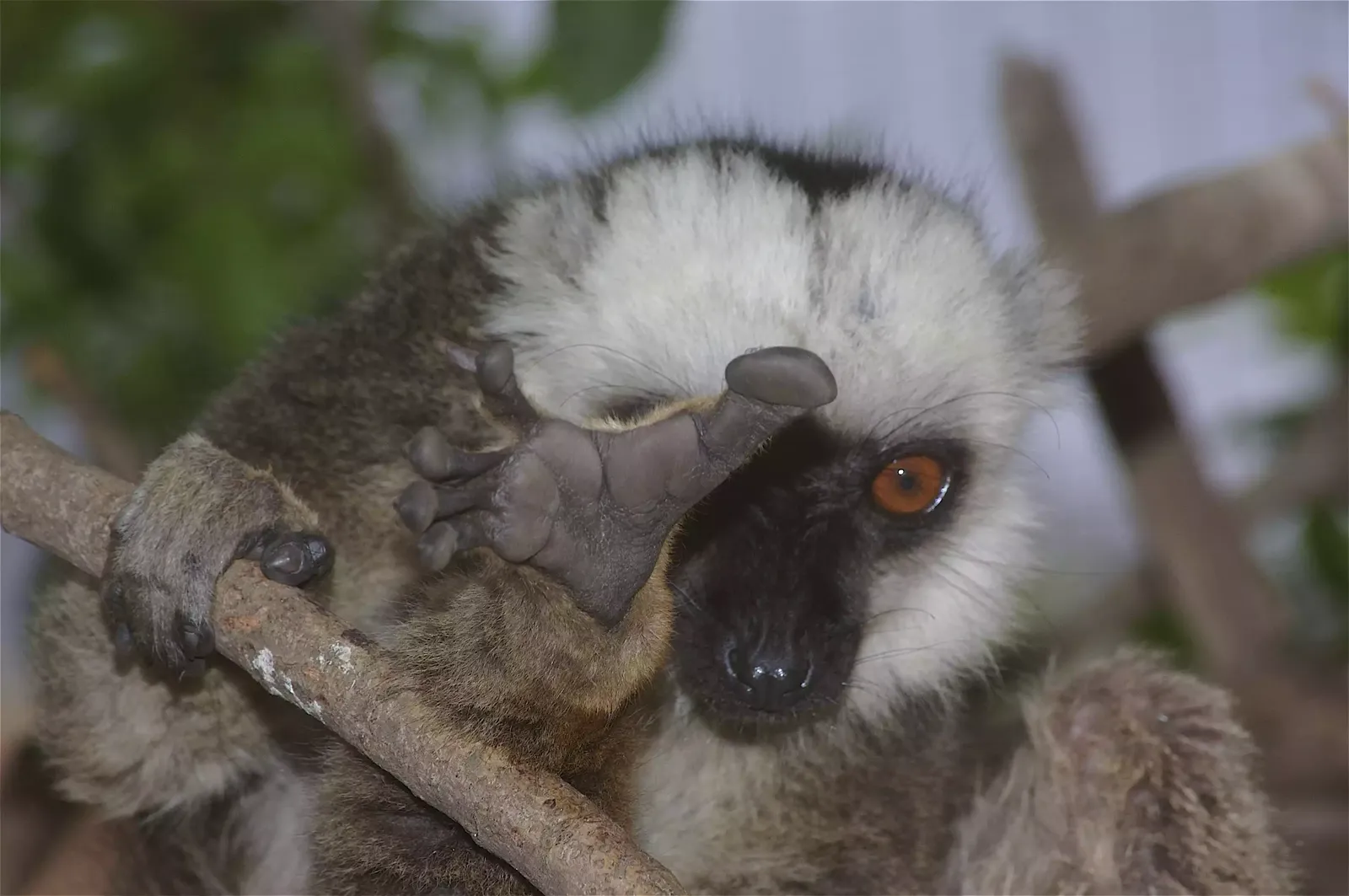
These lemurs are distinguished by their soft, dense white fur on the head and tail, which gives them their characteristic name.
The rest of their body is usually shades of grey or brown, allowing them to camouflage themselves in the jungle environment.
They are medium-sized animals with large, expressive eyes that give them a charming appearance.
It is at high risk of extinction in the medium term.
Reproduction
The breeding season generally occurs during the rainy season in Madagascar.
Females have a gestation period of approximately 4 months.
They usually give birth to a single calf, although occasionally they may give birth to twins.
The young are carried in the mother's womb for some time before they begin to explore on their own.
Behaviour
White-headed lemurs are social animals that live in close-knit family groups. You will observe how they interact with grace and affection, communicating through soft vocalisations and delicate gestures. They are known for their cooperative behaviour and their ability to forage for fruit and other food in the lush jungle of Madagascar.
Threats
Habitat loss due to deforestation and agriculture is a significant threat to this species.
Illegal hunting and the pet trade also pose risks.
Conservation efforts focus on the protection of their natural habitats and education about their ecological importance.
Feeding
They are mainly frugivorous, meaning that they feed mainly on fruit.
They also consume leaves, flowers, nectar and insects.
Their diet varies according to the availability of food in their habitat.
Distribution
NT (Near Threatened)
It is not yet at risk, but could be soon if conditions worsen.
ALL
Not Used
EX (Extinct)
There are no longer any living individuals of the species.
EW (Extinct in the wild)
Only specimens survive in captivity or in scientific collections.
EN (Endangered)
It has a very high risk of disappearing in the wild if conservation measures are not taken.
CR (Critically Endangered)
It faces an extremely high risk of extinction in the near future.
LC (Least Concern)
The species is relatively secure in the wild and faces no immediate risk of extinction.