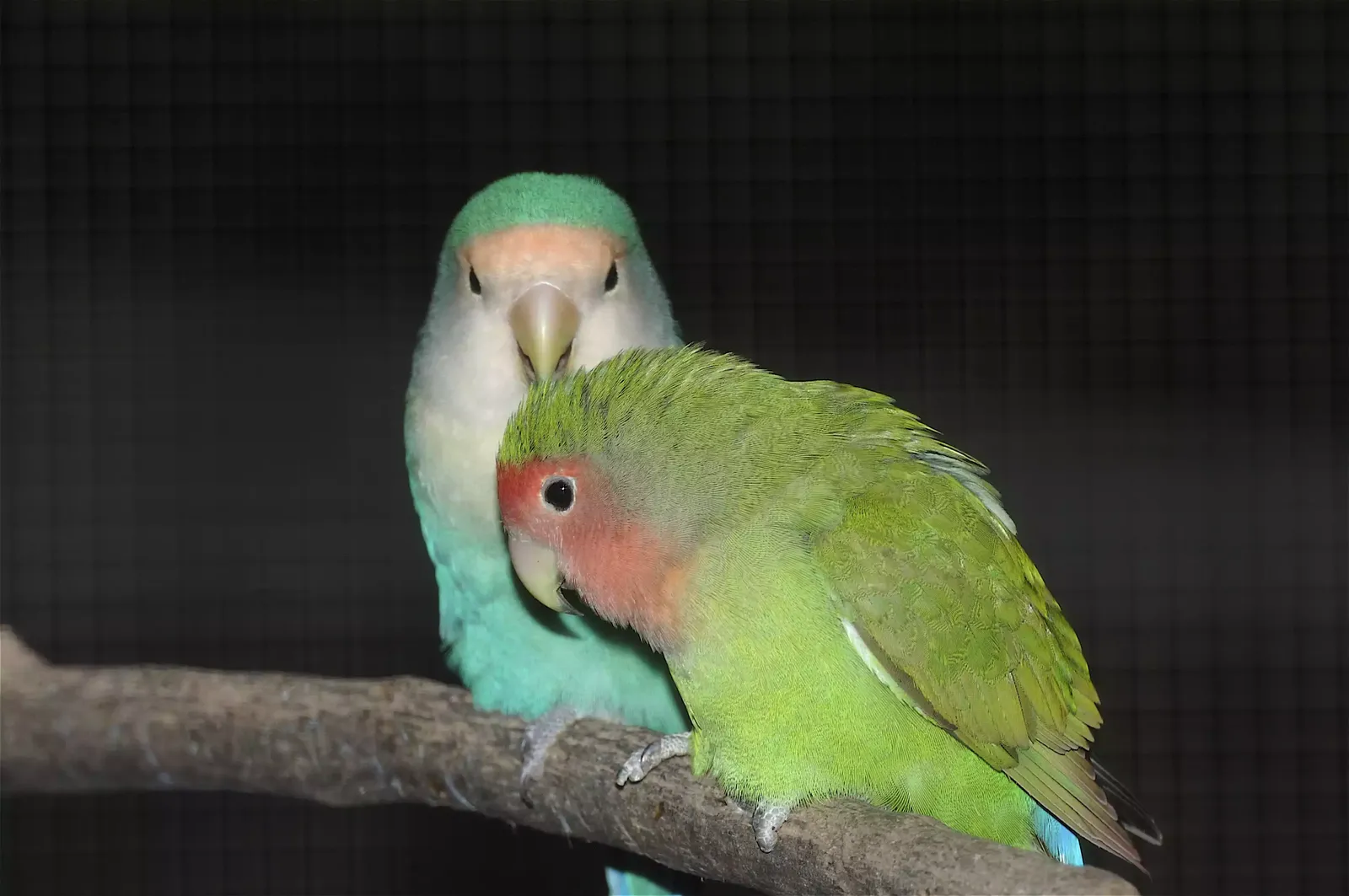
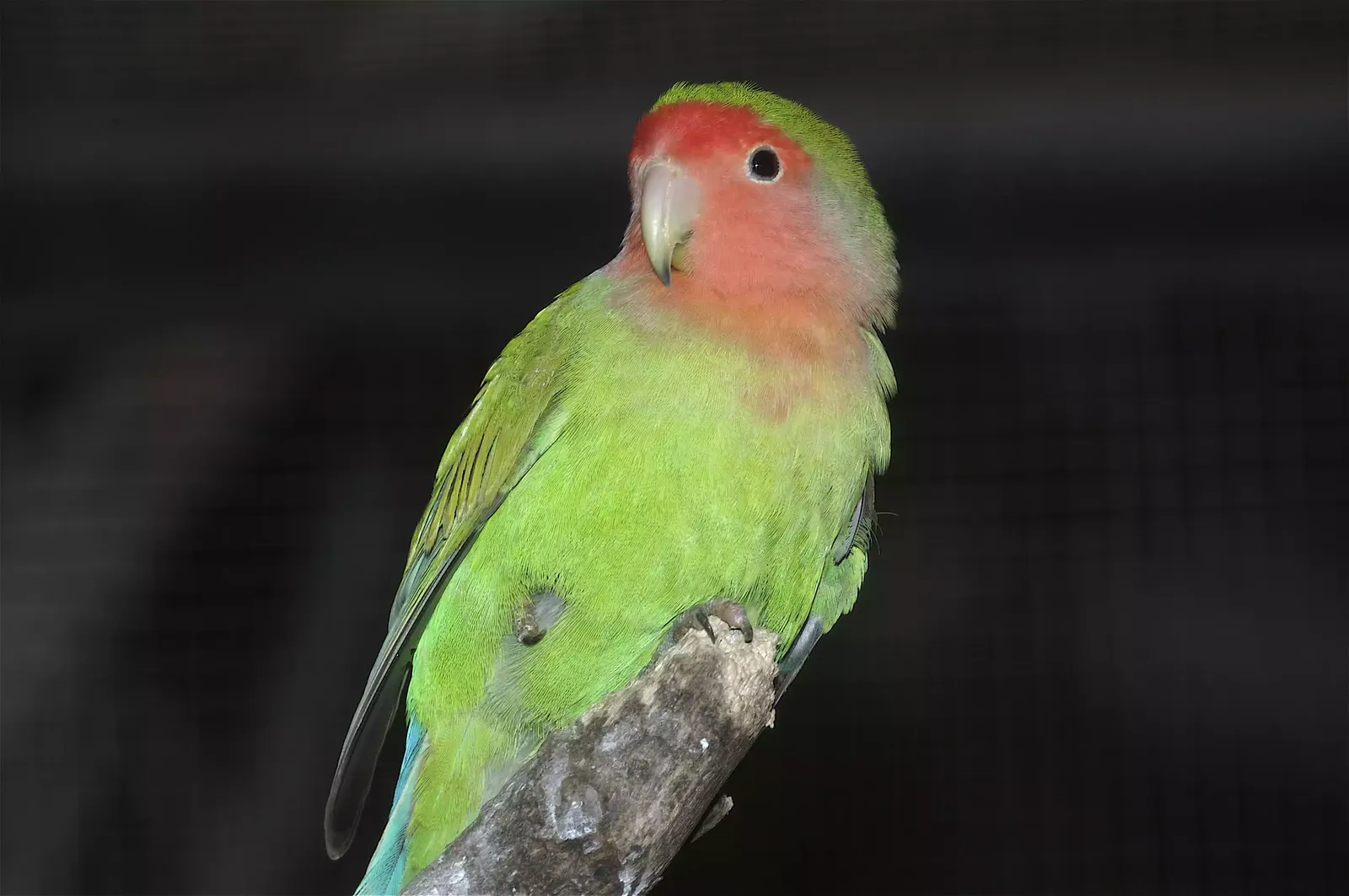
These birds are noted for their vibrant plumage, which varies according to species, but generally includes colours such as green, yellow and red.
They are small birds with an adorable appearance, expressive eyes and a powerful beak that they use for feeding and exploring their environment.
The species is relatively secure in the wild and faces no immediate risk of extinction.
Reproduction
Breeding season is usually between April and May.
Mating occurs between individuals of the same group.
Gestation lasts approximately 135 days, and parturition occurs in September or October.
Behaviour
Inseparables are highly social birds that often form strong bonds with their mates. You will observe them interacting with grace and affection, communicating through soft vocalisations and playful behaviour. They are known for their loving behaviour and their ability to form close relationships with other members of their group.
Threats
Habitat loss due to deforestation and capture for the pet trade are significant threats to lovebirds.
Feeding
They are omnivorous birds, which means that they feed on fruits, seeds and insects.
Their diet includes fresh fruit, vegetables, seeds and occasionally insects.
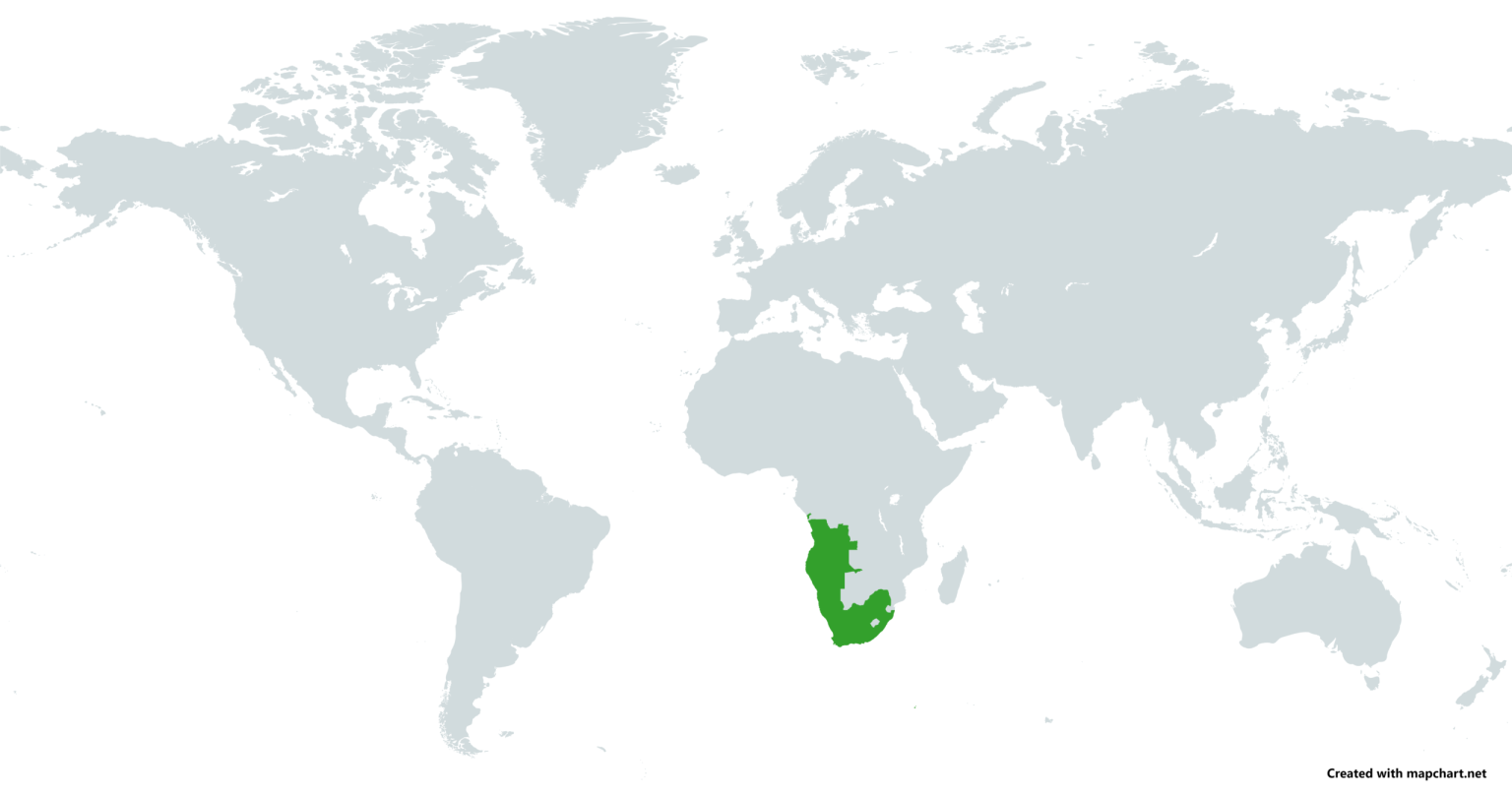
Distribution
VU (Vulnerable)
It is at high risk of extinction in the medium term.
NT (Near Threatened)
It is not yet at risk, but could be soon if conditions worsen.
ALL
Not Used
EX (Extinct)
There are no longer any living individuals of the species.
EW (Extinct in the wild)
Only specimens survive in captivity or in scientific collections.
EN (Endangered)
It has a very high risk of disappearing in the wild if conservation measures are not taken.
CR (Critically Endangered)
It faces an extremely high risk of extinction in the near future.