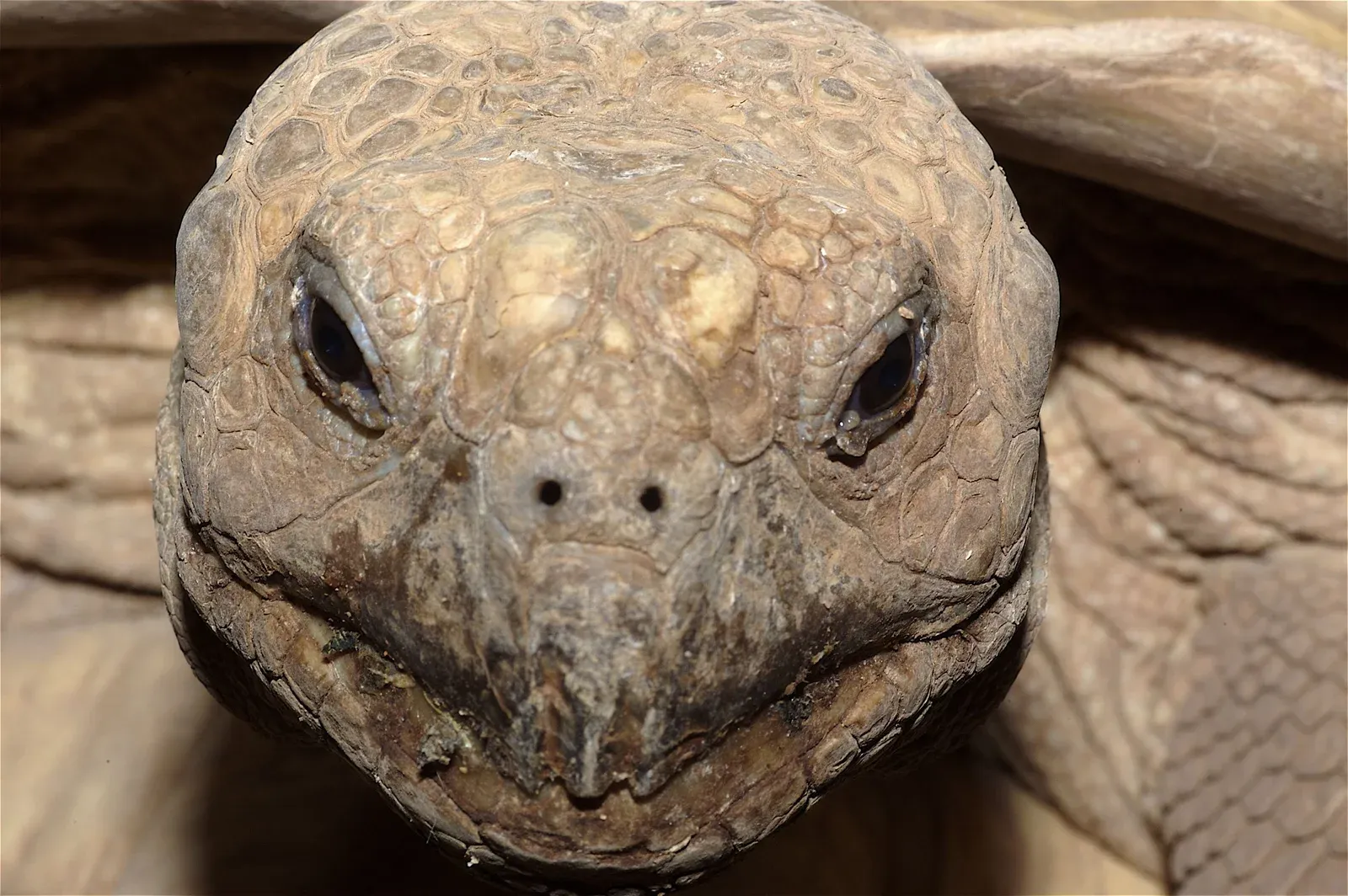
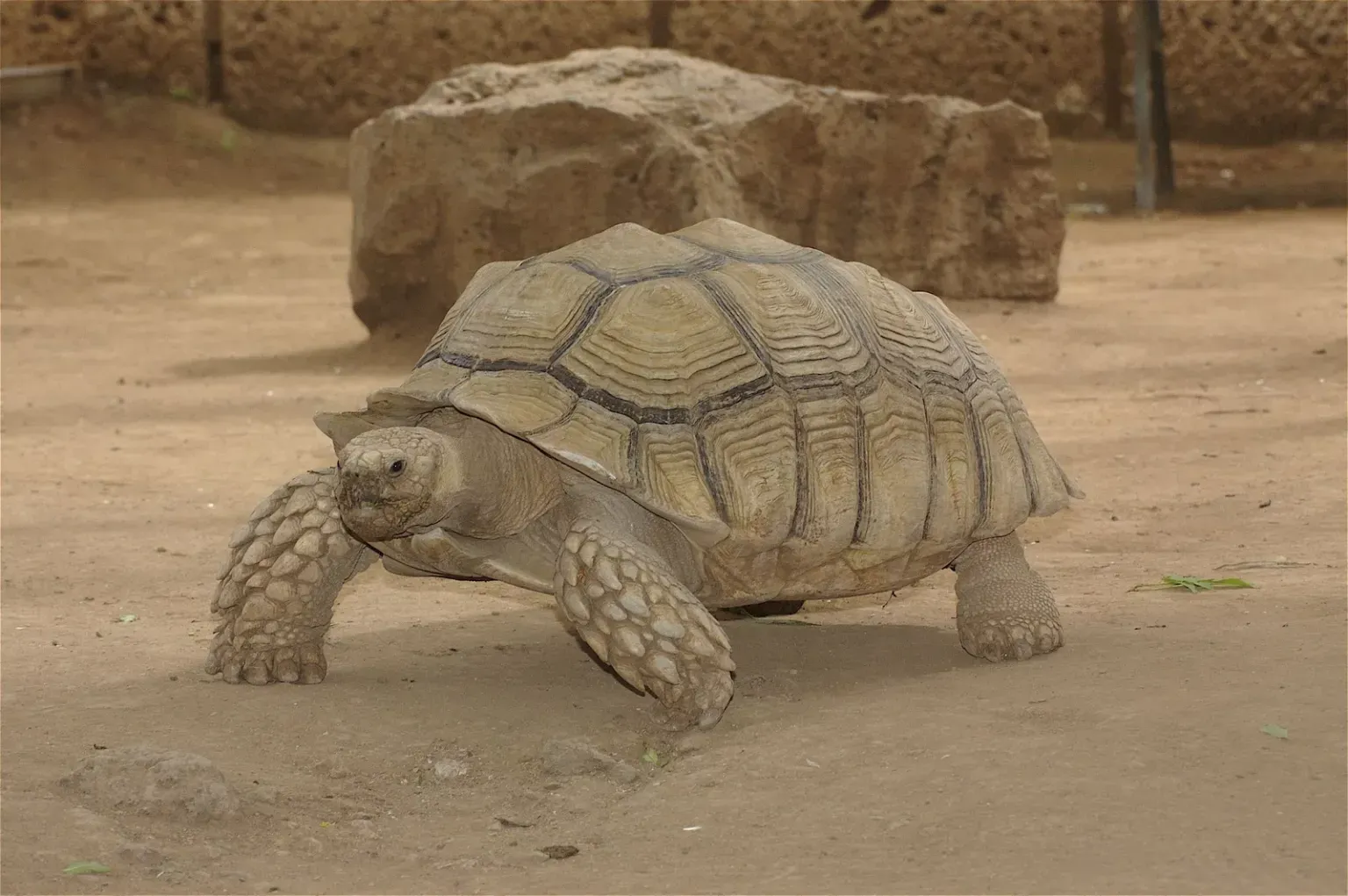
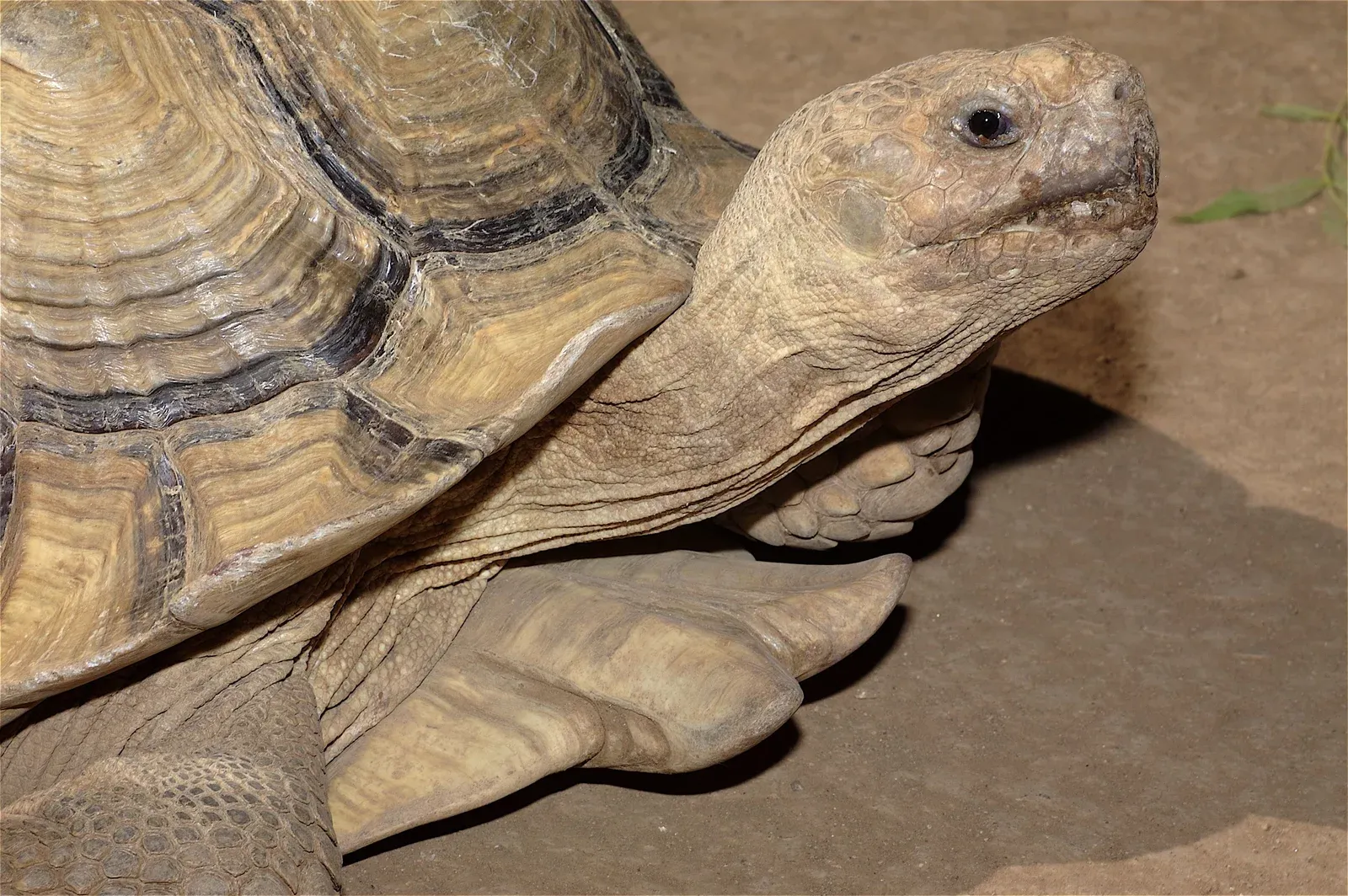
These turtles are characterised by their large, domed carapace, which is adorned with patterns of deep grooves and dark lines.
Their colour varies from light brown to yellow, which allows them to camouflage themselves in their natural habitat.
They are large tortoises, with stout legs and a long neck that allows them to reach vegetation at high altitudes.
It has a very high risk of disappearing in the wild if conservation measures are not taken.
Reproduction
The African Spurred Tortoise breeds during the rainy season, when food is plentiful. Females lay 15-30 eggs in a deep, sandy nest. These eggs hatch after about eight months, depending on temperature.
Behaviour
Sulcata Tortoises are known for their leisurely behaviour and adaptation to desert conditions. They are herbivorous and feed mainly on plants and vegetation. Although slow-moving, they are hardy and can travel long distances in search of food and water in their natural habitat.
Threats
It faces threats such as habitat fragmentation, illegal trafficking, climate change, predators, disease and competition with livestock. Conservation is crucial to protect this species.
Feeding
It does not fetch water from ponds, it gets its hydration from the food it eats.
Its diet includes calving, succulents and vegetation.
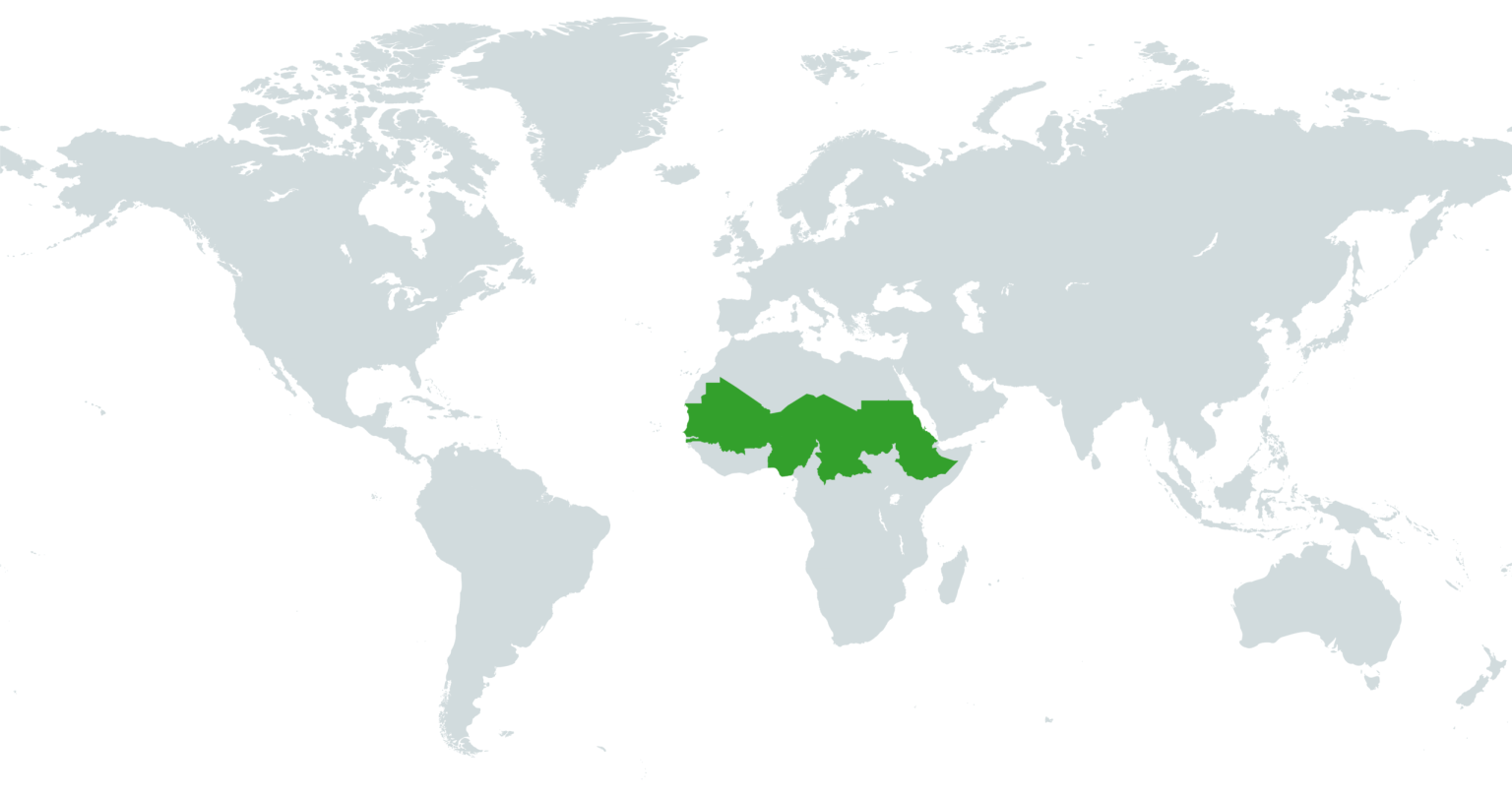
Distribution
VU (Vulnerable)
It is at high risk of extinction in the medium term.
NT (Near Threatened)
It is not yet at risk, but could be soon if conditions worsen.
ALL
Not Used
EX (Extinct)
There are no longer any living individuals of the species.
EW (Extinct in the wild)
Only specimens survive in captivity or in scientific collections.
CR (Critically Endangered)
It faces an extremely high risk of extinction in the near future.
LC (Least Concern)
The species is relatively secure in the wild and faces no immediate risk of extinction.