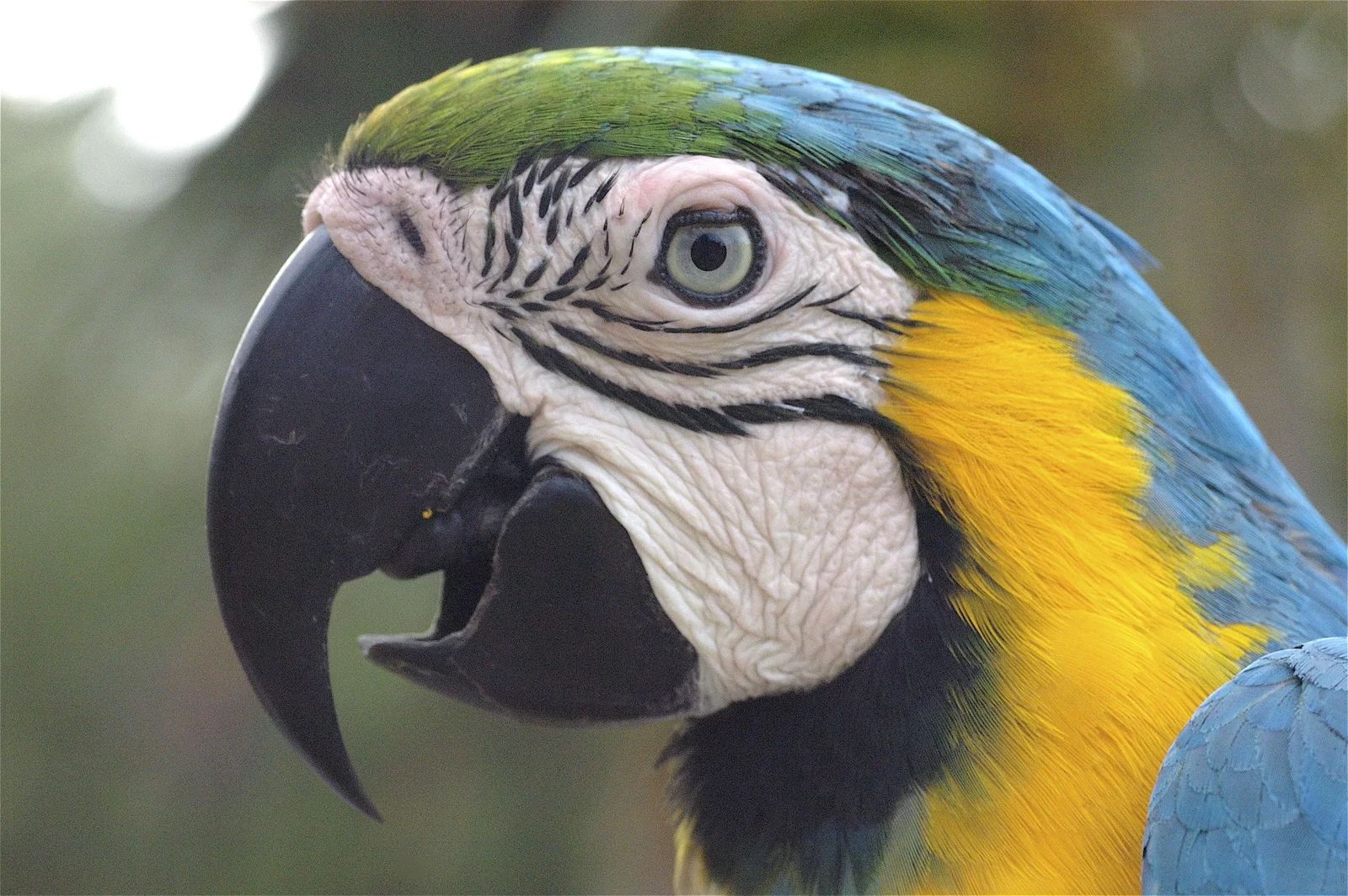
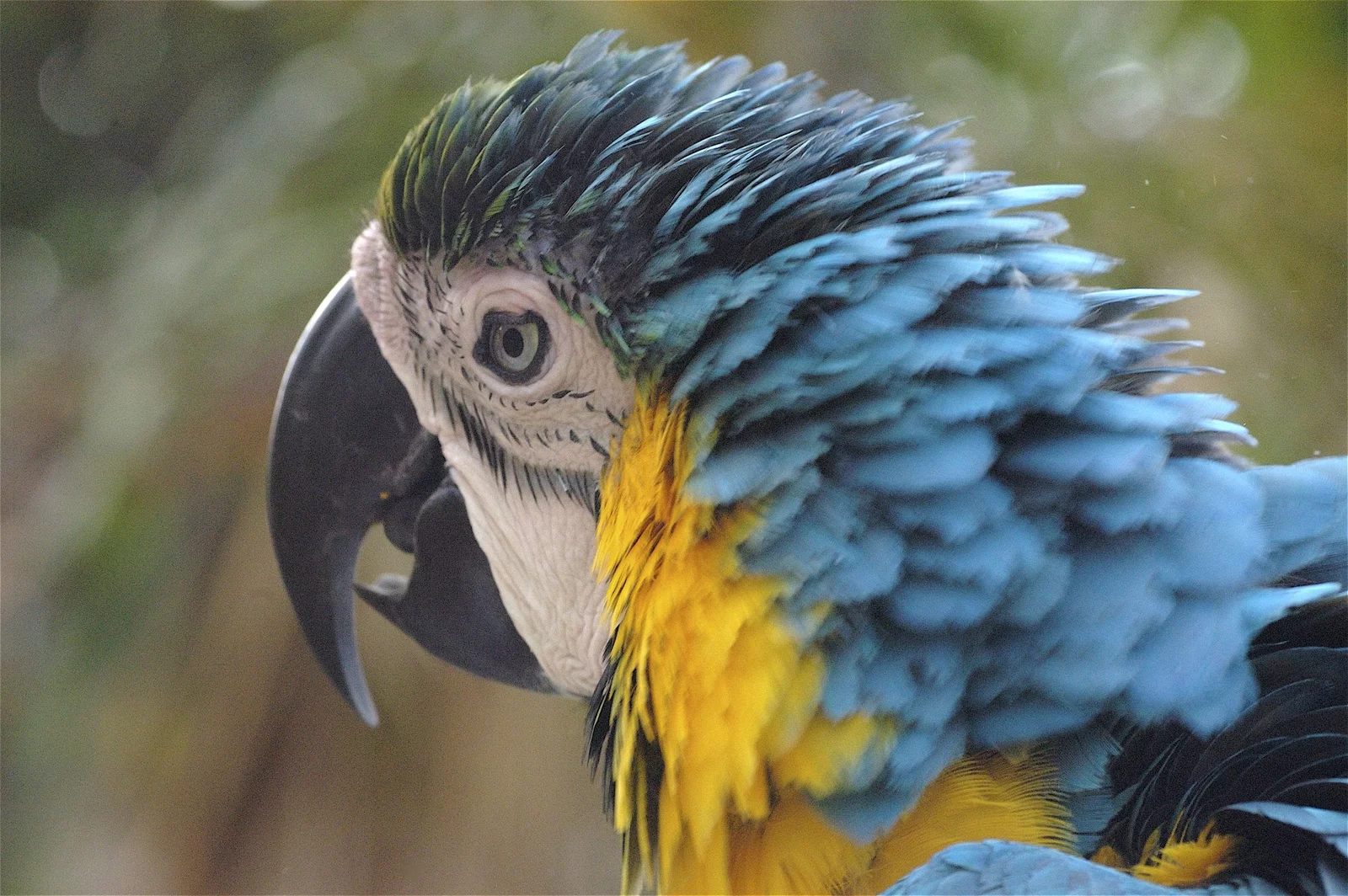
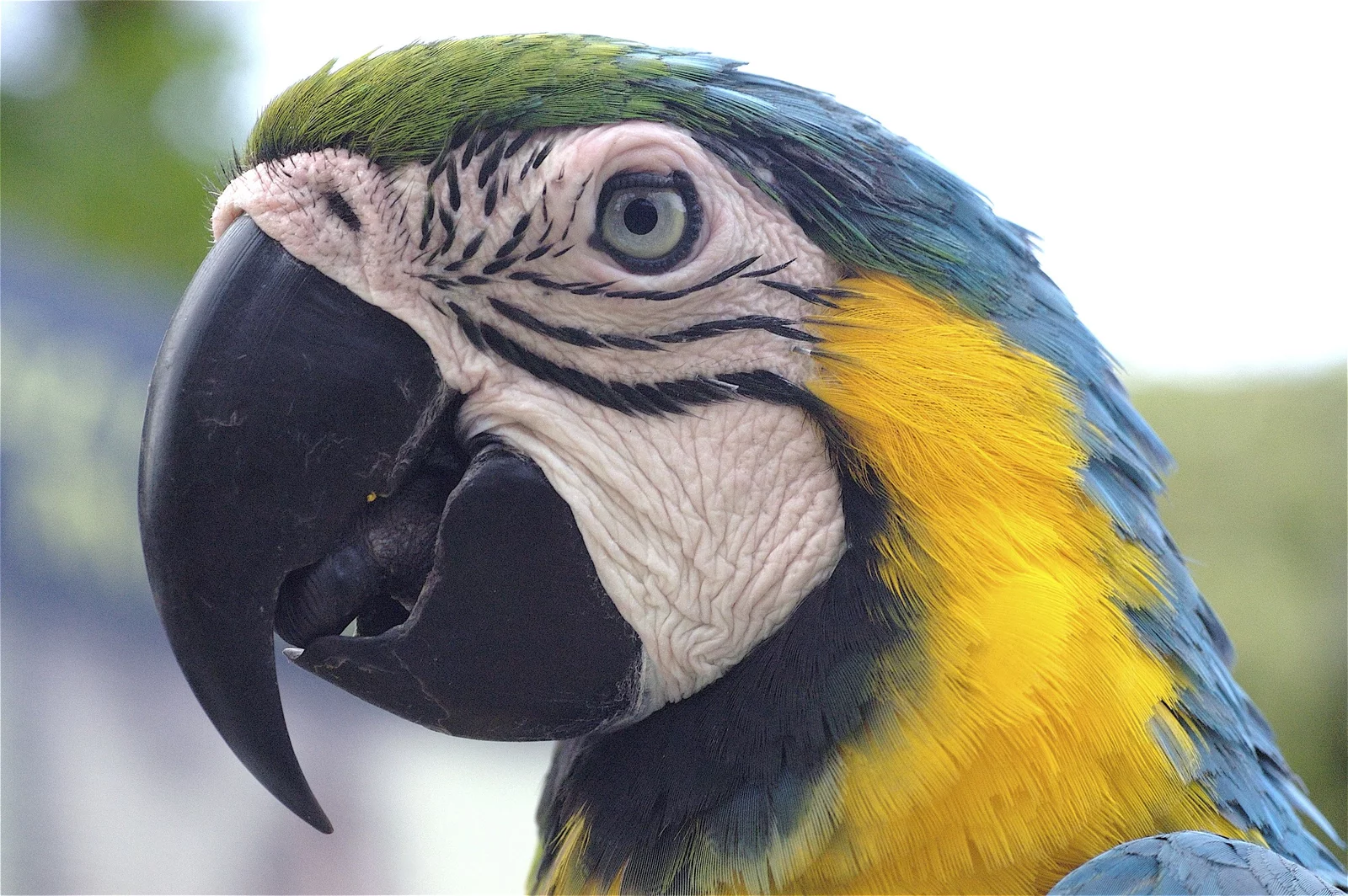
These macaws are noted for their vibrant blue and yellow plumage, which contrasts spectacularly.
Their long, elegant tail, powerful beak and intelligent eyes are perfect adaptations to their tropical forest lifestyle.
They are medium to large birds, making them imposing birds.
The species is relatively secure in the wild and faces no immediate risk of extinction.
Reproduction
The breeding and rearing of the Blue and Yellow Macaw is a fascinating process that requires knowledge and dedication to ensure the success and welfare of these birds. Although they do not have a defined breeding season, they can breed throughout the year, with particular intensity in late spring. During courtship, they choose their sexual partner and, once the pair is formed, the transfer of sperm from the male to the female takes place. It is important to follow good management practices and provide them with a suitable environment for successful breeding.
Behaviour
Blue and Yellow Macaws are social birds often found in pairs or large groups. You will observe how they interact with each other with energy and joy, communicating through loud vocalisations and flashy movements. They are known for their intelligence and ability to learn, making them a species that always captivates our visitors.
Threats
The Yellow-fronted Macaw faces a number of threats in the wild. Some of the main ones are habitat loss due to deforestation and agricultural expansion, illegal trafficking of macaws as pets, hunting and predation, and exposure to pollution and disease. It is crucial to take action to protect these beautiful birds and preserve their existence in the wild.
Feeding
- Dry ration: Provides up to 10% of their maximum weight. Include high-energy macaw-specific feed, preferably from a good brand. In addition, you can offer nuts such as walnuts, almonds or hazelnuts (up to 25 grams).
- Fresh ration: This should be approximately 15% of the bird's weight. Include fruits and vegetables such as apples, pears, melons, peppers, oranges, carrots, broccoli, among others. You can also add cooked or sprouted legumes and some fresh unsalted cheese.
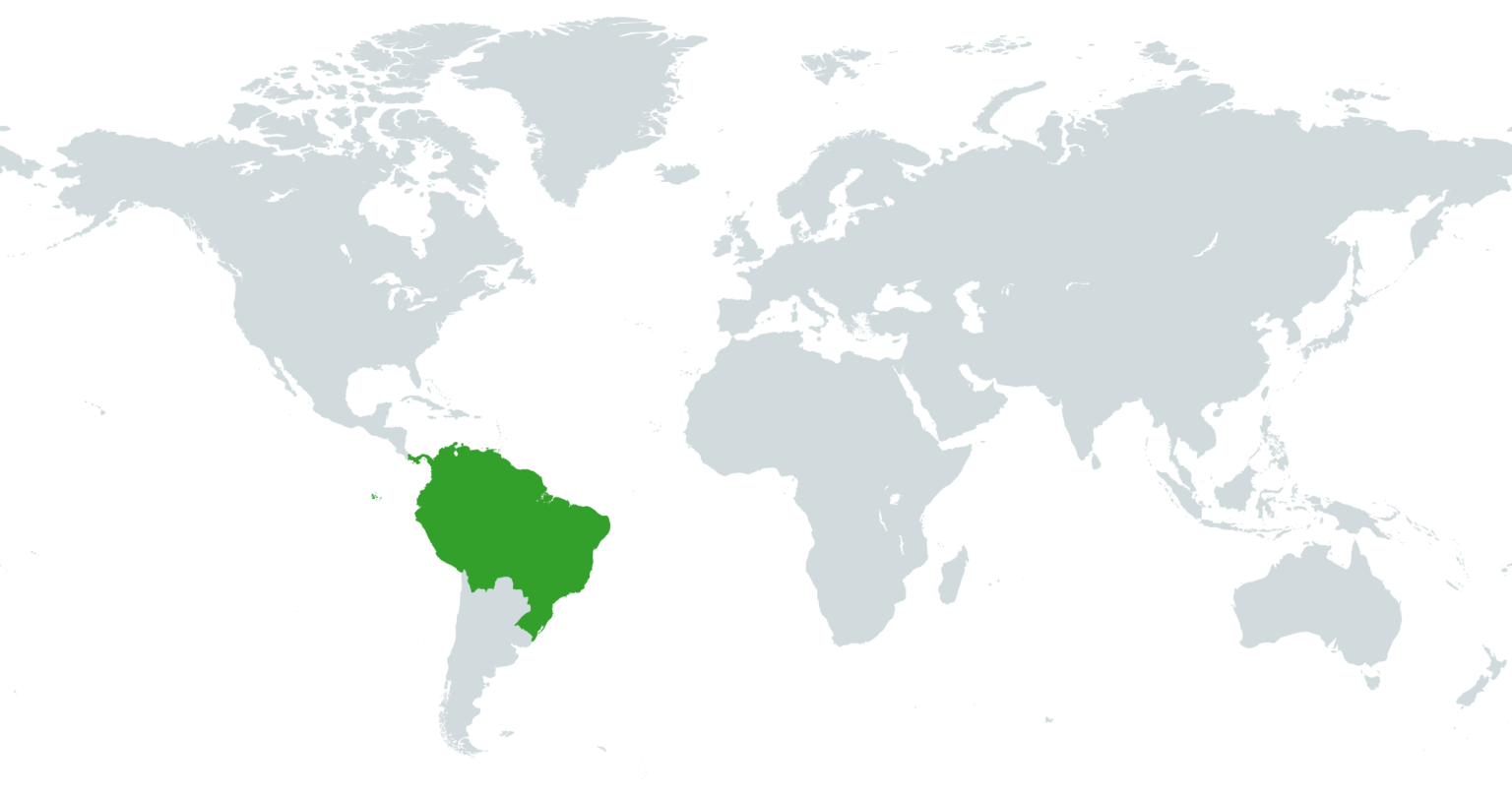
Distribution
VU (Vulnerable)
It is at high risk of extinction in the medium term.
NT (Near Threatened)
It is not yet at risk, but could be soon if conditions worsen.
ALL
Not Used
EX (Extinct)
There are no longer any living individuals of the species.
EW (Extinct in the wild)
Only specimens survive in captivity or in scientific collections.
EN (Endangered)
It has a very high risk of disappearing in the wild if conservation measures are not taken.
CR (Critically Endangered)
It faces an extremely high risk of extinction in the near future.