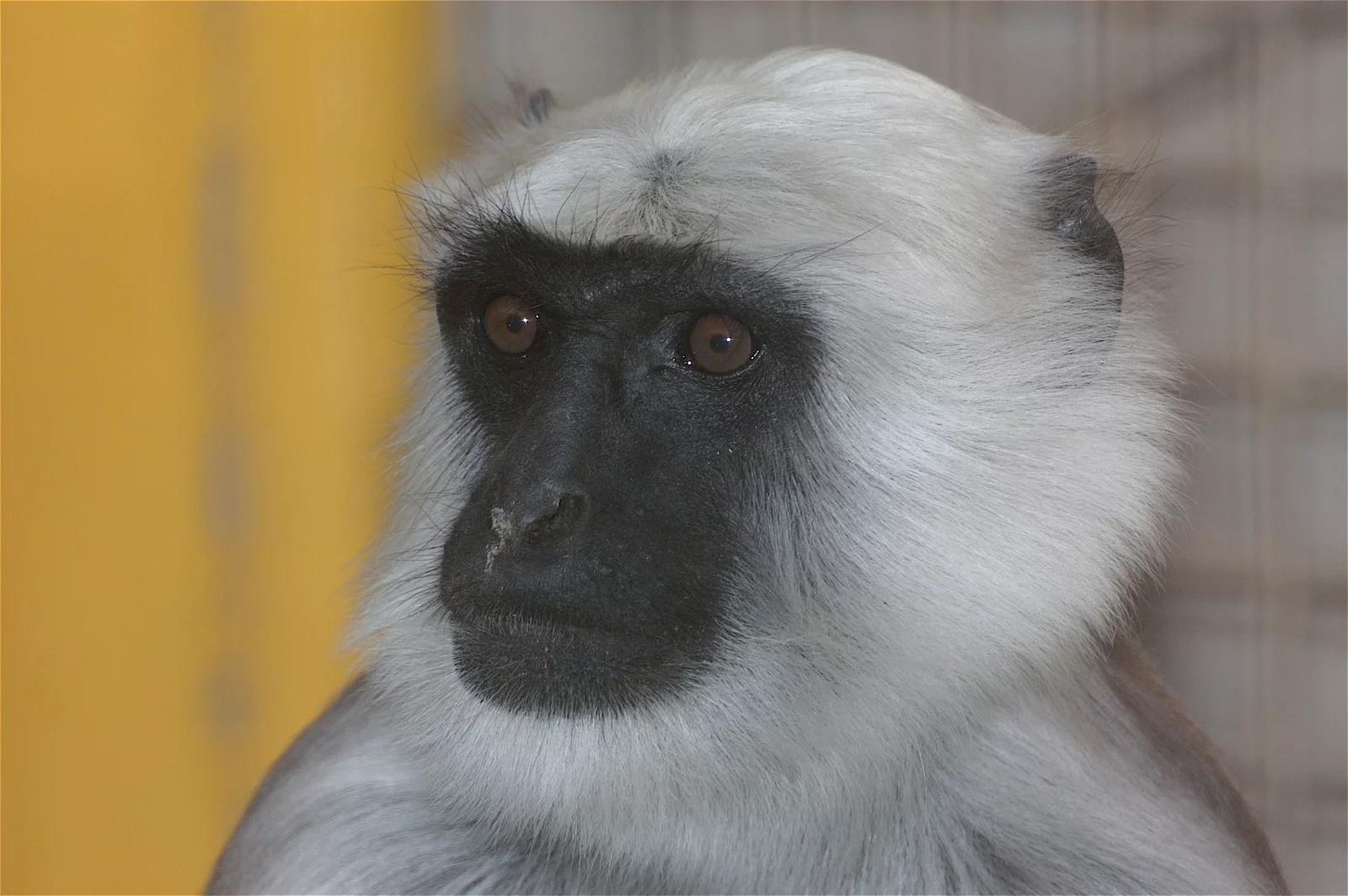
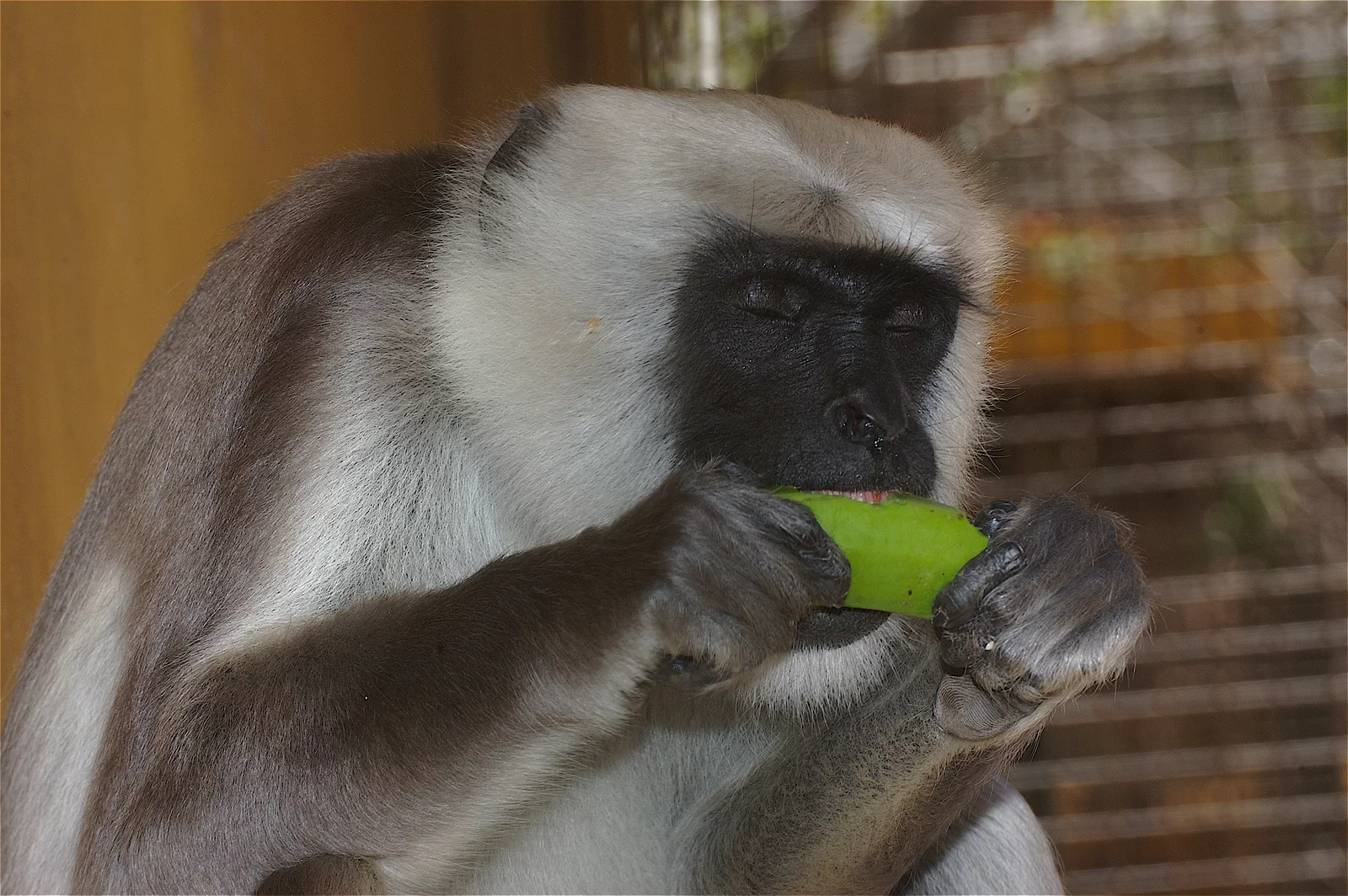
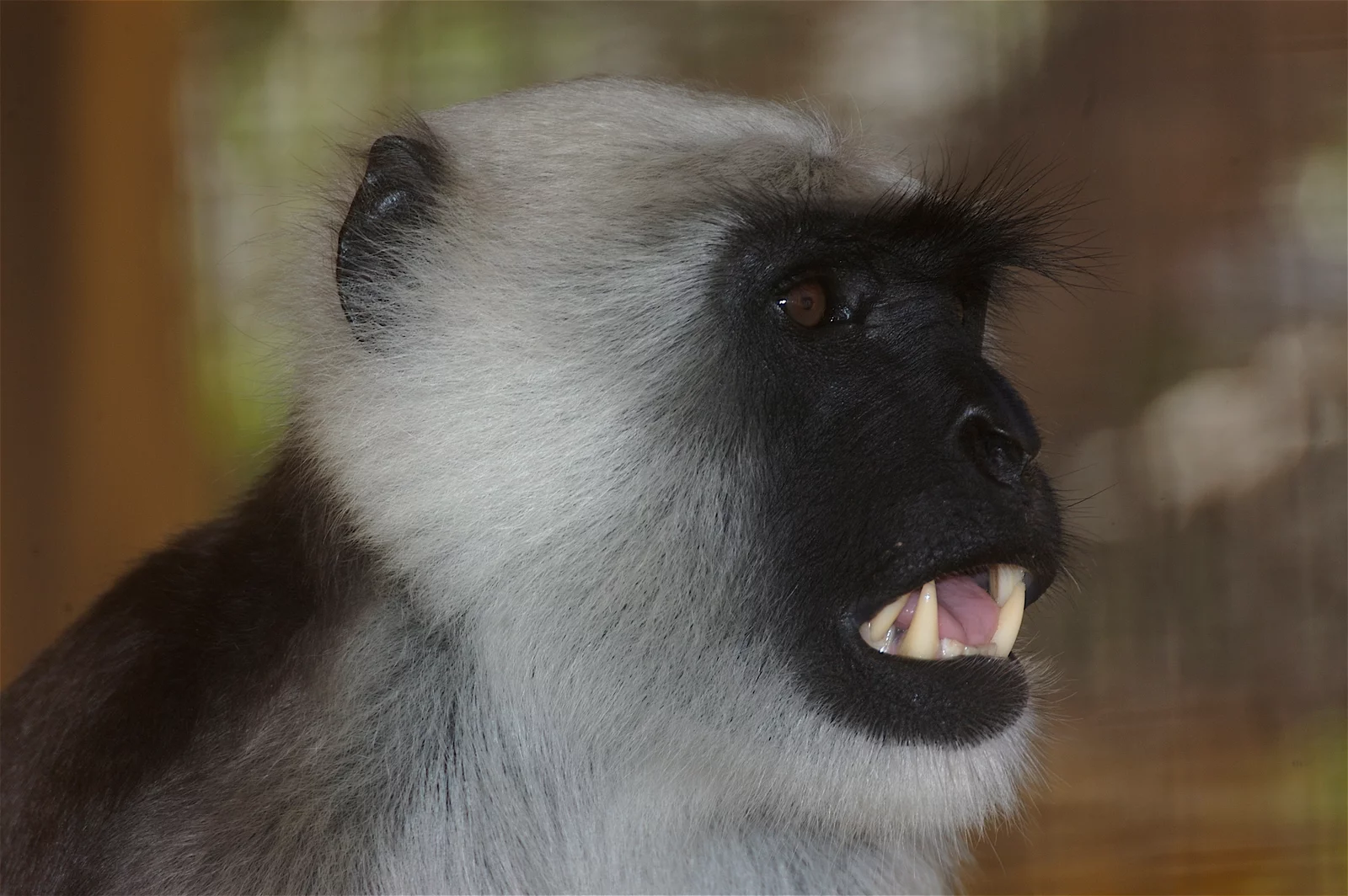
These langurs are distinguished by their silver-grey and black fur, which gives them their name.
They also have a dark face with expressive eyes and a long tail used for balance as they move through the trees.
Their elegant appearance and upright posture make them a truly special species.
The species is relatively secure in the wild and faces no immediate risk of extinction.
Reproduction
Reproduction of the common langur involves an interesting process. Females have a menstrual cycle similar to that of humans, and gestation lasts approximately 200 days. They usually give birth to a single calf, which is cared for and protected by the mother and other members of the group.
Behaviour
It lives in hierarchical groups of related females with their offspring and a stud male. These groups are territorial and violently defend their territory from other groups. Young males fight their way up the hierarchy and, once mature, try to oust the stud males to keep their harem.
Threats
Deforestation, illegal hunting and conflicts with humans.
Feeding
It feeds mainly on leaves, flowers, fruits and other plant matter, complementing its diet with insects and small animals.
Distribution
VU (Vulnerable)
It is at high risk of extinction in the medium term.
NT (Near Threatened)
It is not yet at risk, but could be soon if conditions worsen.
ALL
Not Used
EX (Extinct)
There are no longer any living individuals of the species.
EW (Extinct in the wild)
Only specimens survive in captivity or in scientific collections.
EN (Endangered)
It has a very high risk of disappearing in the wild if conservation measures are not taken.
CR (Critically Endangered)
It faces an extremely high risk of extinction in the near future.