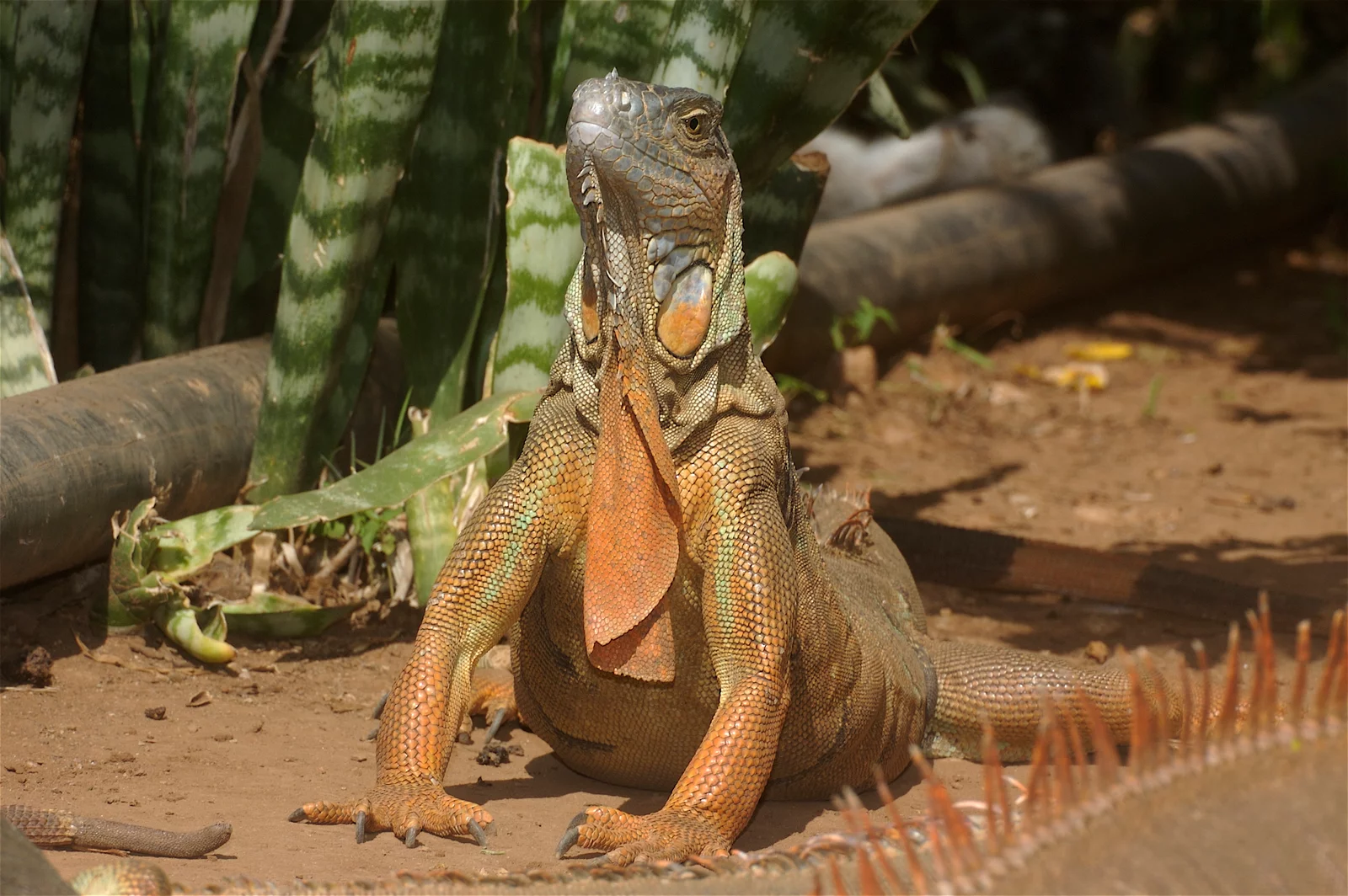
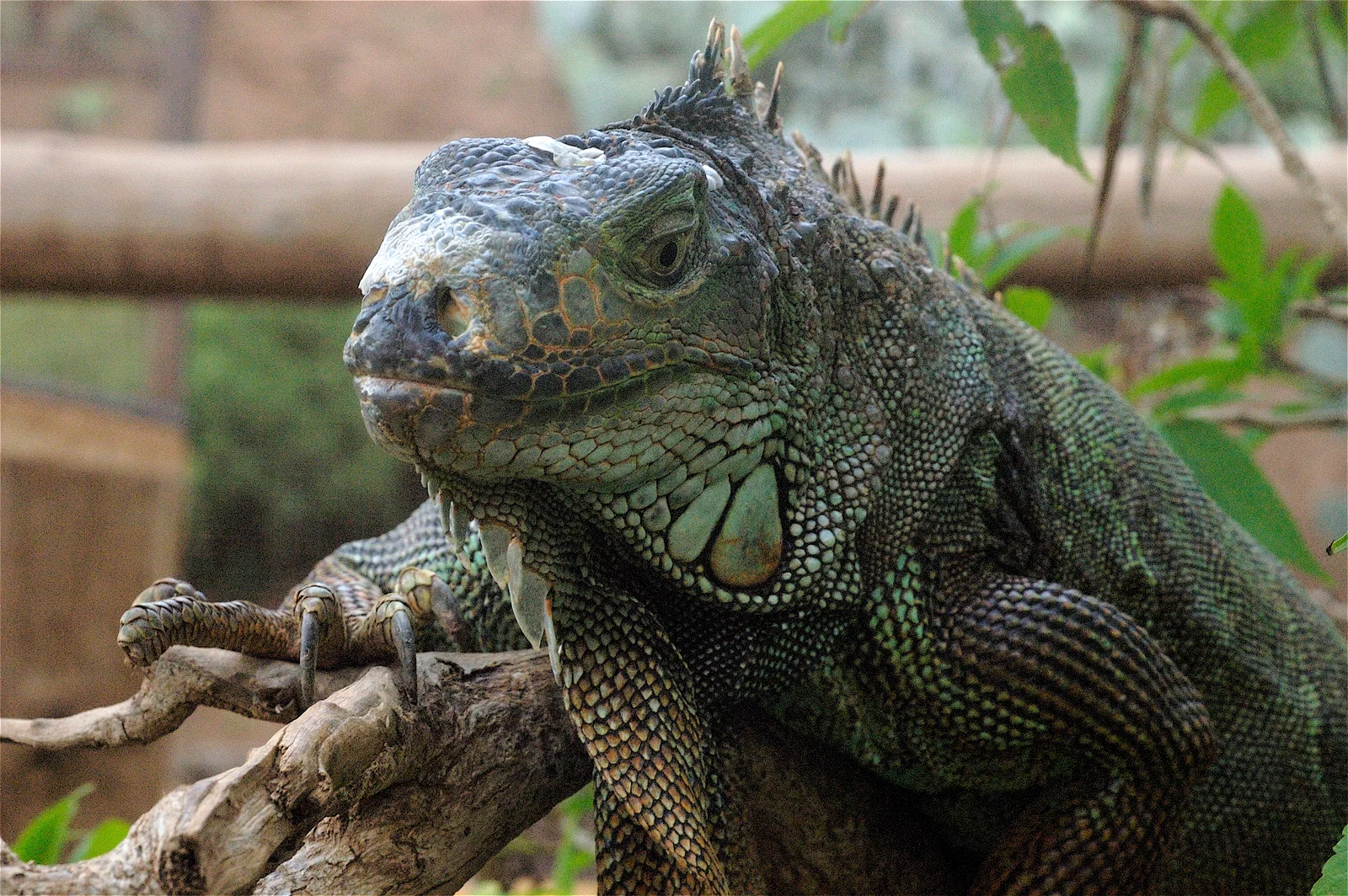
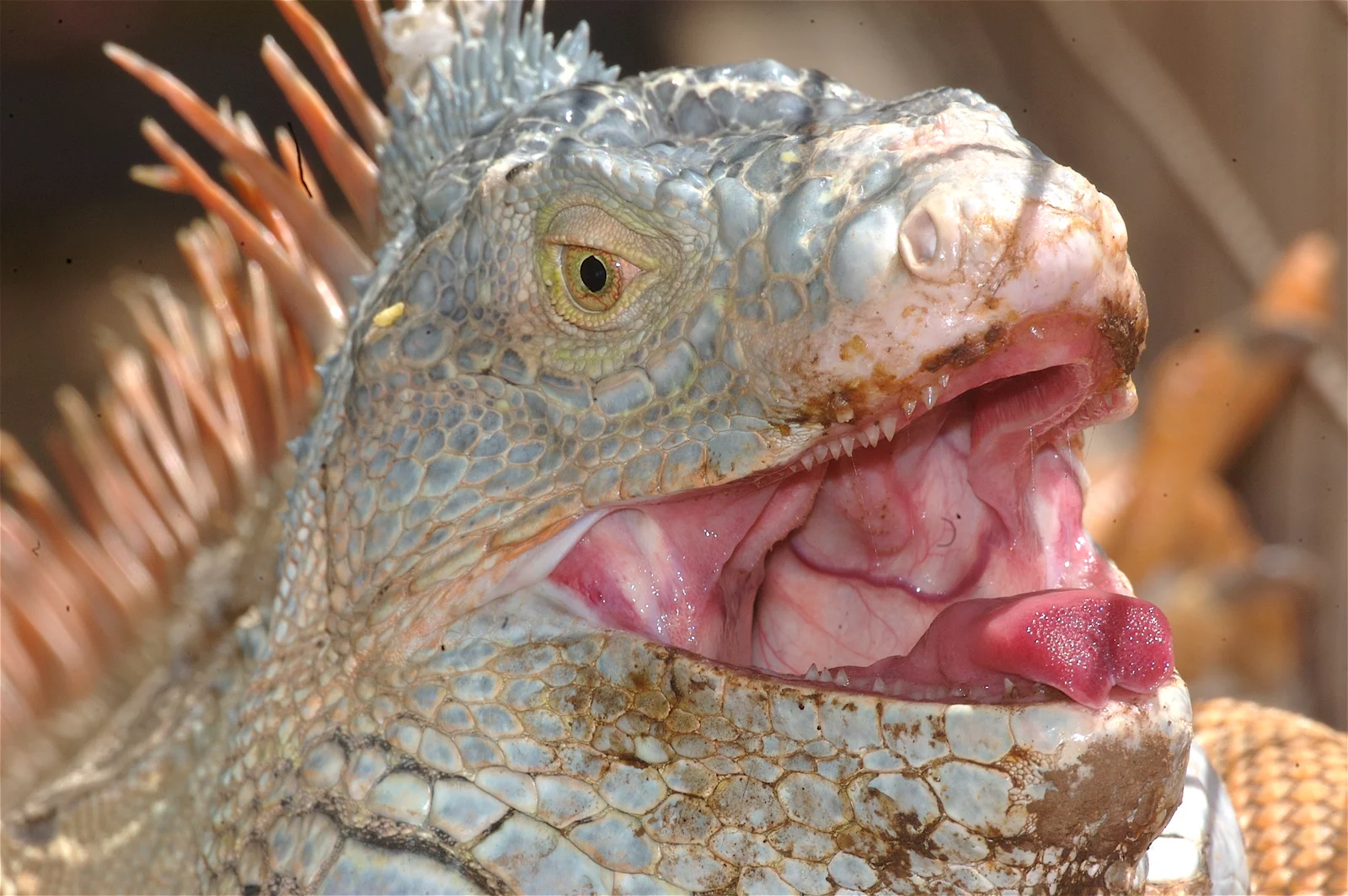
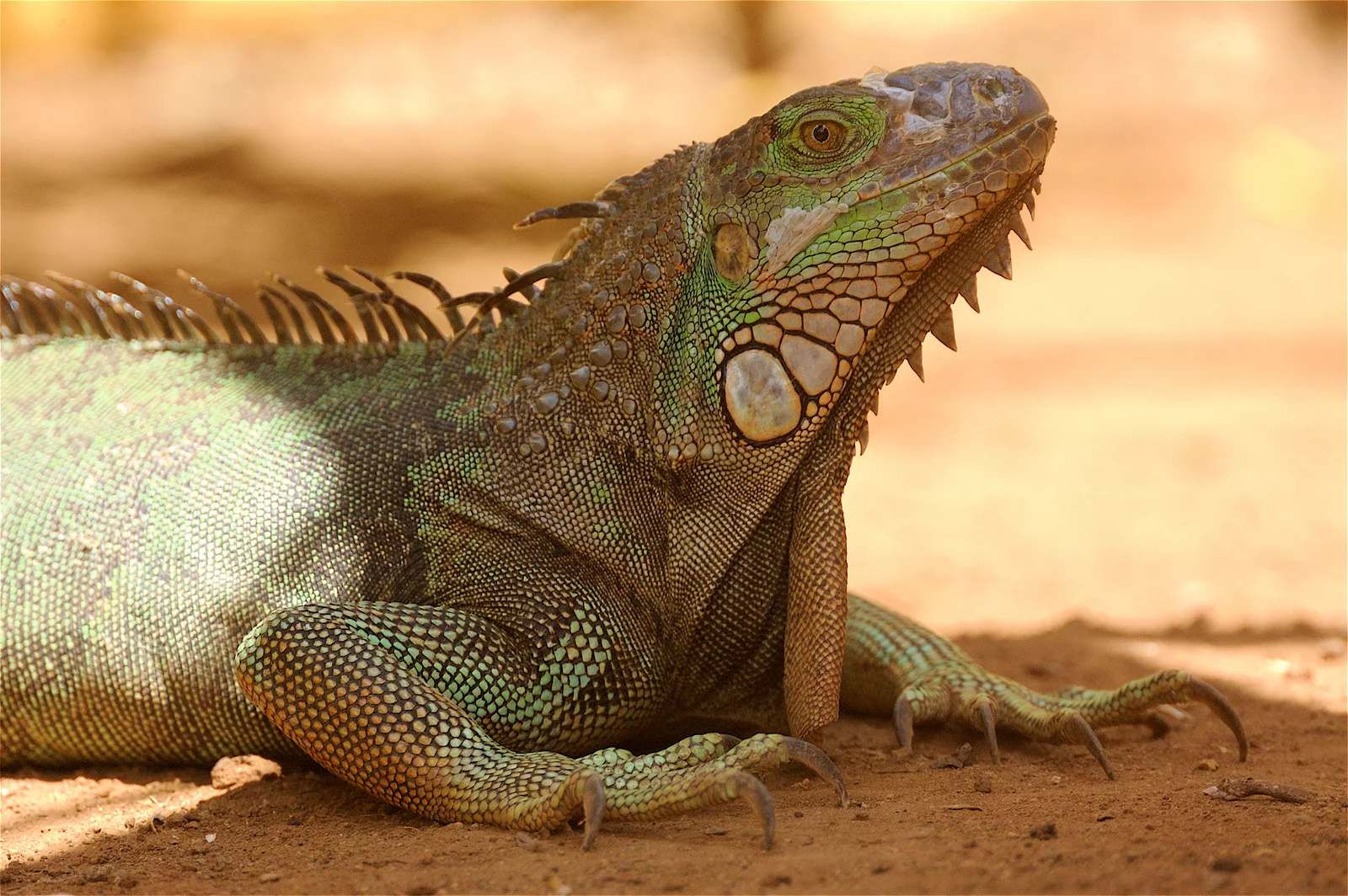
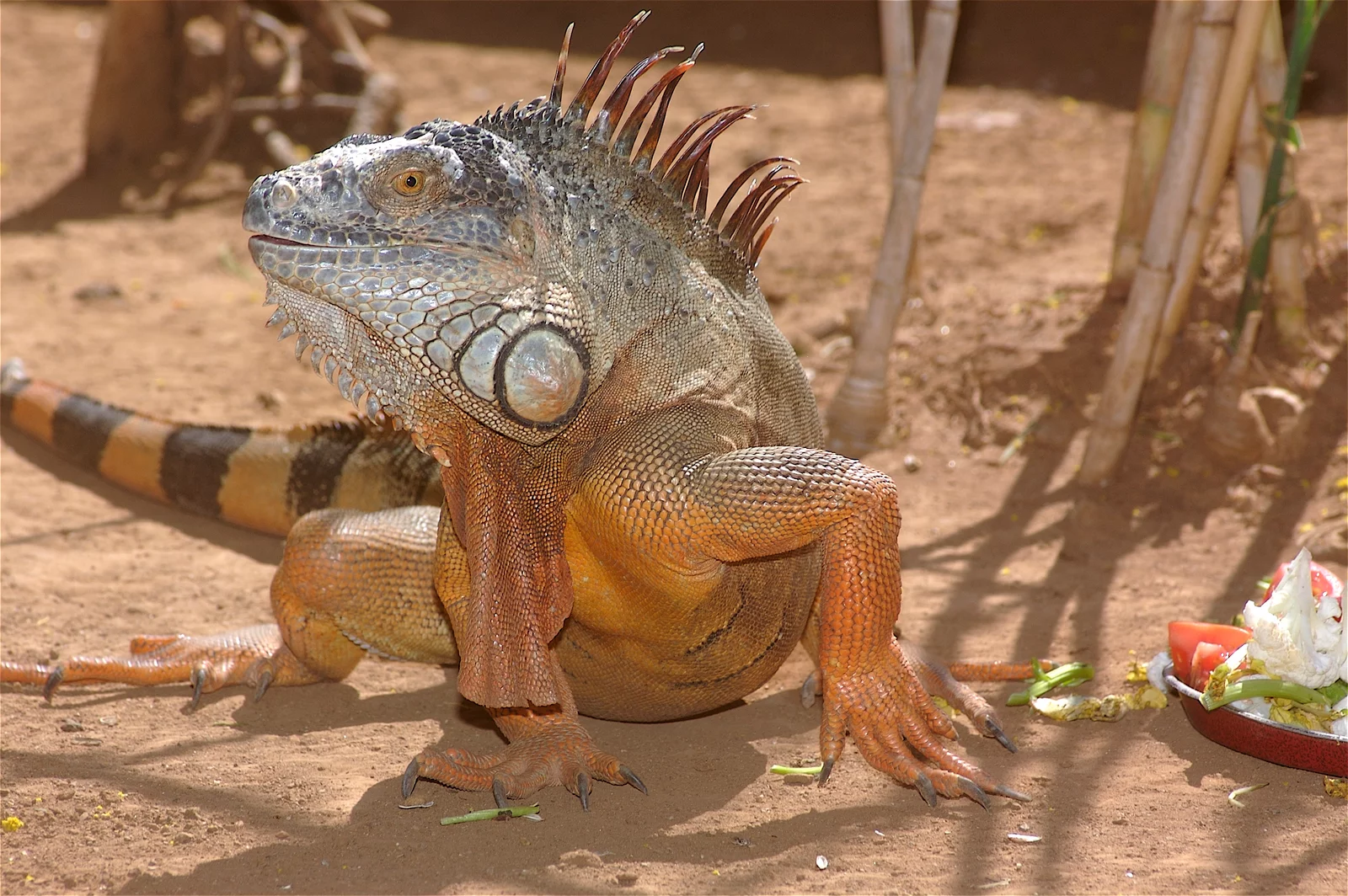
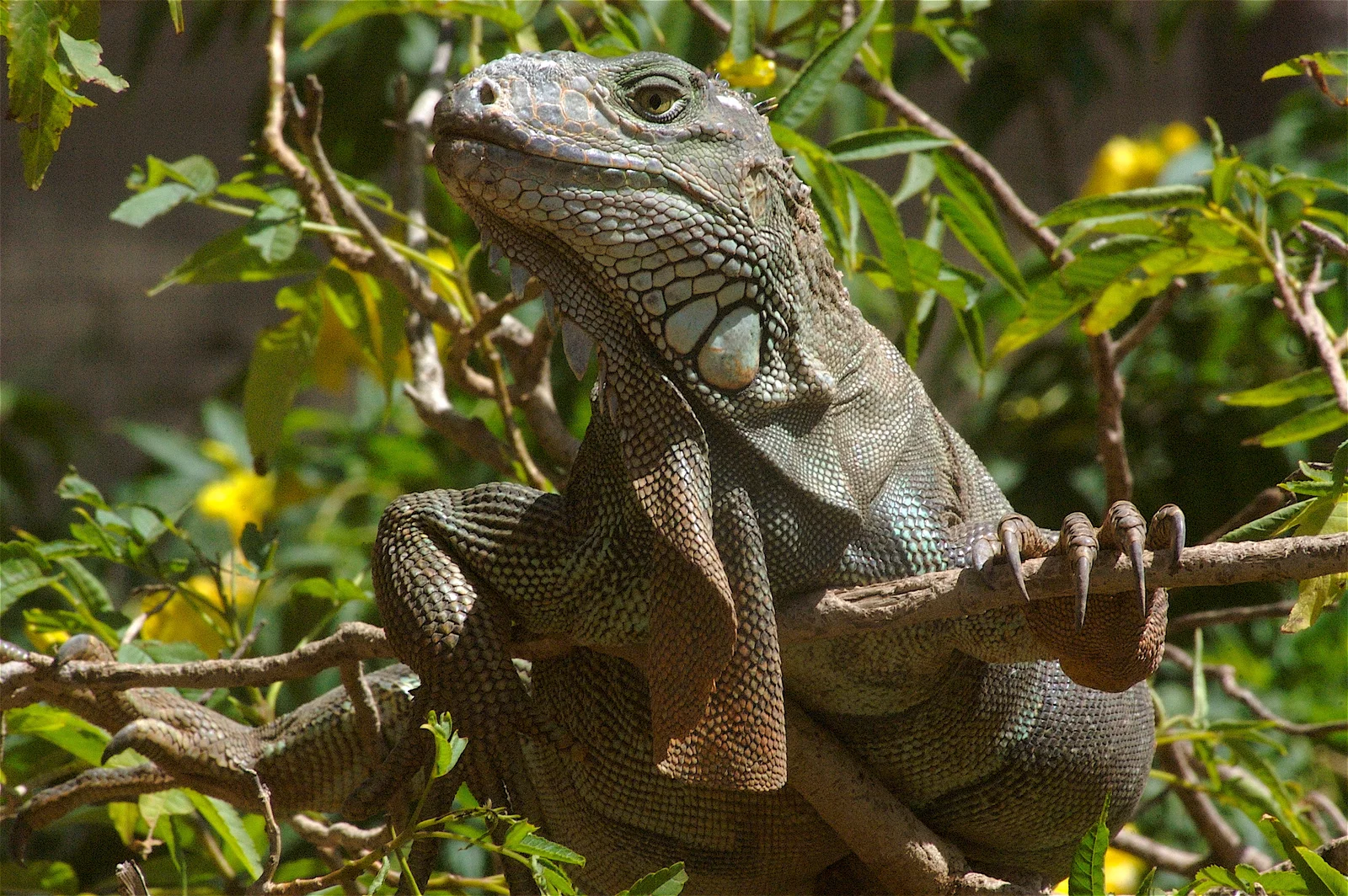
Iguanas are noted for their elongated body, rough scales and long, muscular tail. Their skin can vary in colour from vibrant green to brown, allowing them to camouflage themselves in their environment.
Some species also have ridges or spines on their backs. Their expressive eyes and forked tongue are amazing adaptations for survival.
The species is relatively secure in the wild and faces no immediate risk of extinction.
Reproduction
Iguana reproduction is oviparous, which means that iguanas reproduce by laying eggs. The process varies depending on whether iguanas live in the wild or in captivity. In the wild, reproduction generally occurs between January and April, while in captivity, it extends from October to April. During mating, males and females perform head and tail movements, and if the female is receptive, she will facilitate the act by raising her tail. Mating lasts between 10 and 45 minutes. After two months, the female will lay around 80 eggs in a nest dug in soft ground. The eggs hatch 50 to 100 days later. During this process, the female stops feeding, but drinks plenty of water. In captivity, egg-laying can be planned by using a bed of sand covered with wet peat on the bottom of the terrarium.
Behaviour
Iguanas are ectothermic animals, meaning that they depend on environmental temperature to regulate their body temperature. They are expert climbers and swimmers, allowing them to explore a variety of habitats. They are often seen snapping their powerful jaws to pluck leaves and fruit from trees.
Threats
The iguana is a fascinating species that faces a number of threats. Illegal hunting, habitat loss due to human development, illegal animal trade and the introduction of invasive species and diseases are some of the challenges affecting their survival. In addition, in their herbivorous diet, they feed mainly on leaves, flower buds and some fruits. It is essential to take measures to protect these creatures and ensure their conservation.
Feeding
In their herbivorous diet, green iguanas feed mainly on leaves, flower buds and some fruits. It is important to note that feeding on insects can reduce their lifespan by half, so it is essential to maintain a plant-based diet.
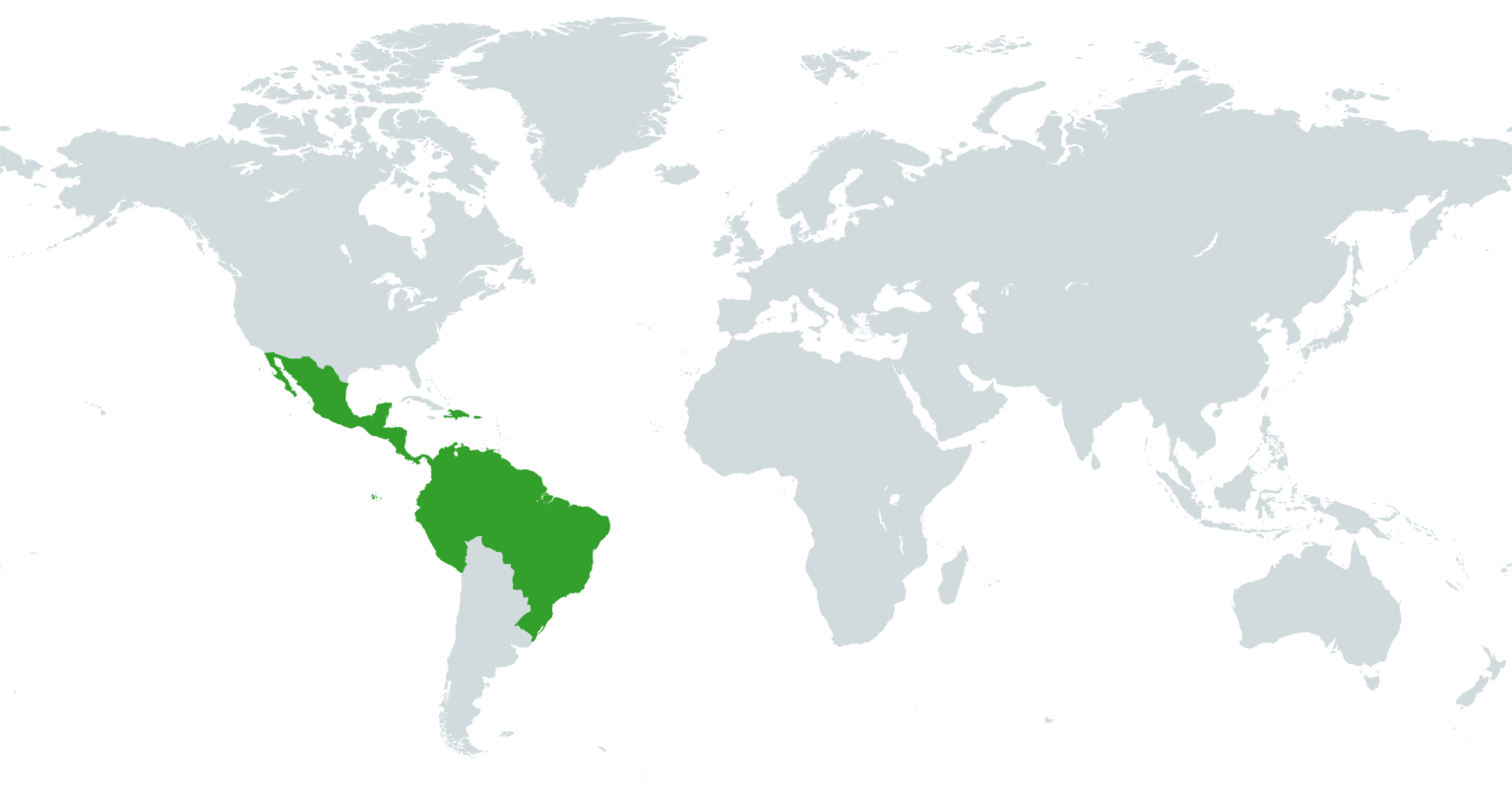
Distribution
VU (Vulnerable)
It is at high risk of extinction in the medium term.
NT (Near Threatened)
It is not yet at risk, but could be soon if conditions worsen.
ALL
Not Used
EX (Extinct)
There are no longer any living individuals of the species.
EW (Extinct in the wild)
Only specimens survive in captivity or in scientific collections.
EN (Endangered)
It has a very high risk of disappearing in the wild if conservation measures are not taken.
CR (Critically Endangered)
It faces an extremely high risk of extinction in the near future.