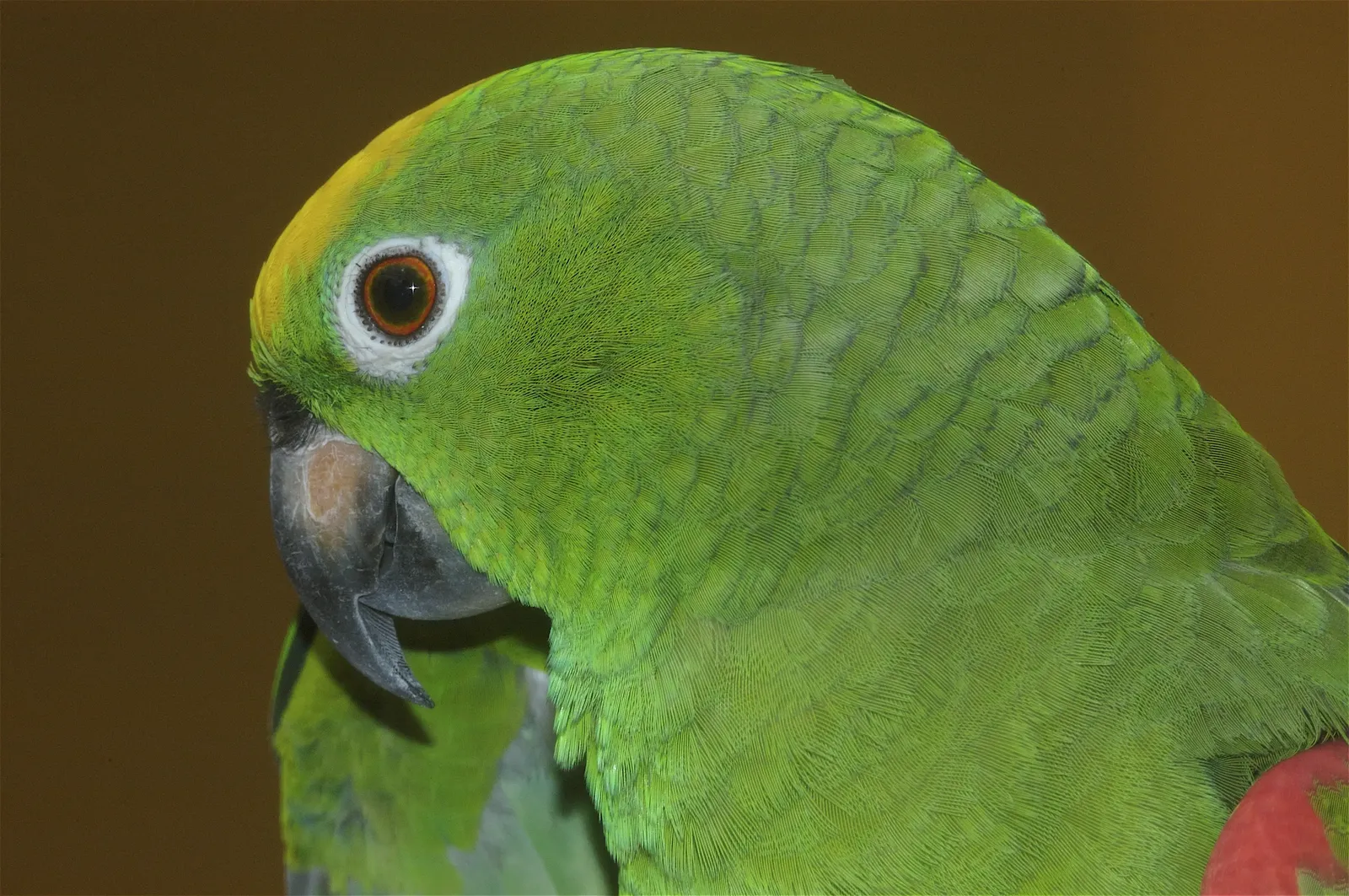
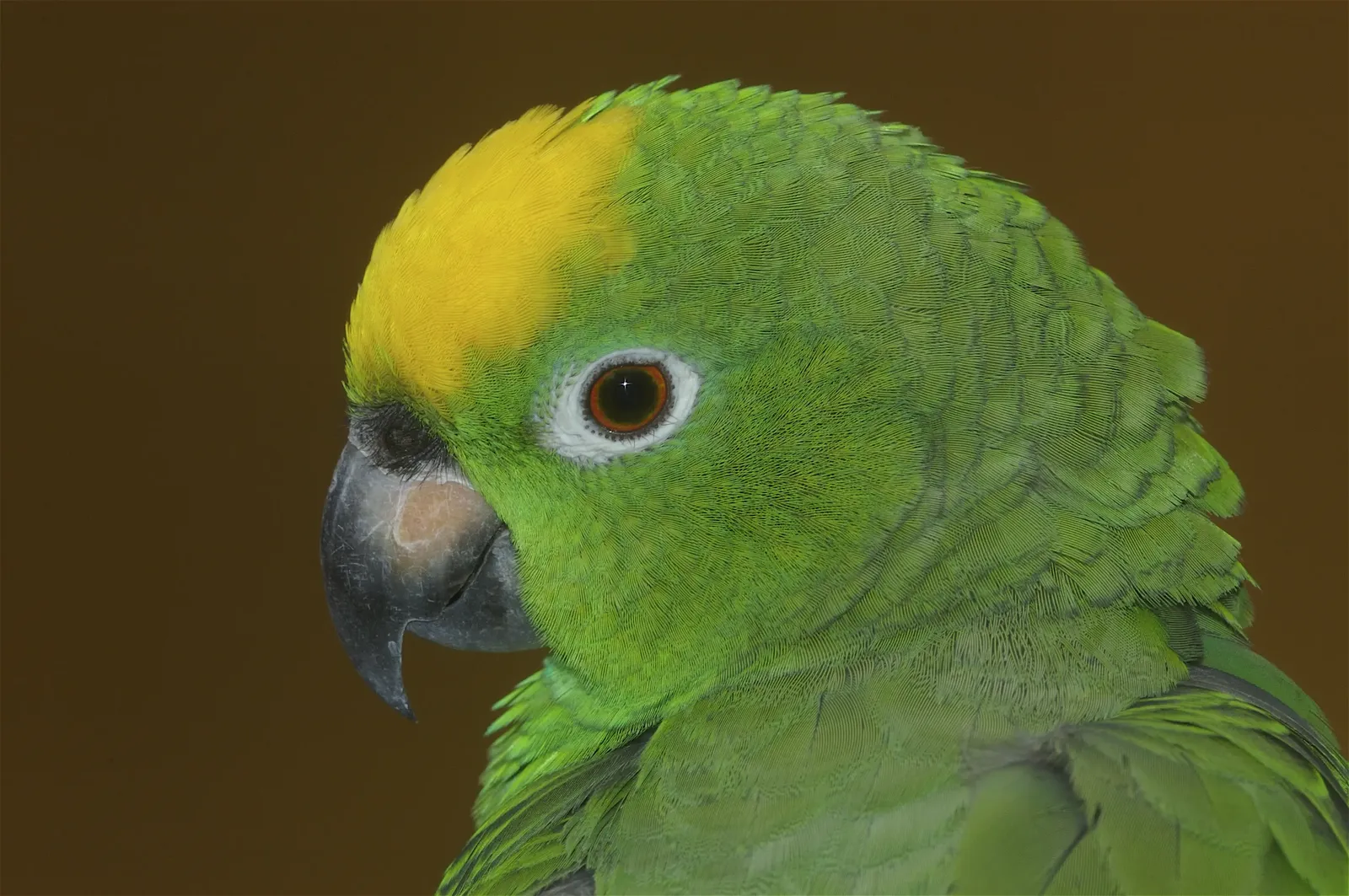
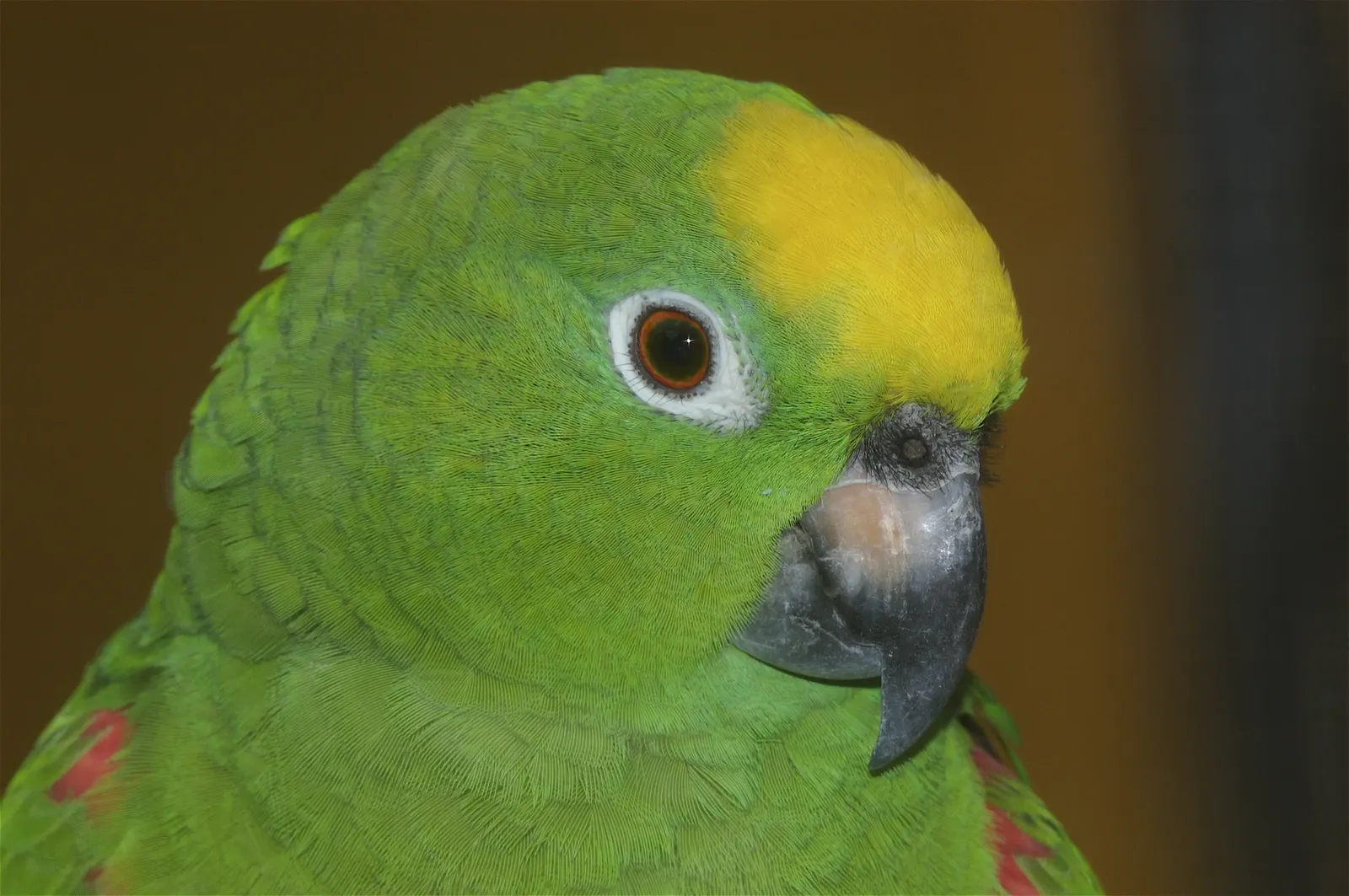
Its plumage is primarily greenish, with a yellow face and crown.
It has a pale bill, orange eyes, white eye rings, and red flashes on the back towards the wings.
Adult males and females do not differ in plumage.
The species is relatively secure in the wild and faces no immediate risk of extinction.
Reproduction
The Yellow-fronted Amazon is a monogamous species that nests in tree cavities during the breeding season. The female lays between 2 and 4 eggs, which are incubated by both male and female for approximately 25 days. The chicks remain in the nest for a period that can vary greatly, with some leaving the nest after 25 days, and others for up to 70 days.
Behaviour
The Yellow-fronted Amazon is a very intelligent, friendly, playful, curious and affectionate parrot. They are social animals that interact in groups, creating a symphony of colours and sounds. In their natural habitat, they live in pairs or small groups in mature trees, in the jungle or in more open places. They are not very gregarious, although they sometimes spend the night in flocks. Their flight is powerful and steady, accompanied by loud, chirping calls. These birds are known for their intelligence, curiosity and playful nature.
Threats
The Amazon Yellow-fronted Amazon faces several threats. Deforestation and the opening of roads have led to the loss of its natural habitat. It is also threatened by subsistence hunting. Forest fires and illegal exploitation of resources are other serious threats to its ecosystem. It is crucial to take measures to protect this species and its habitat.
Feeding
The Yellow-fronted Amazon is a parrot with a mainly vegetarian diet. In the wild, it feeds on a variety of fruits, nuts, seeds, berries and even insects and flowers. In captivity, it is recommended to provide a mixed diet suitable for tropical parrots, which can be supplemented with fresh fruits, nuts, sprouted seeds and vegetation. It is important to ensure that their diet is balanced and nutritious to maintain optimal health.
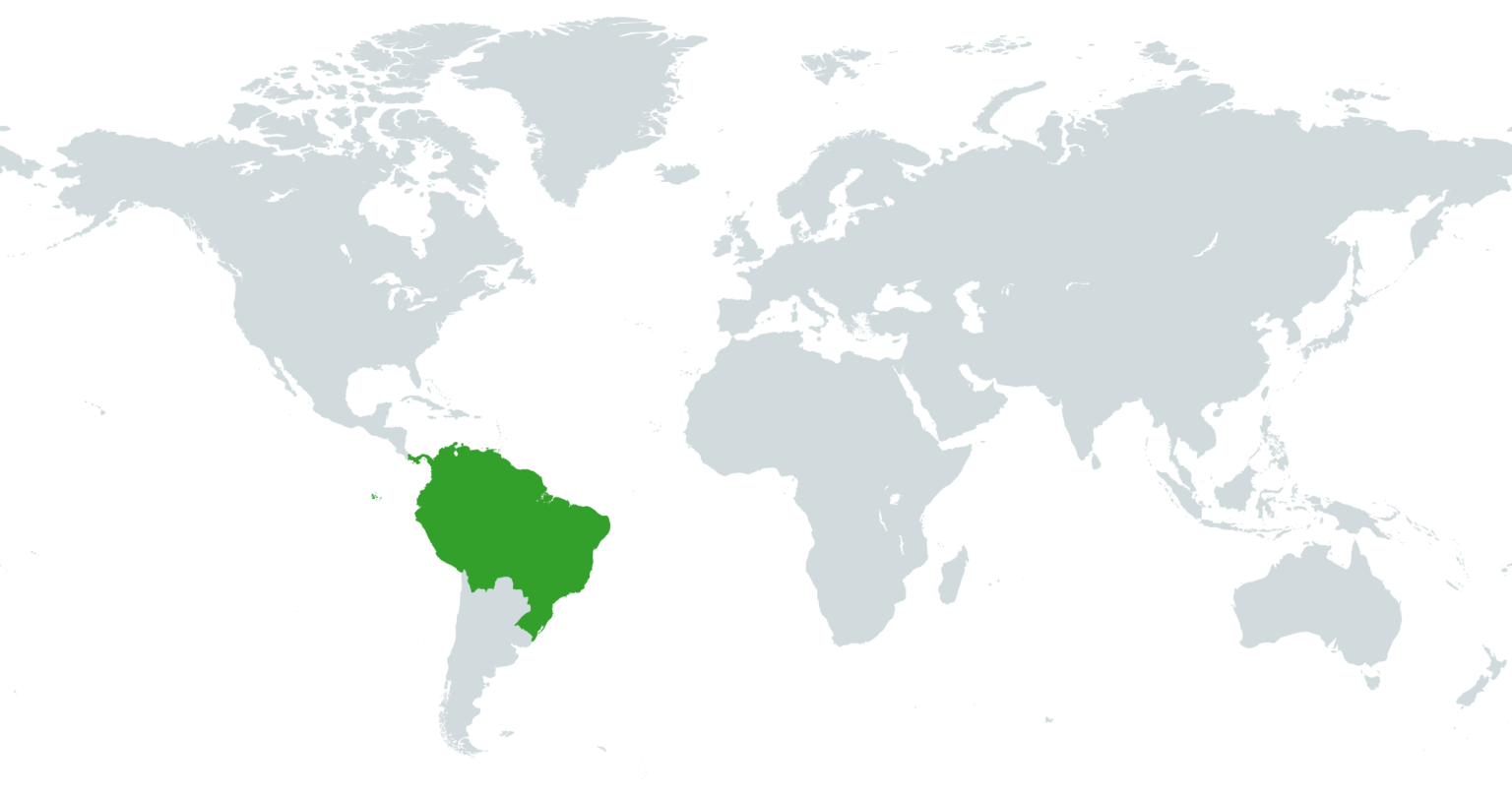
Distribution
VU (Vulnerable)
It is at high risk of extinction in the medium term.
NT (Near Threatened)
It is not yet at risk, but could be soon if conditions worsen.
ALL
Not Used
EX (Extinct)
There are no longer any living individuals of the species.
EW (Extinct in the wild)
Only specimens survive in captivity or in scientific collections.
EN (Endangered)
It has a very high risk of disappearing in the wild if conservation measures are not taken.
CR (Critically Endangered)
It faces an extremely high risk of extinction in the near future.