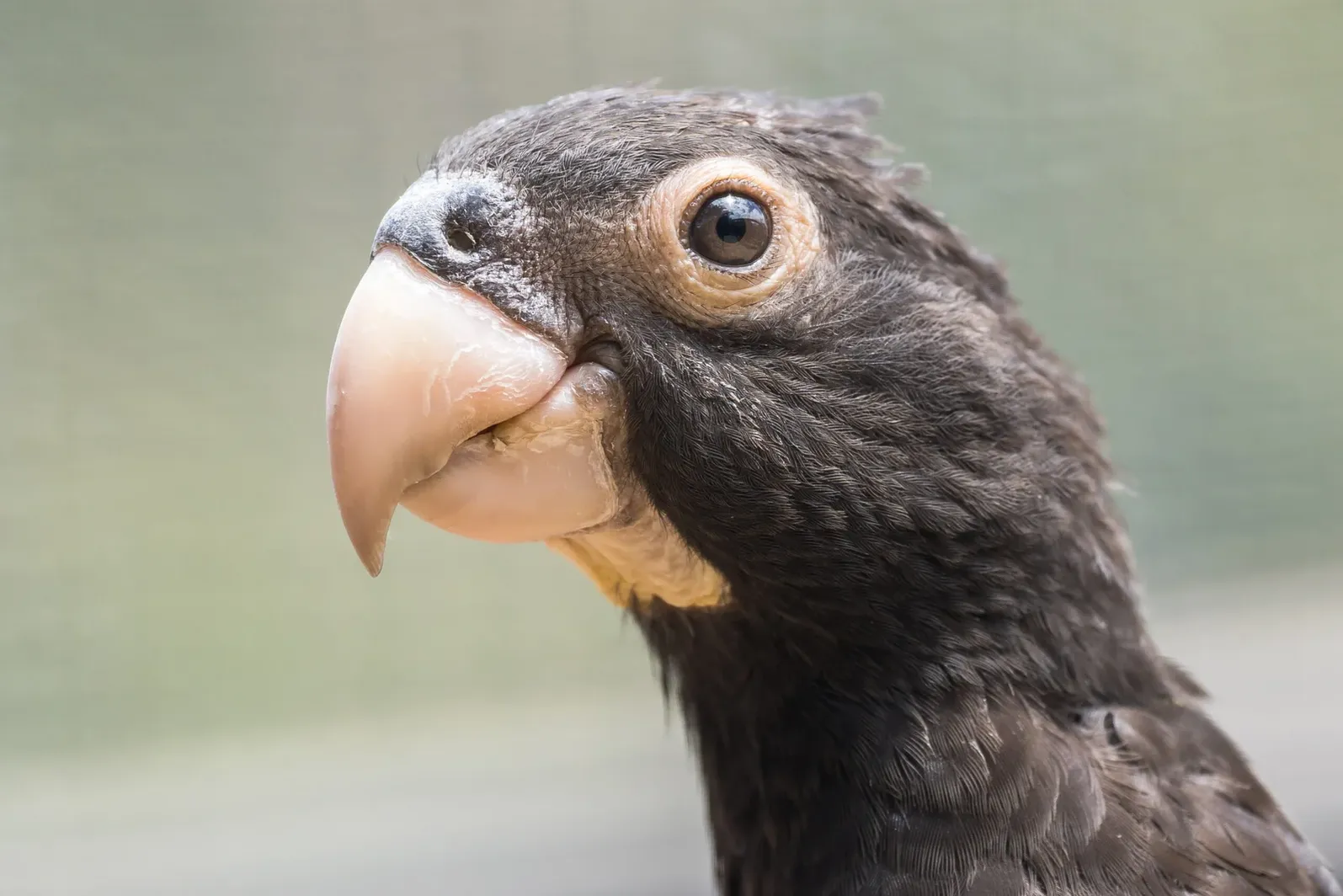
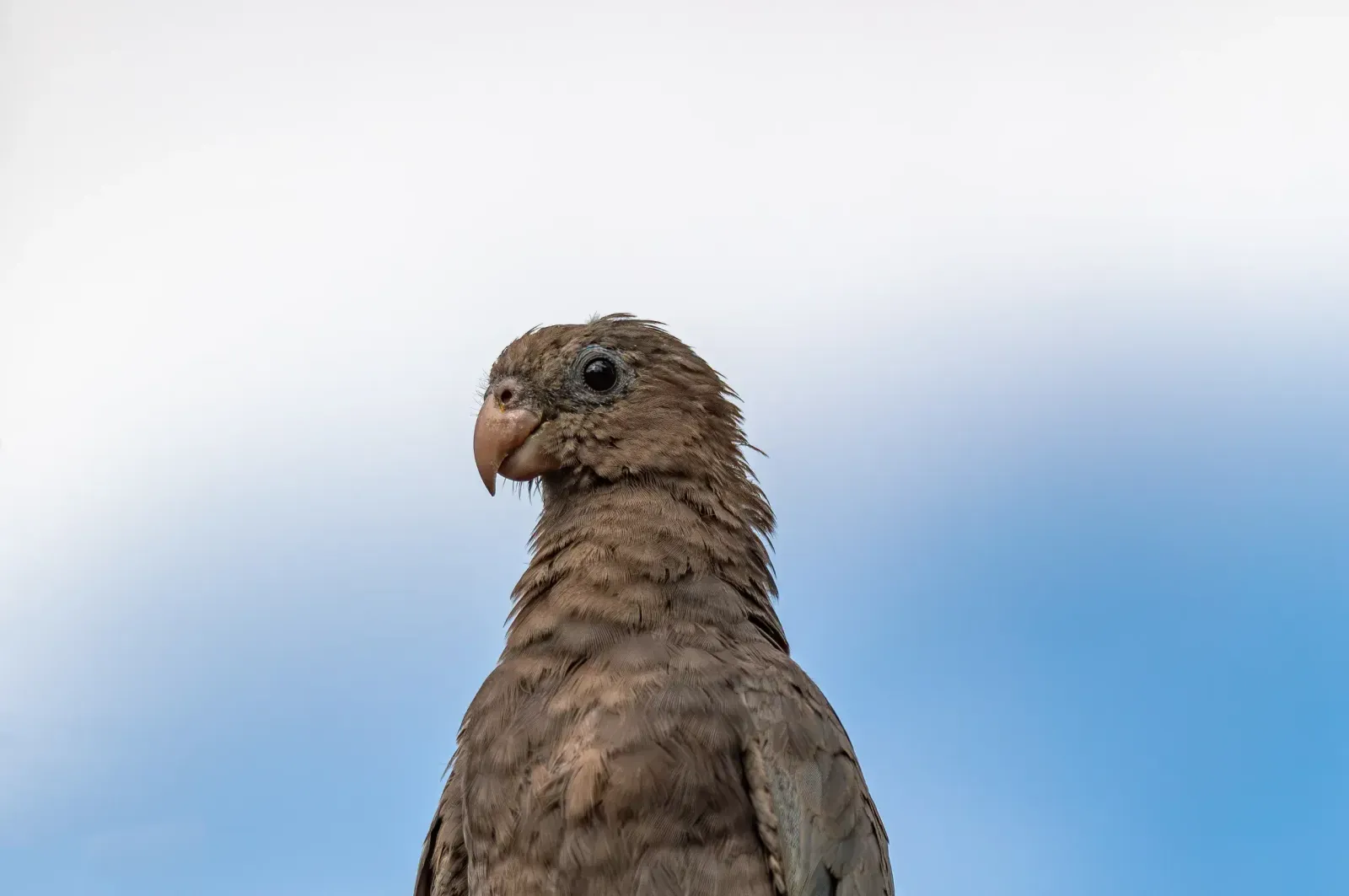
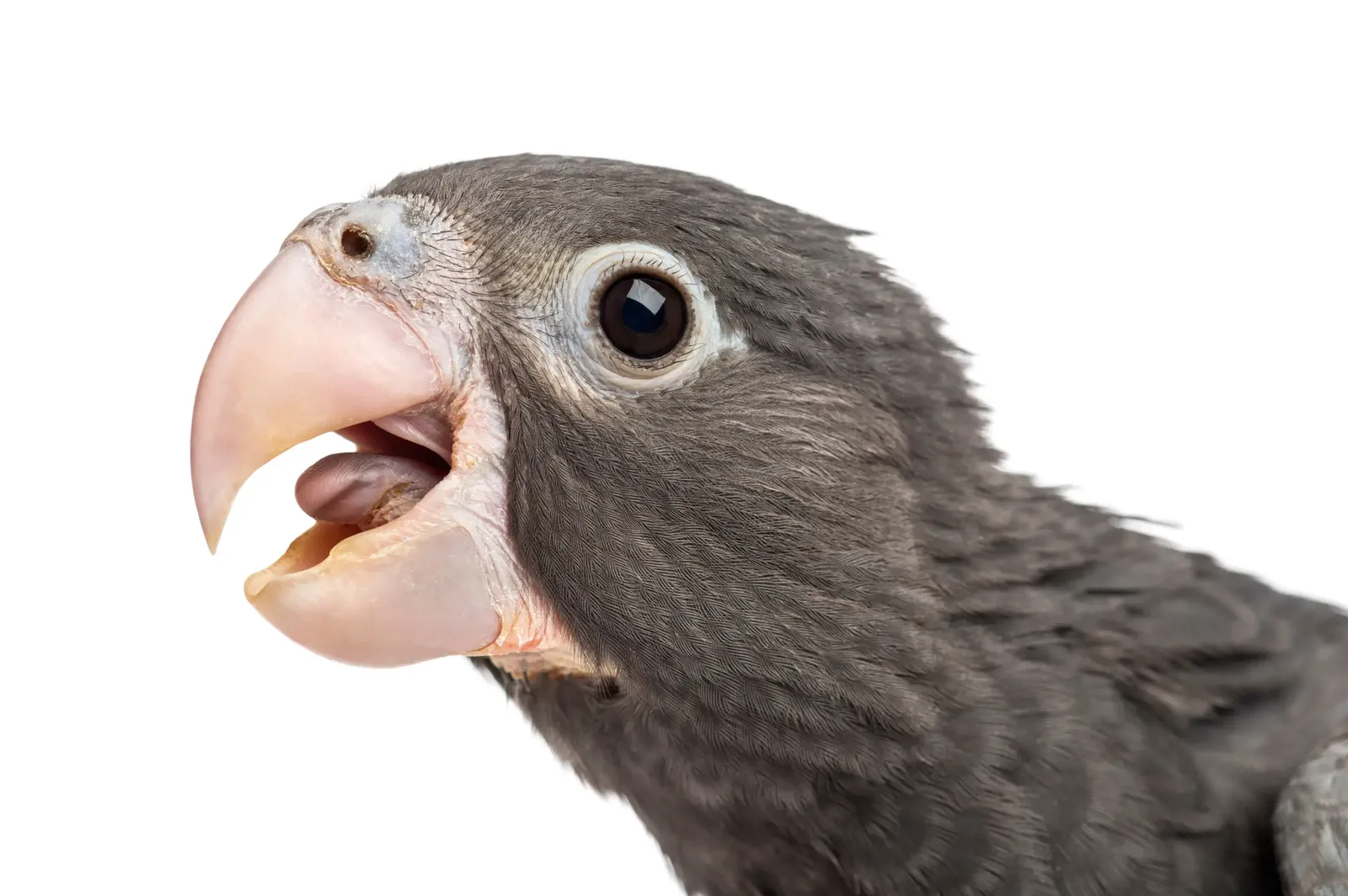
The vasa parrot is a robust and distinctive bird.
Its plumage is shades of brown to black, with lighter underparts.
The tail is rounded and its strong, curved beak is pinkish in colour.
The species is relatively secure in the wild and faces no immediate risk of extinction.
Reproduction
During breeding, females defend their territory around the nest from other females. Males have evolved phalluses that allow for prolonged copulations of up to 90 minutes.
Behaviour
It lives in groups and has an unusual mating system. Females are larger than males and moult their head feathers during the breeding season. They emit complex songs near the nest to attract males and receive regurgitated food.
Threats
Although considered of "least concern" by the IUCN, habitat loss and illegal trade in exotic birds are potential threats.
Feeding
Their diet includes fruits, seeds and nuts. In captivity, they can also be fed vegetables and parrot-specific pellets.
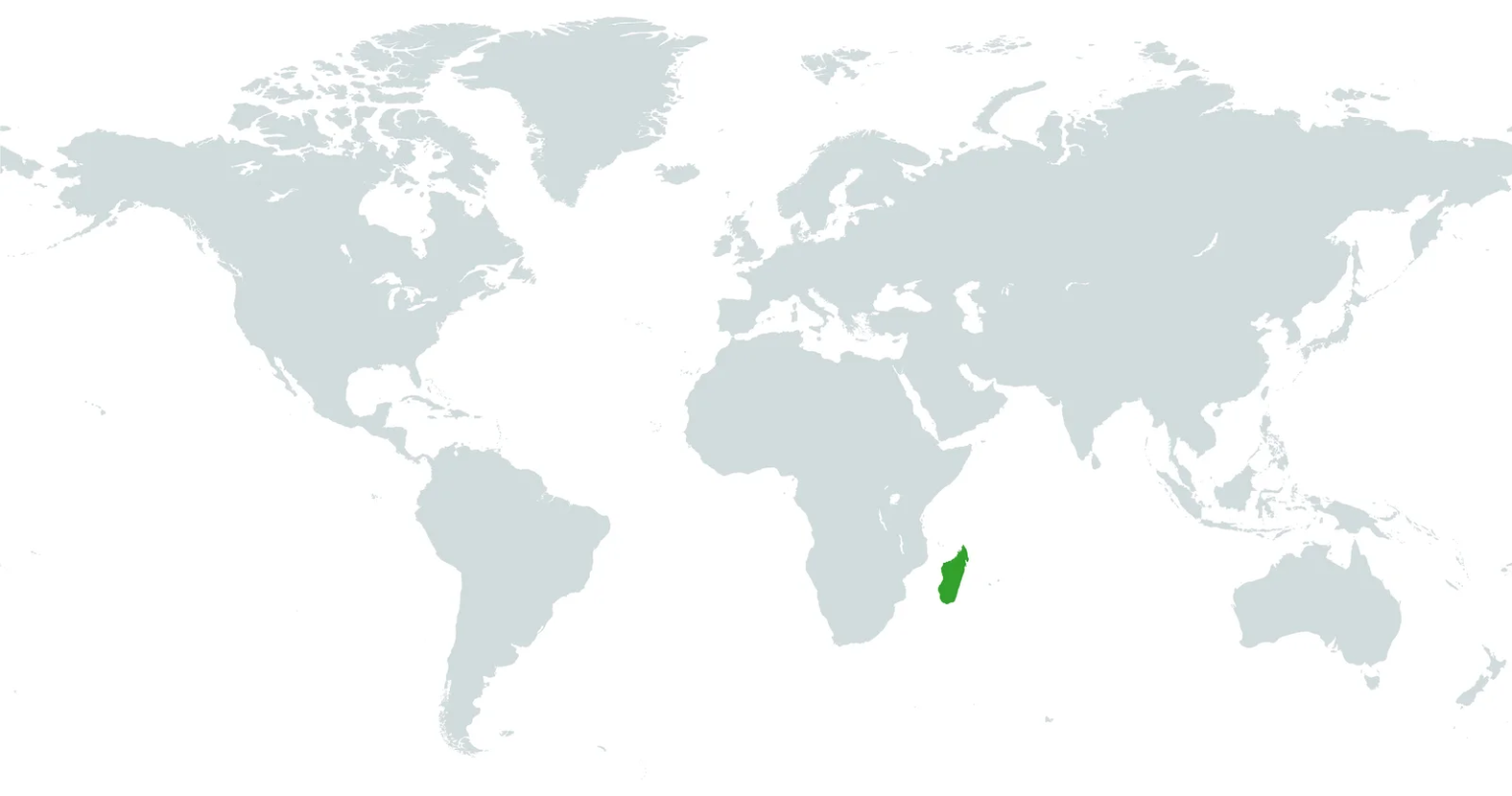
Distribution
VU (Vulnerable)
It is at high risk of extinction in the medium term.
NT (Near Threatened)
It is not yet at risk, but could be soon if conditions worsen.
ALL
Not Used
EX (Extinct)
There are no longer any living individuals of the species.
EW (Extinct in the wild)
Only specimens survive in captivity or in scientific collections.
EN (Endangered)
It has a very high risk of disappearing in the wild if conservation measures are not taken.
CR (Critically Endangered)
It faces an extremely high risk of extinction in the near future.