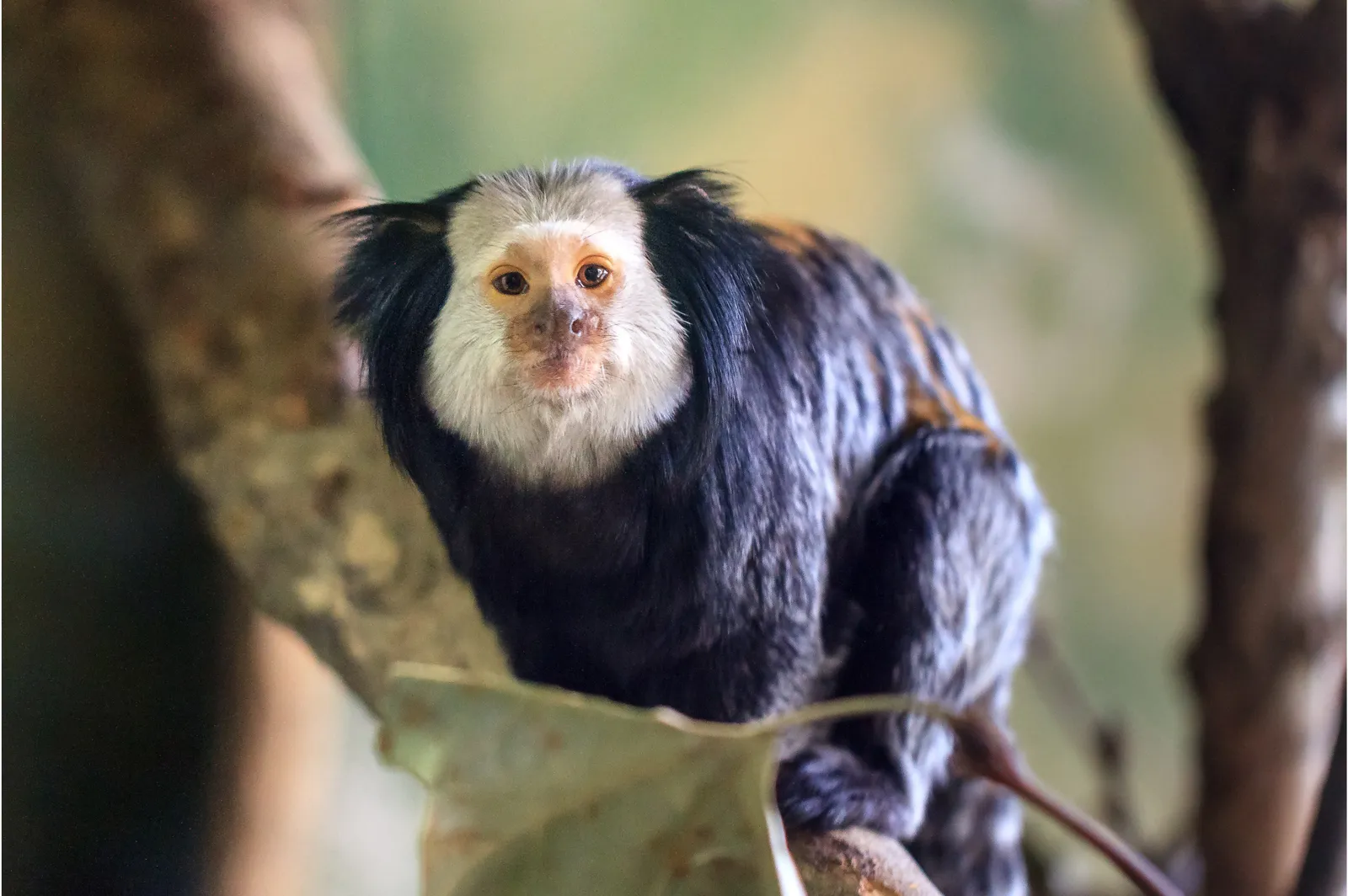
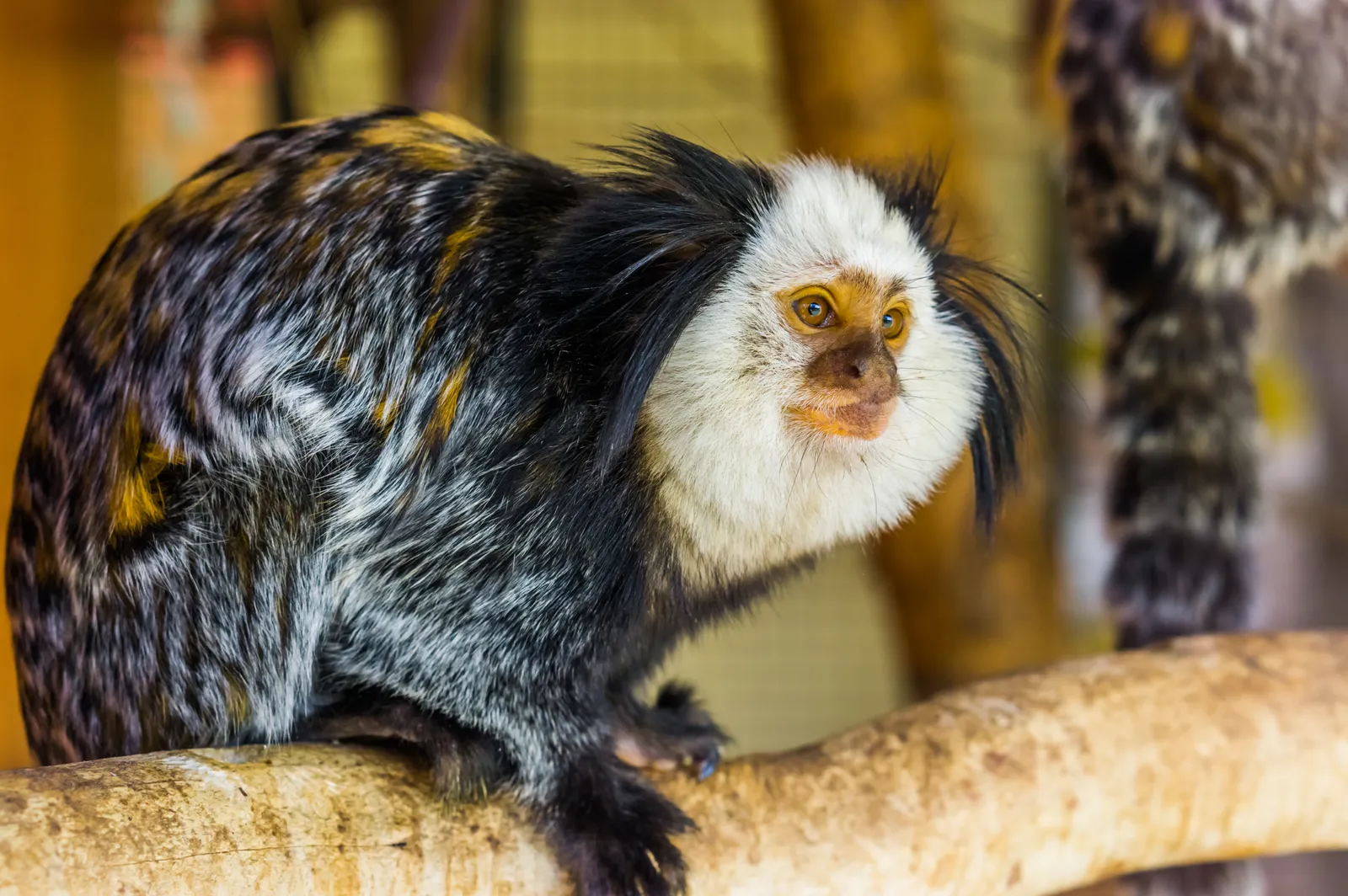
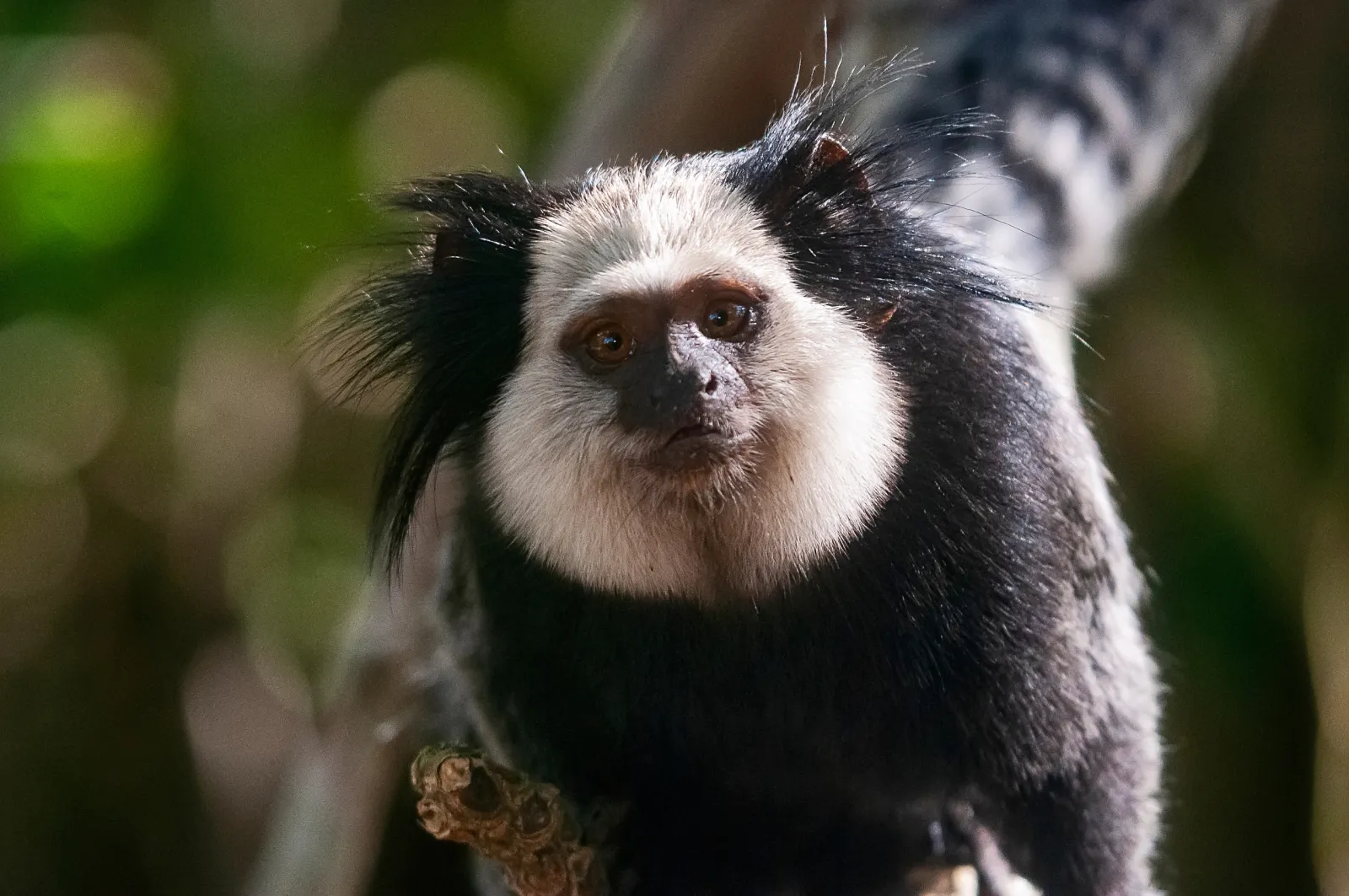
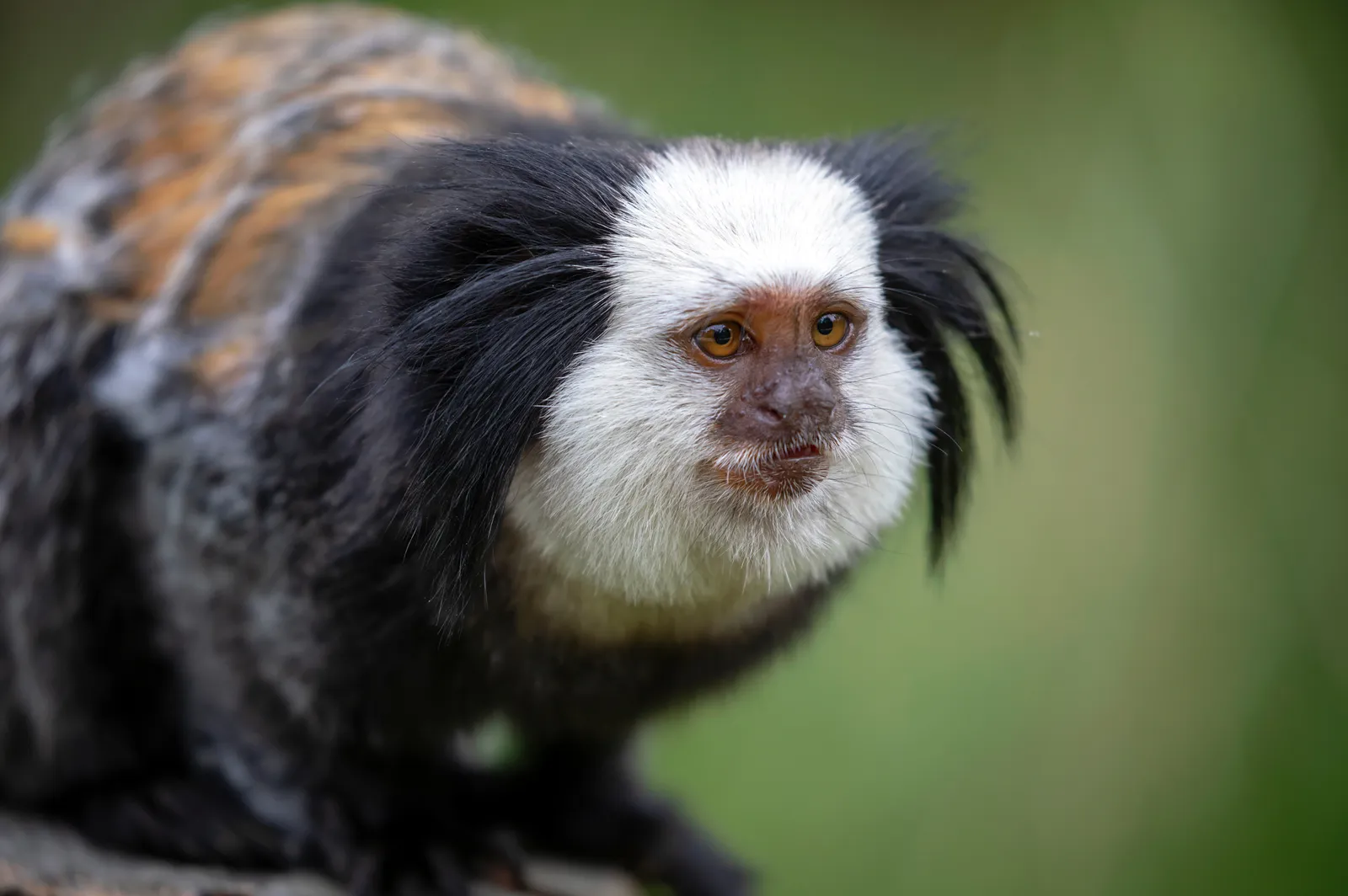
The white-headed marmoset is characterised by a white head and neck, two black tufts under the ears and a bare pink area around the mouth and eyes, which are light brown.
Its hair, legs and tail are black, while the back is orange and grey with black and white bands.
The tail has grey rings.
The species is relatively secure in the wild and faces no immediate risk of extinction.
Reproduction
Females tend to be monogamous and come into heat quickly after parturition. Gestation lasts about 140-145 days, and usually 1 or 2 young are born. In captivity, triplets are sometimes born.
Behaviour
It is a diurnal, arboreal primate that moves in groups of 3 to 8 individuals in a territory of 5 hectares. Its diet is based on insects and fruits. In captivity, it is one of the most reproductive marmosets, and the dominant female tends to be monogamous. Gestation lasts about four and a half months, and two offspring are born per litter. Life expectancy in the wild is 10 years.
Threats
Although its conservation status is considered of "least concern", the destruction of its habitat in Brazil's Atlantic forests remains a threat. Natural enemies include birds of prey, snakes and small cats.
Feeding
They are omnivorous and feed mainly on insects and fruits. They also consume tree sap, fungi, flower nectar and small vertebrates such as frogs and lizards.
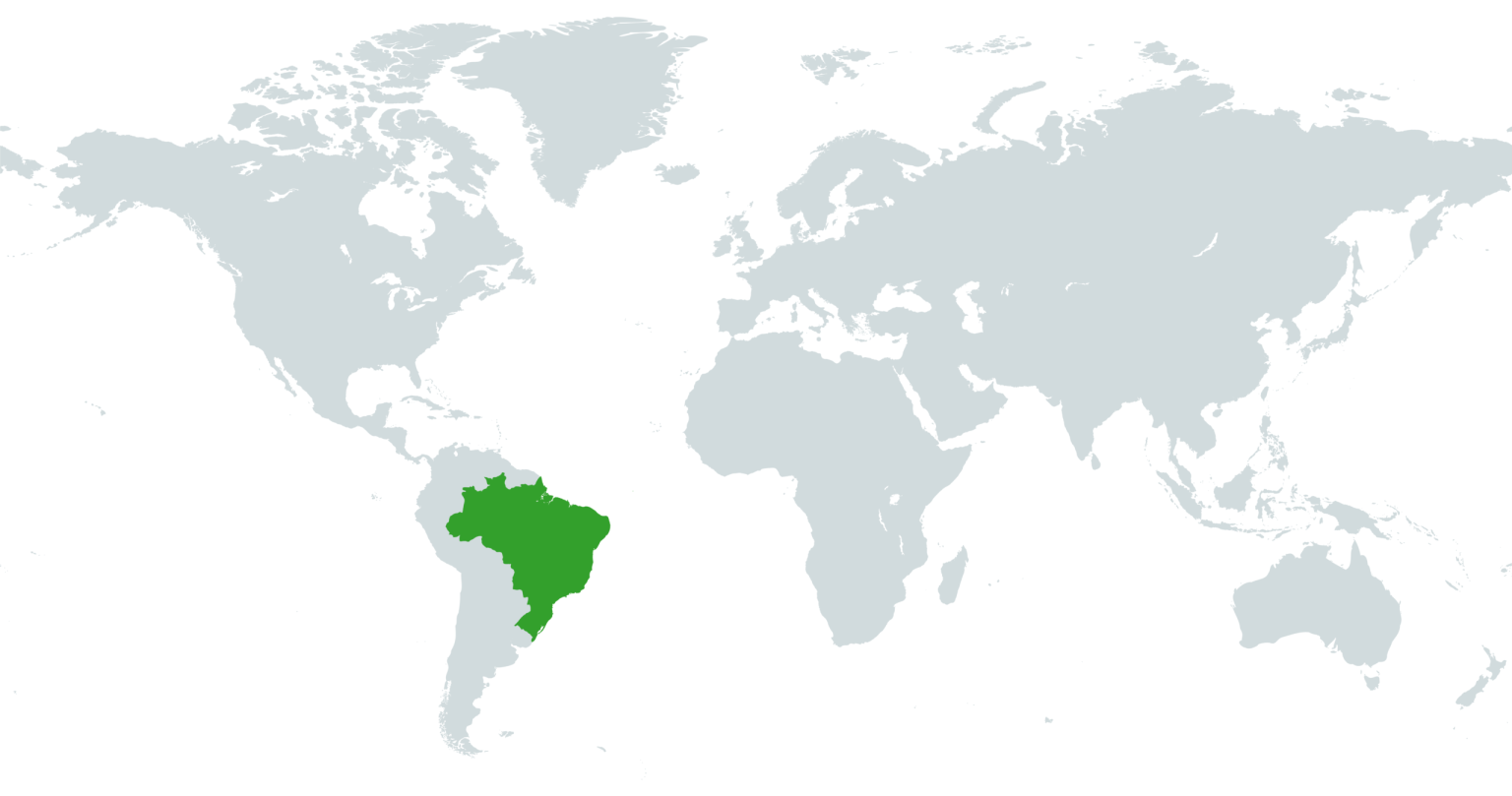
Distribution
VU (Vulnerable)
It is at high risk of extinction in the medium term.
NT (Near Threatened)
It is not yet at risk, but could be soon if conditions worsen.
ALL
Not Used
EX (Extinct)
There are no longer any living individuals of the species.
EW (Extinct in the wild)
Only specimens survive in captivity or in scientific collections.
EN (Endangered)
It has a very high risk of disappearing in the wild if conservation measures are not taken.
CR (Critically Endangered)
It faces an extremely high risk of extinction in the near future.